- Products
- Air Compressors & Air Tools
- Climate Control
- Compaction Equipment
- Concrete Cutting Tools & Equipment
- Concrete and Masonry
- Demolition & Excavation
- Electrical & Mechanical
- Fasteners and Anchoring Adhesives
- Floor Protection
- Generators and Welders
- Hand Tools
- Heaters
- Janitorial and Office Supplies
- Jobsite Protection
- Ladders & Storage
- Lighting & Lighting Accessories
- Man Lifts
- Material Handling Equipment
- Power Tools
- Pressure Washers & Pumps
- Safety Gear
- Safety Products
- Saws
- Surface Preparation
- SEASONAL PRODUCTS
- Rentals
- Air Compressor and Air Tool Rentals
- Climate Control Rental
- Compaction Rentals
- Concrete Equipment Rentals
- Demolition & Excavation Equipment Rentals
- Concrete Floor Grinder Rentals
- General Construction Equipment Rentals
- Generator Rentals and Welder Rentals
- Heater Rentals
- Light Tower Rentals
- Man Lift Rentals in Massachusetts and Rhode Island
- Material Handling Equipment Rentals
- Pressure Washer & Pump Rentals
- Saw Rentals in New England
- SEASONAL PRODUCTS
- Products
- Air Compressors & Air Tools
- Climate Control
- Compaction Equipment
- Concrete Cutting Tools & Equipment
- Demolition & Excavation
- Electrical & Mechanical
- Floor Protection
- Generators and Welders
- Construction Heaters
- Construction Ladders, Staging, & Storage
- Construction Lighting
- Man Lifts
- Material Handling Equipment
- Industrial Janitorial and Office Supplies
- Pressure Washers & Pumps
- Construction Safety Products
- Construction Safety Gear
- Surface Preparation
- Building Protection
- Diesel Accessories
- Zero Emissions
- Rentals
- Air Compressor and Air Tool Rentals
- Climate Control Rental
- Compaction Rentals
- Concrete Equipment Rental
- Demolition & Excavation Equipment Rental
- General Construction Equipment Rental
- Generator Rentals and Welder Rentals
- Construction Heaters Rental
- Light Tower Rentals
- Man Lift Rentals
- Material Handling Equipment Rental
- Pressure Washer & Pump Rentals
- Saw Rentals in New England
- Concrete Floor Grinder Rentals
- Zero Emissions Rentals
- Repairs & Used
- Parts
- Blog
- Services
- Resources
- About Us
- Contact Us
Sales & Rental of Construction | Industrial Equipment & Supplies


10 Best Concrete Hand Tools for Contractors
Concrete work rewards preparation, steady timing, and tools that suit the pour. The right concrete hand tools help contractors spread, level, edge, joint, and finish concrete with better control. A bull float can smooth broad areas, while a hand trowel helps refine edges and tight spots. Small differences matter.
This guide explores ten useful tools, including concrete rakes, screeds, darbies, floats, edgers, groovers, jointers, and finishing brooms. Each tool serves a different purpose, and choosing one depends on slab size, finish requirements, concrete conditions, and crew preference. Handle comfort and blade stiffness matter, too. A tool that feels balanced in the hand can make repeated passes less tiring.
There is no perfect shortlist for every contractor. Some crews prefer familiar designs, while others value lighter handles or replaceable parts. That judgment can take time. The recommendations focus on practical uses, durability, ease of handling, and care between jobs—not on brand claims. Clean tools after use, inspect handles and edges, and follow product instructions. These habits help tools perform consistently and can prevent a minor flaw from affecting a finished surface. The goal is simple: understand what each tool does before the concrete starts setting.
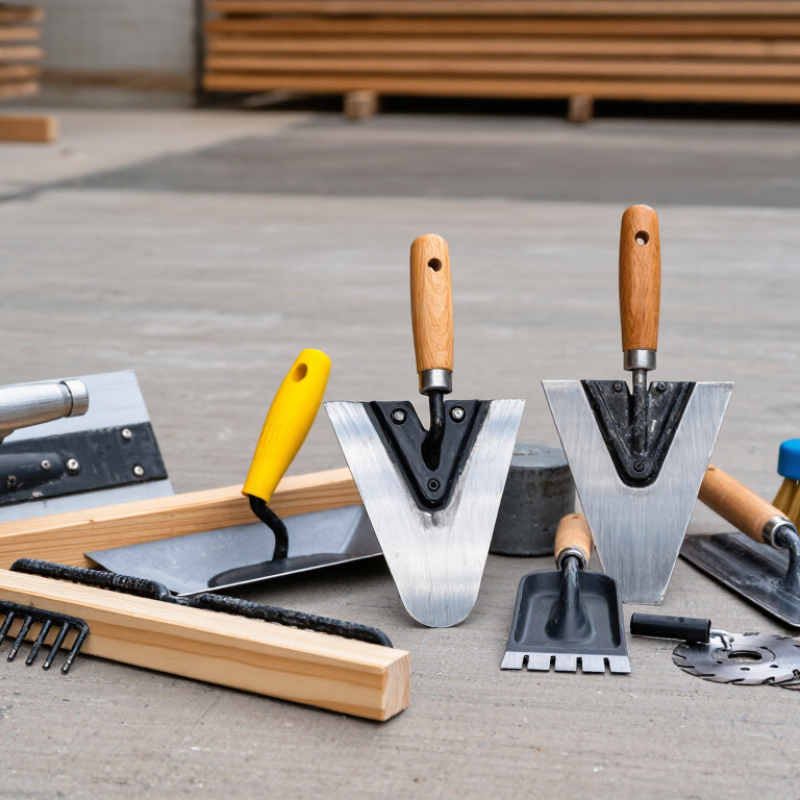
Table of Contents
[Hide]
Essential Concrete Hand Tools for Site Preparation and Layout
Site layout starts with a stable benchmark, not a hurried mark on damp soil. A 25-foot tape, framing square, chalk reel, and mason’s line help crews transfer dimensions and keep forms aligned. Check both diagonals before fixing the corners; matching measurements help confirm a square layout. Batter boards keep reference points clear of excavation and foot traffic. A taut line reveals small offsets that can disappear when viewed from the edge of a slab. Small errors travel. ACI 117-10, Specification for Tolerances for Concrete Construction and Materials, provides tolerances for concrete work, making careful measurement more than a matter of appearance.
Joint locations also belong in the layout plan. ACI 302.1R-15, Guide to Concrete Floor and Slab Construction, gives a general contraction-joint spacing range of 24 to 36 times the slab thickness, with spacing commonly limited to 15 feet. For a four-inch slab, that suggests roughly 8 to 12 feet as a planning range; project specifications and design requirements should govern. Mark joint lines with a chalk reel before placement, then verify them against walls, openings, and drains. A line level can help check grade over short runs, though it will not replace proper elevation control. Recheck the marks after forms are secured. It is easy to trust a straight string; it is less easy to notice a misplaced benchmark until concrete is down.
Related Posts
-

What Are the Best New Concrete Tools from China?
-
10 Tips for Buying New Concrete Tools?
-

How to Choose the Right Concrete Tools for Your DIY Projects: Expert Tips & Trends
-
2025 How to Use Concrete Tools for Your Next Construction Project
-

2026 Best New Concrete Tools for Your Construction Projects?
-
What Are the Best Concrete Finishing Tools?

© Copyright - Pro Tool & Supply - Site by SVM E-Marketing Solutions - Sitemap
- Privacy policy