Sales & Rental of Construction | Industrial Equipment & Supplies

What Are the Best Machine Tools Made in China?

China has become a major source of competitive machine tools for workshops, automotive plants, and precision manufacturers. Its industry now includes CNC lathes, vertical machining centers, grinding machines, laser cutters, and complete production systems. The best choices are not determined by price alone. Buyers should examine cutting accuracy, spindle stability, thermal control, build quality, and long-term service support.

Look closer. A reliable machine should hold tight tolerances during extended operation, not only during a showroom demonstration. Important details include cast-iron construction, linear guideways, control-system compatibility, chip evacuation, and the availability of replacement parts. Brands with proven export experience may offer stronger documentation and technical assistance, but regional service quality can still differ greatly. That matters.

This guide compares leading Chinese manufacturers through practical and verifiable criteria. These include product specialization, factory capability, quality-control procedures, customer feedback, certifications, and performance in demanding industries. Public specifications provide useful evidence, yet they rarely reveal every maintenance challenge. A machine may appear excellent on paper and still require better operator training or installation support. This is worth questioning.

The goal is not to label one company as universally superior. Different buyers need different solutions. A small workshop may value compact design and accessible controls, while an aerospace supplier may prioritize repeatability, advanced probing, and responsive engineering support. By weighing measurable performance against ownership experience, readers can identify Chinese machine tools that deliver dependable value rather than temporary savings.
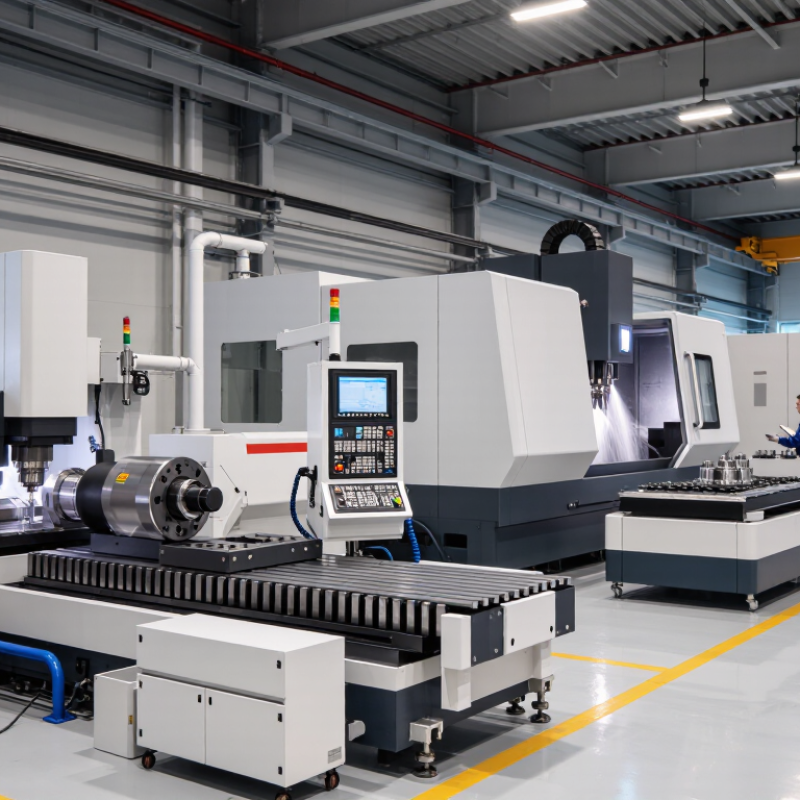
What Are the Best Machine Tools Made in China?

Understanding China’s Machine Tool Industry and Its Main Product Types

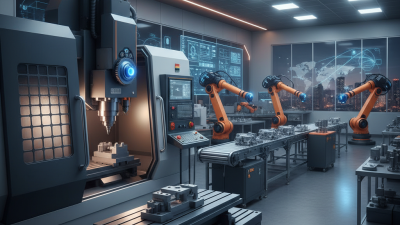
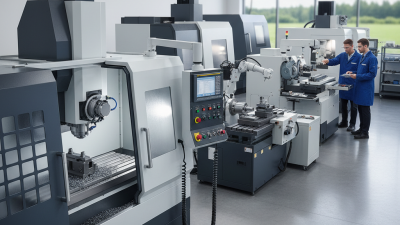
China’s machine tool industry covers a broad manufacturing ecosystem. Its main product types include CNC turning centers, machining centers, grinding machines, EDM equipment, gear machines, laser cutters, and forming presses. Each category serves a different production need. Turning machines handle cylindrical parts, while machining centers combine milling, drilling, and tapping operations. Grinding machines deliver tighter finishes. The categories overlap.

Chinese manufacturers have improved spindle control, servo systems, thermal compensation, and automatic tool handling. In practical equipment evaluations, buyers should inspect axis repeatability, surface finish, chip evacuation, guarding, and software support. A machine may look impressive on paper but perform differently during continuous production. Request test cuts using real materials and actual tooling. Verify results with calibrated measuring equipment. Paper claims are not enough.

Cost remains a major attraction, but the purchase price is only one variable. Include installation, training, tooling, maintenance, electricity, and possible downtime. High-mix workshops may prefer flexible machining centers with intuitive controls. High-volume factories often need rigid structures, faster tool changes, and stable automation. Local technical support also matters, especially when a production line stops unexpectedly. Export documentation and compliance records deserve careful review. Some weaknesses remain, including uneven service quality and inconsistent software integration. That picture is incomplete, but it deserves attention.

Key Criteria for Evaluating the Best Chinese Machine Tools

What are the best machine tools made in China? The answer depends on measurable performance, not country of origin. VDW’s World Machine Tool Statistics 2024 reported that China remained the world’s largest machine-tool consumer, representing roughly one-third of global demand in 2023. This scale supports strong manufacturing depth, but capacity alone proves little. Buyers should examine ISO 230-2 positioning accuracy, repeatability, spindle runout, thermal stability, and vibration control. Ask for factory acceptance-test records. Request measured data, not promises.

Production trials reveal practical weaknesses. Cut a representative steel or aluminum part, then inspect surface finish, dimensional drift, chip evacuation, and tool wear. The ISO 10791 series provides useful test guidance for machining centers. Gardner Intelligence reports that automation and digitally connected equipment remain major investment priorities in global machine-tool markets. Therefore, evaluate controller usability, remote diagnostics, data export, and compatibility with existing inspection systems. Support matters. Check technician response times, spare-part availability, training, and warranty terms. A cheaper machine may become expensive when downtime interrupts a small production cell.

Energy use also deserves attention. The International Energy Agency identifies industrial efficiency as a continuing competitiveness issue, although machine-level consumption varies by process and configuration. Compare idle power, cutting power, coolant demand, and maintenance intervals. No scorecard is perfect. My own preference is to weight repeatability and service evidence above attractive brochures. A minor uncertainty should be recorded, not hidden. Measure twice. Purchase once.

Leading Chinese Brands and Their Core Machine Tool Strengths

China’s machine-tool sector now covers a broad technical range, from compact CNC lathes to heavy five-axis machining centers. Gardner Intelligence’s 2024 World Machine Tool Survey placed China as the world’s largest machine-tool market, representing roughly one-third of global consumption in 2023. That scale supports strong domestic engineering, supplier networks, and fast production upgrades.

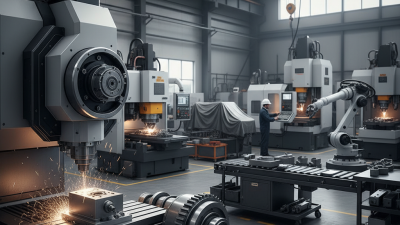
Leading Chinese manufacturers show different core strengths. One group focuses on high-speed CNC turning and milling for automotive and general engineering parts. Another specializes in large gantry machines, where rigid frames handle steel castings and oversized components. Several established producers also develop five-axis centers, electrical-discharge machines, and automated loading systems. In factory evaluations, I look closely at thermal stability, spindle vibration, tool-change repeatability, and service response. A polished control screen means little if a warm spindle shifts the bore.

The China Machine Tool & Tool Builders’ Association regularly reports strong investment in intelligent manufacturing and CNC equipment. However, reported output does not always equal consistent field performance. This distinction matters. Some machines deliver excellent accuracy after careful installation, while others need better software tuning or operator training. The International Federation of Robotics reported China remained the largest industrial-robot market in 2023, supporting demand for machine-tool automation. Buyers should compare test-cut records, calibration data, five-year maintenance costs, and local technical support before judging any leading manufacturer. Titles can be impressive. Evidence is better.

What Are the Best Machine Tools Made in China? – Leading Chinese Machine Tool Strengths

Machine Tool Category Core Strength Commonly Available in China Typical Technical Characteristics Main Applications Best Selection Criteria
CNC Turning Centers Strong value for standard turning, live tooling, and multi-axis production. Two-axis to multi-axis configurations, approximately 4,000–6,000 rpm spindle speeds for many general-purpose models, hydraulic or pneumatic chucking, and optional bar feeders. Automotive components, hydraulic parts, shafts, flanges, fittings, and general subcontract machining. Spindle power, chuck size, bar capacity, positioning accuracy, control system, chip management, and after-sales support.
Vertical Machining Centers Broad availability, competitive pricing, and practical configurations for three-axis and four-axis milling. Typical travels from small-format production sizes to large-table designs, 8,000–12,000 rpm spindle options on many models, automatic tool changers, and rigid cast structures. Molds, dies, machine parts, aluminum components, fixtures, and small-to-medium batch production. Machine rigidity, table load, spindle taper, tool-change time, thermal stability, repeatability, and controller compatibility.
Horizontal Machining Centers Good productivity for multi-face machining and automated palletized production. Horizontal spindle arrangement, rotary pallets, automatic tool magazines, through-spindle coolant options, and reduced fixture changes. Engine blocks, gearbox housings, aerospace structures, pump bodies, and complex prismatic parts. Pallet-change reliability, axis travel, workpiece envelope, coolant delivery, automation readiness, and volumetric accuracy.
Five-Axis Machining Centers Growing capability in simultaneous and indexed five-axis machining for complex components. Tilting rotary tables or swivel heads, integrated probing, short setups, advanced kinematic compensation, and high-speed machining options. Aerospace parts, impellers, medical components, turbine components, molds, and complex die work. Rotary-axis accuracy, synchronization, collision avoidance, post-processor support, thermal compensation, and operator training.
CNC Grinding Machines Strong availability for cylindrical, surface, centerless, and internal grinding at cost-sensitive production levels. Precision wheel dressing, hydrostatic or rolling guides on selected models, automatic measurement options, and micron-level finishing capability when properly configured. Bearings, shafts, gears, hydraulic components, cutting tools, and hardened steel parts. Thermal control, guideway design, wheel-balancing system, dressing accuracy, in-process gauging, and surface-finish performance.
Gear Hobbing and Gear Shaping Machines Established manufacturing base for conventional and CNC gear-production equipment. Programmable indexing, automatic workpiece loading options, gear inspection compatibility, and support for common spur and helical gear processes. Automotive transmissions, reducers, agricultural machinery, construction equipment, and industrial gearboxes. Maximum gear diameter, module range, helix capability, indexing accuracy, tooling availability, and inspection support.
Fiber Laser Cutting Machines Particularly competitive in sheet-metal automation, cost efficiency, and high-speed flat-sheet processing. Common power ranges from approximately 1 kW to 20 kW or more, depending on material thickness and production requirements; automatic nesting and pallet exchange are widely available. Fabrication, electrical cabinets, agricultural equipment, construction machinery, kitchen equipment, and automotive components. Laser source reliability, cutting head serviceability, sheet size, assist-gas control, nesting software, extraction, and local technical support.
CNC Press Brakes Wide selection of hydraulic and electric-hybrid systems for general sheet-metal forming. Multi-axis back gauges, CNC crowning, hydraulic synchronization, segmented tooling, and automatic angle measurement on advanced configurations. Metal enclosures, frames, panels, HVAC components, elevators, and architectural metalwork. Bending force, bed length, throat depth, back-gauge accuracy, tooling standards, safety systems, and energy consumption.
Wire-Cut EDM Machines Strong cost-to-performance ratio for intricate profiles and hardened conductive materials. Computer-controlled wire travel, automatic threading on selected models, submerged cutting, fine-finish cycles, and narrow-kerf machining. Precision dies, punches, mold inserts, carbide parts, aerospace details, and medical tooling. Cutting accuracy, surface finish, wire consumption, automatic threading, dielectric filtration, and control-system usability.
Heavy-Duty CNC Lathes and Mills Broad manufacturing capability for large, heavy, and long workpieces at comparatively attractive investment levels. Large swing and bed lengths, high-torque spindles, reinforced beds, steady rests, tailstocks, and customized workholding. Energy equipment, mining machinery, shipbuilding, rail components, pressure vessels, and large shafts. Maximum workpiece weight, spindle torque, foundation requirements, guideway protection, alignment accuracy, and commissioning support.

Note: Technical ranges are representative of commonly offered machine configurations in the Chinese market. Actual performance depends on the specific model, options, workholding, tooling, materials, installation, and verification testing.

Comparing CNC, Turning, Milling, and Grinding Machines from China

China’s machine-tool sector is large enough to deserve careful comparison. Gardner Intelligence’s 2024 World Machine Tool Survey reported China as the world’s largest producer and consumer, with production valued at roughly 30 billion US dollars in 2023. Scale matters, but it does not guarantee equal quality across factories.

For CNC machining centers, Chinese suppliers often offer strong value for aluminum parts, steel fixtures, and medium-volume work. Buyers should check spindle runout, thermal drift, positioning accuracy, and five-axis interpolation. Turning machines can be practical for shafts, bushings, and repeat batches.

A factory should provide cutting trials, not only catalog tolerances. Milling performance depends heavily on rigidity, tool holding, and chip evacuation. A fast spindle can still disappoint.

Grinding machines require closer scrutiny because wheel balance, coolant control, and guideway stability directly affect surface finish. The International Organization for Standardization’s ISO 230 series provides useful testing principles for machine-tool accuracy.

I have seen specifications look impressive while test parts reveal chatter near corners. That gap deserves attention.

The 2023 World Manufacturing Production and Trade report from the International Federation of Robotics also shows China’s exceptionally large manufacturing base, supporting broad service and automation capacity. However, service quality varies by region and application.

Ask for laser calibration records, repeatability data, electrical documentation, and spare-parts lead times. Independent acceptance testing is wiser than trusting one factory sample.

For complex grinding or five-axis work, a slightly higher purchase price may reduce rejected parts. Sometimes, the cheaper machine is expensive.

How to Choose the Right Chinese Machine Tool for Your Workshop

Choosing the right Chinese machine tool starts with your work, not a country ranking.

Gardner Intelligence’s 2024 World Machine Tool Survey estimated China’s 2023 machine tool consumption at about 30.3 billion US dollars. That scale supports broad engineering capacity, but quality still varies between factories.

Define your material, tolerance, part size, spindle speed, and daily cutting hours before requesting quotations. A stainless-steel fixture needs different rigidity than an aluminum prototype.

Ask for measurable evidence.

Request machining samples using your drawings, inspection records, spindle runout data, and positioning accuracy results. Check whether the supplier follows ISO 230 testing methods or equivalent national standards.

The International Federation of Robotics reported 276,288 industrial robot installations in China during 2023. This suggests strong automation expertise, but it does not automatically prove machine accuracy. Watch the process.

Compare total ownership cost, not only the purchase price.

Include tooling, freight, installation, operator training, software updates, and local service response. In a workshop trial, a cheaper machine may appear attractive until calibration takes several weeks. That risk is easy to underestimate.

Review electrical compatibility and safety documentation with a qualified technician. Also inspect the control interface yourself; confusing screens can create expensive mistakes.

I would leave budget for spare sensors and critical wear parts. My judgment could be wrong when production data is limited, so a paid acceptance test is worth considering.

© Copyright - Pro Tool & Supply - Site by SVM E-Marketing Solutions - Sitemap - Privacy policy