- Products
- Air Compressors & Air Tools
- Climate Control
- Compaction Equipment
- Concrete Cutting Tools & Equipment
- Concrete and Masonry
- Demolition & Excavation
- Electrical & Mechanical
- Fasteners and Anchoring Adhesives
- Floor Protection
- Generators and Welders
- Hand Tools
- Heaters
- Janitorial and Office Supplies
- Jobsite Protection
- Ladders & Storage
- Lighting & Lighting Accessories
- Man Lifts
- Material Handling Equipment
- Power Tools
- Pressure Washers & Pumps
- Safety Gear
- Safety Products
- Saws
- Surface Preparation
- SEASONAL PRODUCTS
- Rentals
- Air Compressor and Air Tool Rentals
- Climate Control Rental
- Compaction Rentals
- Concrete Equipment Rentals
- Demolition & Excavation Equipment Rentals
- Concrete Floor Grinder Rentals
- General Construction Equipment Rentals
- Generator Rentals and Welder Rentals
- Heater Rentals
- Light Tower Rentals
- Man Lift Rentals in Massachusetts and Rhode Island
- Material Handling Equipment Rentals
- Pressure Washer & Pump Rentals
- Saw Rentals in New England
- SEASONAL PRODUCTS
- Products
- Air Compressors & Air Tools
- Climate Control
- Compaction Equipment
- Concrete Cutting Tools & Equipment
- Demolition & Excavation
- Electrical & Mechanical
- Floor Protection
- Generators and Welders
- Construction Heaters
- Construction Ladders, Staging, & Storage
- Construction Lighting
- Man Lifts
- Material Handling Equipment
- Industrial Janitorial and Office Supplies
- Pressure Washers & Pumps
- Construction Safety Products
- Construction Safety Gear
- Surface Preparation
- Building Protection
- Diesel Accessories
- Zero Emissions
- Rentals
- Air Compressor and Air Tool Rentals
- Climate Control Rental
- Compaction Rentals
- Concrete Equipment Rental
- Demolition & Excavation Equipment Rental
- General Construction Equipment Rental
- Generator Rentals and Welder Rentals
- Construction Heaters Rental
- Light Tower Rentals
- Man Lift Rentals
- Material Handling Equipment Rental
- Pressure Washer & Pump Rentals
- Saw Rentals in New England
- Concrete Floor Grinder Rentals
- Zero Emissions Rentals
- Repairs & Used
- Parts
- Blog
- Services
- Resources
- About Us
- Contact Us
Sales & Rental of Construction | Industrial Equipment & Supplies


How to Choose Contractor Tools for Global Buyers
Choosing contractor tools for global buyers requires more than comparing prices and torque ratings. A cordless drill that performs well in Chicago may frustrate a crew in Nairobi if batteries, chargers, or replacement parts are unavailable. Voltage, plug systems, climate, transport conditions, warranty support, and local service networks all influence the real purchase value.
Market data confirms the scale of this decision. Fortune Business Insights valued the global power tools market at approximately USD 36.07 billion in 2023. It projects continued growth through 2032, driven by construction, maintenance, and infrastructure investment. Grand View Research also identifies cordless equipment, lithium-ion batteries, and professional applications as major growth areas. These reports describe opportunity, but they do not replace field testing. Numbers can hide inconvenient details.
Kenny Koehler, a longtime tool reviewer and editor at Pro Tool Reviews, has said, “The right tool makes the job easier.” That principle matters for international contractors. A lighter impact wrench can reduce fatigue during repetitive steel-frame work. A sealed grinder may better withstand dust on a dry construction site. A modular battery platform can simplify inventory across several crews. Still, choosing only the newest model can be a mistake. I have seen buyers overlook service response times, regional battery availability, and language-specific manuals. Those gaps become expensive after delivery.
This guide evaluates contractor tools through performance, durability, compatibility, safety, supplier credibility, and total ownership cost. It also questions common assumptions. The cheapest quotation is rarely the cheapest solution. Sometimes, the better tool is simply the one your team can repair.
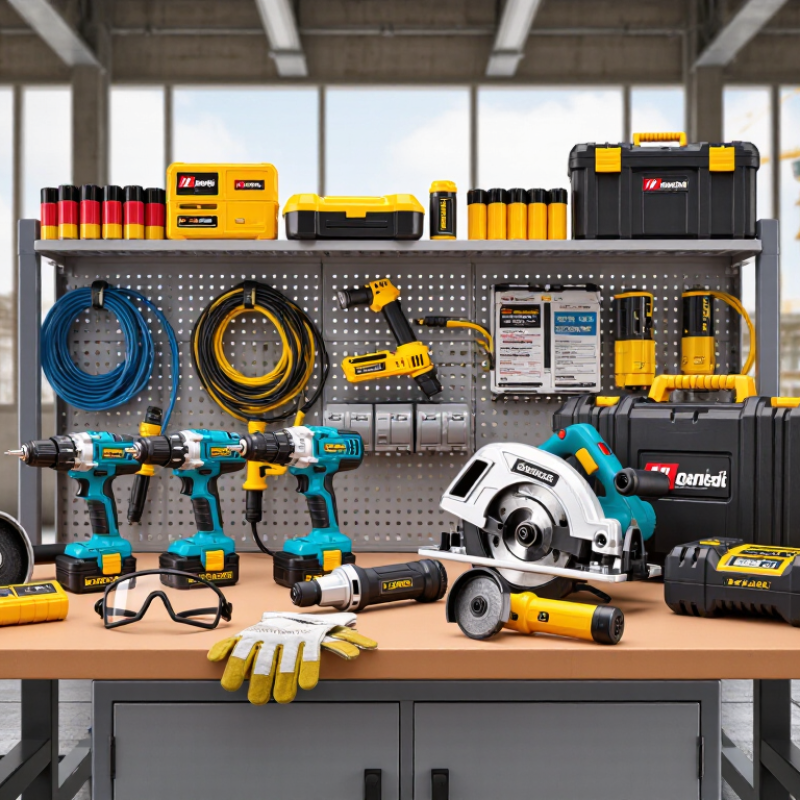
Table of Contents
[Hide]
Define Project Requirements and Contractor Tool Categories
Global buyers should define the work before browsing contractor tool catalogs. Create a one-page requirement sheet. Record material, fastener size, duty cycle, workspace, power standard, climate, operator skill, and service access. A concrete drill faces dust and vibration. A finishing tool needs control and low fatigue. Separate must-haves from preferences. The Project Management Institute’s 2021 Pulse report estimated that 11.4% of investment was wasted through poor project performance. Vague requirements can quietly increase that waste.
Classify tools by task and risk: cutting, drilling, fastening, lifting, inspection, protection, and maintenance. Score each category for output, runtime, consumables, ergonomics, noise, and repairability. The International Labour Organization estimated 2.93 million work-related deaths annually in 2019, including 2.6 million from work-related diseases. That evidence makes guarding, dust control, and noise limits essential requirements. They are not optional extras.
Global fit requires detailed verification. Check voltage, plug configuration, metric or imperial interfaces, manuals, spare-part lead times, and local service capacity. The 2023 Global Status Report for Buildings and Construction states that buildings and construction produce about 37% of global energy-related and process carbon emissions. Measure energy per completed task, not only purchase price. A cheaper tool may create expensive downtime. Procurement teams often overvalue headline power and ignore calibration or training. The spreadsheet looks precise. It may not be. Test shortlisted categories on the real substrate, using timed work samples and recorded defect rates.
How to Choose Contractor Tools for Global Buyers - Define Project Requirements and Contractor Tool Categories
| Tool Category | Typical Project Requirement | Common Applications | Key Selection Specifications | Power and Input Considerations | Recommended Duty Level | Portability Priority | Safety and Compliance Checks | Procurement Guidance for Global Buyers |
|---|---|---|---|---|---|---|---|---|
| Drilling and Rotary Tools | Create holes in wood, metal, masonry, or composite materials. | Anchoring, cable routing, fixture installation, maintenance, and assembly. | Rated torque, no-load speed, impact rate, chuck capacity, maximum drilling diameter, and overload protection. | Confirm local voltage and frequency for corded tools; verify battery voltage, charger input, plug type, and spare battery availability for cordless tools. | Professional intermittent to continuous use, depending on project volume. | High when work is performed on scaffolding, rooftops, or remote sites. | Guarding, auxiliary handle, dust-control compatibility, electrical protection, and user instructions in the destination language. | Select interchangeable accessories based on local material standards and maintain a stock of compatible bits. |
| Cutting and Grinding Tools | Cut, trim, grind, or finish construction materials safely and efficiently. | Metal fabrication, pipe work, tile cutting, concrete preparation, and surface finishing. | Disc diameter, rated speed, cutting depth, spindle size, power rating, vibration level, and dust extraction capability. | Check voltage, frequency, starting current, battery runtime, and compatibility with locally available discs and blades. | Heavy-duty intermittent use with cooling breaks and consumable replacement planning. | Medium to high; weight and balance directly affect handling and fatigue. | Wheel guard, two-step switch, kickback control, eye and hearing protection, and maximum accessory speed marking. | Specify the intended material and accessory type to prevent incorrect disc selection and premature wear. |
| Fastening and Assembly Tools | Install screws, bolts, anchors, and fasteners with consistent output. | Framing, drywall installation, equipment assembly, cabinetry, and mechanical maintenance. | Torque range, impact energy, fastening speed, clutch settings, bit interface, and repeatability. | Verify battery platform availability or local electrical compatibility; include suitable sockets, bits, and chargers. | High-cycle use for installation teams; choose a reinforced housing for jobsite conditions. | High for overhead and elevated work; ergonomic grip and low vibration are important. | Torque control, trigger lock, bit retention, battery protection, and hand-arm vibration information. | Match torque capability to fastener size and material to reduce stripped threads and structural installation errors. |
| Concrete and Demolition Tools | Break, chip, drill, or remove hard construction materials. | Concrete removal, trenching, renovation, tile removal, and anchor-hole preparation. | Impact energy, blows per minute, drilling diameter, vibration emission, tool weight, and service access. | Confirm circuit capacity, extension-cable requirements, battery runtime, and compatibility with dust extraction systems. | Heavy-duty use; thermal protection and scheduled maintenance are essential. | Medium; lighter tools improve mobility, while heavier tools may provide greater productivity. | Anti-vibration features, side handle, dust suppression, hearing protection, and safe accessory locking. | Calculate expected concrete hardness, daily operating hours, accessory consumption, and replacement-part lead time. |
| Measuring and Layout Tools | Measure distance, level, alignment, area, and installation tolerances. | Site surveying, partition layout, equipment positioning, leveling, and quality inspection. | Measurement range, accuracy, resolution, calibration interval, display readability, and data-storage capability. | Check battery type, charging method, operating temperature, and suitability for the destination climate. | Routine professional use; calibration and verification should be scheduled periodically. | Very high; compact size and protective cases reduce transport and storage damage. | Ingress protection rating, calibration documentation, laser classification where applicable, and impact resistance. | Use the measurement unit required by the project and confirm regional documentation and calibration acceptance. |
| Surface Preparation Tools | Clean, smooth, strip, or prepare surfaces before coating or installation. | Paint removal, concrete smoothing, adhesive removal, polishing, and coating preparation. | Working width, abrasive compatibility, speed control, dust collection efficiency, and surface finish consistency. | Confirm power supply, extraction connection size, replacement abrasive availability, and battery operating time if cordless. | Professional intermittent or continuous use according to the material and surface area. | Medium; wheels, handles, and adjustable working positions improve site mobility. | Dust control, respiratory protection, guarding, low-vibration operation, and safe abrasive replacement procedures. | Specify surface type and required finish so the abrasive grade and machine capacity are correctly matched. |
| Material Handling Equipment | Move, lift, position, or transport materials around the jobsite. | Loading, warehouse transfer, interior fit-out, panel handling, and waste movement. | Rated load, lifting height, platform dimensions, wheel type, turning radius, and brake performance. | For powered units, confirm charging infrastructure, battery chemistry, duty cycle, and operating temperature range. | Daily professional use; inspect wheels, brakes, frames, and lifting components regularly. | High when access routes are narrow or surfaces are uneven. | Load rating label, brake system, stability, pinch-point protection, and operator training requirements. | Compare the maximum load with actual material weights and confirm compatibility with local site-access rules. |
| Power Generation and Site Distribution | Provide reliable electricity where fixed power is unavailable or insufficient. | Remote construction, emergency repair, outdoor installation, and temporary site operations. | Continuous and peak output, fuel or battery capacity, noise level, runtime, outlets, and voltage stability. | Match output to starting currents of motors and compressors; verify socket configuration, frequency, grounding, and fuel availability. | Continuous or standby operation according to project requirements. | Medium; wheels, lifting points, and compact storage reduce transport difficulty. | Ground-fault protection, overload protection, ventilation, exhaust control, fuel handling, and outdoor-use rating. | Assess total operating cost, local emissions rules, service support, spare parts, and transport restrictions before ordering. |
| Personal Protective Equipment | Reduce exposure to impact, dust, noise, chemicals, heat, and electrical hazards. | General construction, cutting, grinding, demolition, painting, and maintenance work. | Protection rating, size range, material compatibility, visibility, breathability, and replacement interval. | No electrical input is normally required; confirm compatibility with helmets, eyewear, respirators, and hearing protection. | Continuous use during exposure-producing tasks. | High; low weight and comfortable fit improve consistent use. | Verify applicable national standards, markings, fit testing where required, and clear user instructions. | Order by hazard assessment and worker size distribution rather than by a single universal specification. |
Global Buyer Checklist:
Define the material, workload, operating environment, required output, power standard, accessory availability, safety requirements, documentation language, warranty terms, spare-parts support, shipping conditions, and total cost of ownership before final tool selection.
Related Posts
-
2025 How to Use Concrete Tools for Your Next Construction Project
-

China Best Contractor Tools Supplier for Global Buyers?
-

2026 Top Tools for Effective Project Management and Collaboration Tools?
-

What Are the Best Floor Tools from China for Buyers?
-

What is the Most Used Tools in Technology Today?
-

Top 10 Best Digital Tools for Effective Online Management?

© Copyright - Pro Tool & Supply - Site by SVM E-Marketing Solutions - Sitemap
- Privacy policy