Sales & Rental of Construction | Industrial Equipment & Supplies

China Best Contractor Tools Supplier for Global Buyers?

Choosing the best contractor tools supplier in China requires more than comparing factory prices. Global buyers need dependable performance, clear communication, and evidence that products survive demanding job sites. A drill may look impressive online, yet its battery can weaken after repeated concrete work. A tape measure may feel solid, but its blade markings can fade in humid storage.

Mike Holmes, a respected Canadian contractor and television host, often repeats the principle, “Make it right.” That simple standard fits every serious contractor tools purchasing decision. Buyers should examine material quality, motor performance, safety controls, packaging, and replacement-part availability. They should also request product samples and test them under realistic conditions. Small details matter. Grip texture matters. Charger heat matters. So does the supplier’s response when something fails.

A reliable China contractor tools supplier should provide consistent specifications, quality-control records, factory experience, and practical after-sales support. Certifications can strengthen confidence, but they should be checked against the actual model. Supplier audits, production inspections, and batch testing add useful protection. Still, no supplier is perfect. Even a well-managed factory may face shipping delays, component shortages, or inconsistent subcontracting. That reality deserves honest discussion.

This guide explores how global buyers can evaluate contractor tools suppliers with greater confidence. It considers product durability, customization, compliance documentation, communication, pricing, and long-term service. The goal is not to find the cheapest offer. It is to find a partner whose tools perform reliably when deadlines, materials, and customer expectations are under pressure. That distinction can save money. More importantly, it can protect a contractor’s reputation.
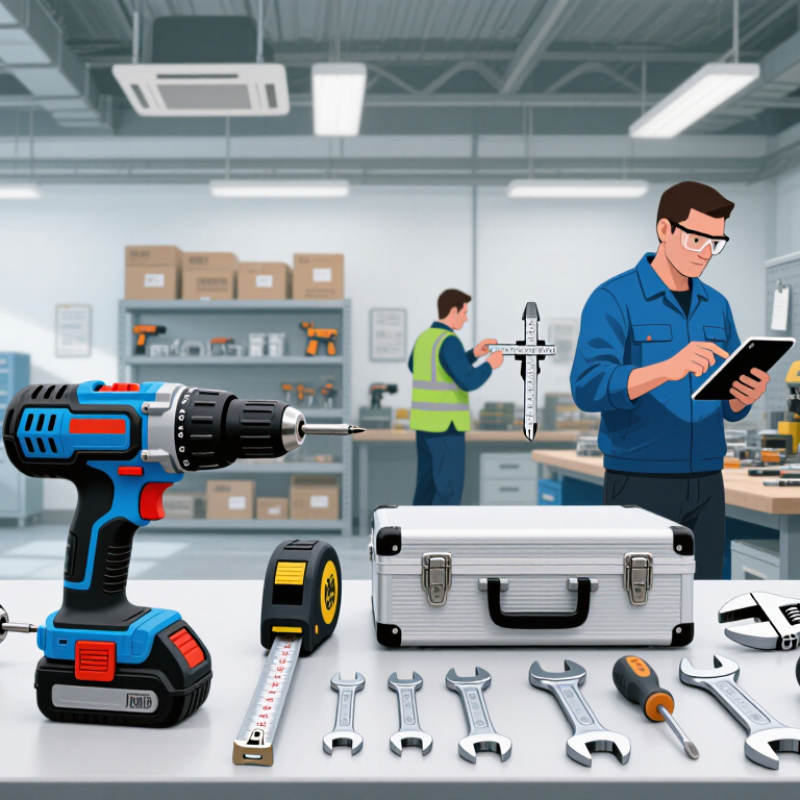
China Best Contractor Tools Supplier for Global Buyers?

What Makes China a Leading Contractor Tools Supplier?

China has become a leading contractor tools supplier because it combines manufacturing depth with flexible production capacity. Years of sourcing experience show this clearly: one industrial district may support forging, machining, heat treatment, coating, and packaging within a short distance. This structure can reduce transport between production stages and shorten development cycles. Buyers can request adjustable handles, metric sizes, reinforced joints, or packaging suited to different markets. Small details matter.

Professional suppliers usually control steel selection, hardness, balance, and surface treatment through documented procedures. During factory visits, buyers may inspect incoming materials, review inspection records, and test samples under load. Common checks include torque resistance, grip comfort, corrosion protection, and dimensional accuracy. Clear drawings and sampling standards make communication more reliable. However, certificates alone do not prove consistent performance. A tool can pass one test and still disappoint in daily use.

Reliable cooperation also depends on production visibility. Regular updates, pre-shipment inspections, traceable cartons, and carefully prepared spare parts can prevent costly delays. Experienced exporters understand container planning, export documents, and destination requirements. Yet China is not a perfect source for every project. Supplier quality varies, and low prices may hide weaker steel or rushed inspection. Buyers should compare test results, factory capability, response speed, and after-sales responsibility instead of choosing only by quotation. Some lessons are learned late. That is why practical trials remain necessary before larger orders.

Key Product Categories for Global Construction Buyers

China Best Contractor Tools Supplier for Global Buyers?

Key Product Categories for Global Construction Buyers

Global construction buyers usually need more than a low quotation. They need dependable tools for different site conditions, project sizes, and working habits. Hand tools remain essential, including hammers, pliers, wrenches, screwdrivers, measuring tools, and cutting equipment. Forged steel, balanced handles, clear size markings, and corrosion-resistant finishes can improve daily efficiency.

Power tools form another major category. Drills, grinders, saws, impact drivers, and rotary hammers should match local voltage requirements and jobsite demands. Buyers should check motor performance, battery capacity, charging systems, spare parts, and safety controls. Dust protection matters on concrete sites. So does noise.

Site equipment deserves equal attention. Buyers may require extension reels, work lights, ladders, tool storage, generators, and compact lifting equipment. Personal protective equipment, such as helmets, gloves, safety glasses, and protective footwear, supports safer operations. However, equipment selection should follow local regulations and documented testing requirements.

From practical sourcing experience, sample testing reveals details that catalog photos hide. A wrench may feel comfortable but weaken under repeated torque. A tool case may look strong but crack during winter transport. These small failures become expensive on international projects. Reliable suppliers should provide inspection records, material information, packaging tests, and consistent production samples. The lowest price can be attractive. It is not always the best value. Even experienced buyers sometimes overlook after-sales response time, which deserves careful review.

China Best Contractor Tools Supplier for Global Buyers? - Key Product Categories for Global Construction Buyers
Product Category Typical Tools Common Construction Applications Typical Technical Specifications Key Buyer Evaluation Dimensions Common Compliance or Quality References Recommended Import Documentation
Cordless Power Tools Drill drivers, impact drivers, rotary hammers, angle grinders, reciprocating saws General installation, interior fit-out, metalwork, maintenance, fastening, drilling and light demolition 12 V, 18 V or 20 V nominal battery platforms are common; tool speed, torque, impact rate and chuck or disc size vary by model. Battery capacity is commonly stated in ampere-hours (Ah). Battery compatibility, charger voltage, torque consistency, duty cycle, spare-battery availability, overheating protection and serviceability IEC 62841 series for many hand-held motor-operated electric tools; applicable electrical safety and electromagnetic compatibility requirements Product specification sheet, battery and charger details, safety manual, test reports, carton dimensions and lithium-battery transport documents when applicable
Concrete Drilling and Demolition Rotary hammers, demolition hammers, core drills, concrete breakers Anchor-hole drilling, concrete penetration, tile removal, slab repair and controlled demolition Common parameters include rated input power, impact energy in joules, no-load speed, impact rate and tool-holder type such as SDS-Plus or SDS-Max. Impact energy, vibration level, thermal protection, dust management, bit retention, operating mode selection and replacement-part supply IEC 62841 where applicable; declared hand-arm vibration values should be reviewed against the intended working duration and local regulations Vibration test data, noise data, operating instructions, accessories list, spare-parts list and packaging drop-test information
Cutting and Grinding Angle grinders, cut-off saws, circular saws, tile cutters and bench grinders Rebar cutting, masonry cutting, pipe preparation, metal finishing, timber cutting and tile installation Typical specifications include disc or blade diameter, rated power, no-load speed, maximum cutting depth and arbor size. Common abrasive-disc sizes include approximately 100–230 mm, depending on the tool class. Guard design, spindle lock, restart protection, overload control, blade compatibility, cutting accuracy and dust extraction connection IEC 62841 series where applicable; abrasive wheels and cutting accessories must also match the relevant product and safety requirements Technical drawings, guard and accessory specifications, user manual, safety warnings, test reports and spare carbon-brush or switch information
Fastening and Assembly Impact wrenches, electric screwdrivers, nailers, staplers and rivet tools Steel-frame assembly, HVAC installation, roofing, furniture installation, drywall work and equipment maintenance Key data includes torque range, fastening capacity, drive size, stroke rate, magazine capacity and compatible fastener dimensions. Pneumatic models are commonly specified by working pressure and air consumption. Torque repeatability, fastening speed, depth control, trigger design, jam-clearing access, air efficiency and calibration capability IEC 62841 where applicable; pneumatic products should be assessed for pressure safety and conformity with the destination market's machinery rules Torque or performance test records, air-consumption data, compatible fastener chart, maintenance schedule and pressure ratings
Measuring and Layout Tools Laser distance meters, rotary lasers, digital levels, measuring tapes and inspection cameras Setting-out, leveling, alignment, room measurement, quantity surveying and installation inspection Specifications commonly include measuring range, stated accuracy, laser class, ingress protection rating, battery type and operating temperature range. Accuracy verification, visibility in bright conditions, calibration process, display readability, tripod compatibility and data-export functions IEC 60825-1 for laser safety classification where applicable; electrical and electromagnetic compatibility requirements may also apply Calibration certificate or inspection record, accuracy specification, laser classification, battery information and user safety instructions
Concrete Mixing and Surface Preparation Hand-held mixers, paddle mixers, concrete vibrators, floor grinders and scarifiers Mortar and adhesive mixing, concrete consolidation, coating removal, floor leveling and surface preparation Typical data includes motor power, mixing volume, paddle diameter, vibration frequency, grinding width and dust-extraction port size. Mixing consistency, overload resistance, ergonomic handle design, vibration control, consumable life and cleaning access IEC 62841 where applicable; dust-control performance should be checked against the required workplace exposure-control procedures Performance test report, recommended material viscosity or batch size, consumable specification, dust-control instructions and maintenance parts list
Air Compressors and Pneumatic Tools Portable compressors, impact wrenches, air nailers, blow guns and spray equipment Framing, vehicle repair, equipment cleaning, spray finishing and continuous workshop operation Important parameters include tank volume, maximum pressure, free air delivery, motor power, duty cycle and noise level. Pneumatic tool requirements should be matched to compressor output. Actual air delivery, pressure stability, tank and valve safety, duty cycle, moisture separation, noise control and local power compatibility Applicable pressure-equipment, electrical-safety and machinery requirements in the destination market; verify the required conformity route before shipment Pressure rating, tank inspection records, valve specifications, electrical data, air-delivery test results and maintenance instructions
Generators and Site Power Portable generators, inverter generators, distribution boxes and extension systems Temporary site power, emergency backup, remote construction and outdoor equipment operation Common specifications include rated and maximum output, output voltage and frequency, fuel type, fuel-tank capacity, runtime and noise level. Continuous output, voltage stability, overload protection, grounding, fuel efficiency, starting performance, socket configuration and service access Destination-market electrical, emissions, noise and generator safety requirements; applicable IEC or regional standards should be confirmed by product type Electrical test report, output waveform data where relevant, emissions information, wiring diagram, grounding instructions and fuel-safety documentation
Pumps and Water Management Submersible pumps, drainage pumps, slurry pumps and pressure-washing pumps Site dewatering, basement drainage, equipment cleaning, wastewater transfer and flood response Typical parameters include flow rate, total head, pump diameter, solids-handling capacity, motor power, cable length and ingress protection. Flow performance at the required head, seal quality, dry-run protection, corrosion resistance, float-switch reliability and service-part availability Electrical safety and ingress-protection requirements; materials should be checked for compatibility with clean water, wastewater or abrasive slurry Pump curve, material declaration, electrical test report, operating limits, seal information, installation manual and spare-parts list
Hand Tools and Site Accessories Wrenches, pliers, hammers, trowels, clamps, tool cases, bits and saw blades Daily installation, repair, carpentry, masonry, mechanical assembly and general site maintenance Product data commonly covers material grade, hardness, dimensions, handle construction, working load or capacity and accessory compatibility. Material consistency, dimensional accuracy, corrosion resistance, grip comfort, edge retention, packaging efficiency and replacement availability Relevant national or international hand-tool standards, material declarations and product-specific safety requirements Material specification, dimensional drawing, hardness report where relevant, load or durability test record and packaging specification
Personal Protective Equipment Safety helmets, eye protection, hearing protection, gloves, respirators, safety footwear and fall-arrest equipment Protection against impact, dust, noise, falling objects, chemical exposure, cuts and work-at-height hazards Product specifications may include protection class, impact rating, filter class, attenuation value, cut resistance, slip resistance and size range. Correct hazard classification, fit and comfort, traceability, shelf life, replacement components, user training and destination-market certification Applicable EN, ANSI, CSA, AS/NZS or other destination-market PPE standards; the required standard depends on the hazard and product type Declaration of conformity, certification or test report, material information, size chart, user instructions, production-batch traceability and shelf-life data
Note: Technical values are representative purchasing dimensions rather than universal specifications. Buyers should confirm the exact model, destination-market requirements, electrical system, certification route, packaging data and warranty terms before placing an order.

How to Evaluate Chinese Contractor Tool Manufacturers

China Best Contractor Tools Supplier for Global Buyers?

How to Evaluate Chinese Contractor Tool Manufacturers

Choosing a Chinese contractor tool manufacturer requires more than comparing online prices. A reliable evaluation starts with factory evidence, not attractive catalog images. Request a live video tour or visit the production site when possible. Check machining areas, assembly stations, storage conditions, and worker safety practices. Ask who makes critical parts and who controls final inspection. Details matter.

Test samples under realistic job conditions. Measure grip comfort, balance, torque consistency, battery performance, and wear after repeated use. Review drawings, material specifications, inspection records, and packaging tests. A capable supplier should explain tolerances clearly and share corrective actions when defects occur. Verify relevant product certifications for each target market, rather than accepting one general certificate. Confirm warranty terms, spare-part availability, lead times, and communication responsibilities in writing.

Look beyond the first shipment. Request a small trial order with defined acceptance standards. Inspect random units before dispatch, preferably through an independent inspection service. Some suppliers promise more than their systems can support. That is a useful warning. A factory may have modern equipment yet weak process discipline. I have also seen buyers focus heavily on price and overlook replacement parts, causing costly delays later. No factory is perfect. The practical goal is transparent cooperation, stable quality, and a clear response when something goes wrong.

How to Evaluate Chinese Contractor Tool Manufacturers

A practical buyer scorecard for comparing supplier capabilities without relying on company or brand names.

The 100-point evaluation model reflects common international procurement requirements: product quality and testing should receive the highest priority, followed by compliance, production reliability, service capability, and total landed cost. Buyers should verify each score with audit records, sample testing, certifications, production data, and shipment references.

Quality Standards, Certifications, and Export Compliance

Choosing a Chinese contractor tools supplier requires more than comparing unit prices. Global buyers should review factory experience, quality systems, and export records. A reliable supplier can provide material certificates, inspection reports, and traceable batch numbers. These records connect each tool to production dates, raw materials, and final checks. Look for documented testing of load capacity, insulation, hardness, torque, or corrosion resistance, depending on the product. Small details matter. For example, a torque wrench should arrive with calibration evidence, not only attractive packaging. Hand tools need consistent dimensions, clean edges, secure handles, and readable markings. Buyers sometimes focus on samples, then discover uneven quality in bulk shipments. That gap deserves careful reflection.

Certifications must match the destination market and product category. A supplier should explain which standards apply and share current, verifiable documents. Buyers should check certificate scope, laboratory details, validity dates, and model numbers. An expired certificate can create delays at customs or during distributor audits. Export compliance also includes accurate invoices, packing lists, origin data, and product descriptions. Packaging should protect sharp edges, prevent moisture damage, and show handling information clearly. Before a large order, request an independent pre-shipment inspection. Keep approval samples and written specifications. They become useful evidence when disagreements occur. No system is perfect. Factories can miss defects, and buyers can miss unclear clauses. A practical supplier welcomes corrective action, records the cause, and confirms the fix with new samples.

Ordering, Pricing, Shipping, and Supplier Management

China Best Contractor Tools Supplier for Global Buyers?

Ordering contractor tools from China requires more than comparing catalog prices. Define each tool by material, dimensions, working load, finish, packaging, and testing requirements. Share drawings or clear photographs when specifications are difficult to describe. Request production samples before placing a large order. Small details matter.

Ask for a quotation with unit price, minimum order quantity, tooling charges, packaging costs, and payment terms. Compare the total landed cost, not only the factory price. Confirm whether the quote uses EXW, FOB, or another shipping term. A cheap offer may hide expensive inland transport or weak packaging. It happens.

Shipping plans should match the tool type and delivery schedule. Confirm carton dimensions, pallet limits, loading quantity, export documents, and estimated transit time. Keep a written inspection standard for appearance, function, labels, and quantity. Pre-shipment inspection can identify loose handles, uneven coatings, or damaged cartons before loading.

Supplier management needs regular communication and measurable records. Use one contact for commercial issues and another for quality follow-up when possible. Review production updates, inspection results, shipment photos, and corrective actions. Maintain a simple supplier scorecard covering quality, response time, delivery accuracy, and complaint handling. Do not rely on promises alone. Build evidence. Recheck critical specifications after any material or process change. A reliable supplier relationship grows through clear expectations, honest feedback, and consistent payment practices.

© Copyright - Pro Tool & Supply - Site by SVM E-Marketing Solutions - Sitemap - Privacy policy