- Products
- Air Compressors & Air Tools
- Climate Control
- Compaction Equipment
- Concrete Cutting Tools & Equipment
- Concrete and Masonry
- Demolition & Excavation
- Electrical & Mechanical
- Fasteners and Anchoring Adhesives
- Floor Protection
- Generators and Welders
- Hand Tools
- Heaters
- Janitorial and Office Supplies
- Jobsite Protection
- Ladders & Storage
- Lighting & Lighting Accessories
- Man Lifts
- Material Handling Equipment
- Power Tools
- Pressure Washers & Pumps
- Safety Gear
- Safety Products
- Saws
- Surface Preparation
- SEASONAL PRODUCTS
- Rentals
- Air Compressor and Air Tool Rentals
- Climate Control Rental
- Compaction Rentals
- Concrete Equipment Rentals
- Demolition & Excavation Equipment Rentals
- Concrete Floor Grinder Rentals
- General Construction Equipment Rentals
- Generator Rentals and Welder Rentals
- Heater Rentals
- Light Tower Rentals
- Man Lift Rentals in Massachusetts and Rhode Island
- Material Handling Equipment Rentals
- Pressure Washer & Pump Rentals
- Saw Rentals in New England
- SEASONAL PRODUCTS
- Products
- Air Compressors & Air Tools
- Climate Control
- Compaction Equipment
- Concrete Cutting Tools & Equipment
- Demolition & Excavation
- Electrical & Mechanical
- Floor Protection
- Generators and Welders
- Construction Heaters
- Construction Ladders, Staging, & Storage
- Construction Lighting
- Man Lifts
- Material Handling Equipment
- Industrial Janitorial and Office Supplies
- Pressure Washers & Pumps
- Construction Safety Products
- Construction Safety Gear
- Surface Preparation
- Building Protection
- Diesel Accessories
- Zero Emissions
- Rentals
- Air Compressor and Air Tool Rentals
- Climate Control Rental
- Compaction Rentals
- Concrete Equipment Rental
- Demolition & Excavation Equipment Rental
- General Construction Equipment Rental
- Generator Rentals and Welder Rentals
- Construction Heaters Rental
- Light Tower Rentals
- Man Lift Rentals
- Material Handling Equipment Rental
- Pressure Washer & Pump Rentals
- Saw Rentals in New England
- Concrete Floor Grinder Rentals
- Zero Emissions Rentals
- Repairs & Used
- Parts
- Blog
- Services
- Resources
- About Us
- Contact Us
Sales & Rental of Construction | Industrial Equipment & Supplies


2026 Top Types of Trim Tools for Global Buyers?
Choosing the right trim tools in 2026 requires more than comparing prices or counting product options. Global buyers must match each tool with the material, edge profile, production volume, and operator’s skill. This guide reviews practical categories, including manual edge trimmers, carbide deburring tools, ceramic cutters, laminate trimmers, and powered finishing systems. Each type has a different working range. Fit matters. A sharp carbide blade may deliver clean results on rigid plastic, yet damage soft leather or thin film. A manual tool can suit small batches, while a powered model may reduce fatigue in continuous production.
The comparison also considers blade life, grip comfort, replacement parts, packaging quality, and supplier communication. These details often decide whether a tool performs reliably after several weeks, not just during a product demonstration. Buyers should request material samples, operating instructions, inspection records, and clear warranty terms before placing larger orders. Trusted suppliers should explain tolerances honestly and identify possible limitations. No single tool wins every application. That assumption is easy to make—and often wrong. Testing remains essential, especially when surface finish, waste control, or dimensional accuracy affects the final product. Our evaluation is practical, but it cannot replace a controlled trial in your own workshop. Edges vary. Even experienced users can overlook vibration, inconsistent pressure, or a poorly matched blade. By understanding these risks, international buyers can select trim tools with greater confidence, reduce avoidable returns, and build a more dependable purchasing process.
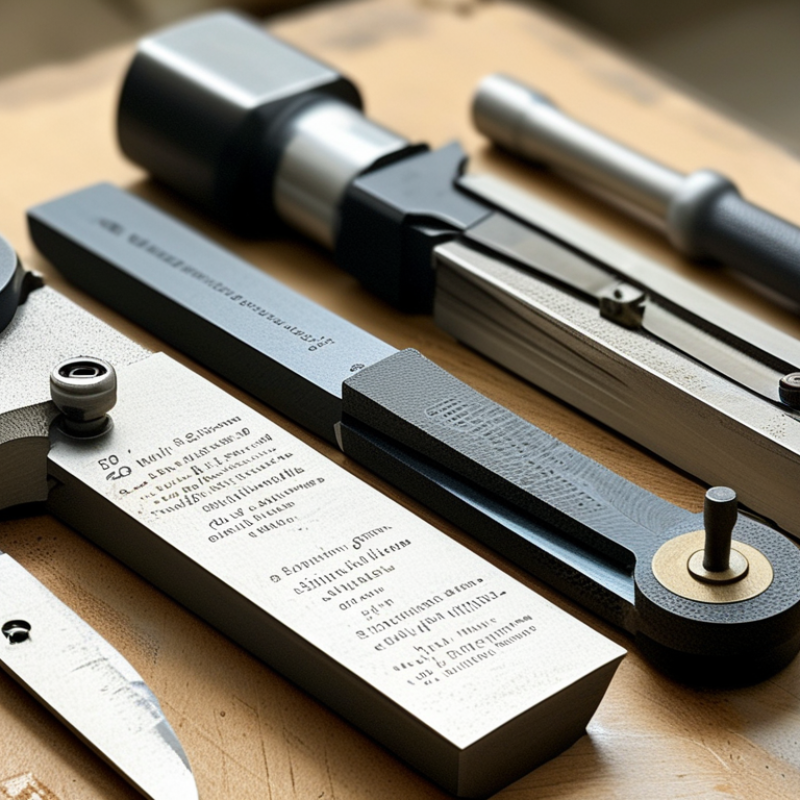
Table of Contents
[Hide]
What Are Trim Tools and How Are They Classified?
Trim tools are handheld or powered instruments used to remove, shape, or refine excess material. They appear in woodworking, plastics processing, metal fabrication, construction, and interior installation. A clean trim line can prevent gaps, rough edges, and costly rework.
The clearest classification is based on function. Cutting tools use blades, shears, or rotary wheels to separate thin material. Shaving tools remove small layers from wood, plastic, or composite surfaces. Deburring tools smooth sharp edges around drilled holes and cut sections. Scraping tools lift adhesive, paint, sealant, or surface residue. Edge-finishing tools create a controlled profile, such as a rounded or beveled corner.
Power source creates another useful classification. Manual tools offer direct control and suit delicate work or low-volume production. Electric and pneumatic tools provide faster, more consistent trimming. Cordless models improve mobility, but battery weight and charging time deserve attention. Some tools accept interchangeable cutters, while others are designed for one material and one task.
In practical sourcing evaluations, I check grip comfort, cutting stability, replacement-part access, and dust control. These details often matter more than appearance. Material compatibility is critical. A blade for soft plastic may chip when used on reinforced panels. The categories are not perfectly clean. One compact rotary tool can cut, grind, polish, and deburr, depending on its attachment. Global buyers should compare the tool’s actual working range, not only its catalog name. Misclassification remains an easy purchasing mistake.
2026 Top Types of Trim Tools for Global Buyers? - What Are Trim Tools and How Are They Classified?
| Tool Type | Classification | Primary Function | Typical Materials | Common Cutting or Trimming Range | Typical Applications | Main Advantages | Key Limitations | Important Buying Factors |
|---|---|---|---|---|---|---|---|---|
| Manual Flush-Cut Trimmer | Hand-operated precision tool | Removes small overhangs and produces a flush edge along a reference surface. | Laminate, PVC edge banding, veneer, soft wood, plastic sheet | Usually suitable for thin edge materials of approximately 0.4–3 mm | Furniture repair, cabinet assembly, small workshops, installation work | Low cost, portable, no electricity required, easy to use on-site | Slower than powered tools; less suitable for thick or very hard materials | Blade sharpness, replaceable blades, grip comfort, cutting consistency, spare-part availability |
| Edge-Banding Trimmer | Manual or powered edge-finishing tool | Trims the top and bottom edges of applied edge banding to align it with a panel. | PVC, ABS, melamine, veneer, wood edge banding | Commonly handles edge-band thicknesses of approximately 0.4–3 mm | Panel furniture, kitchen cabinets, office furniture, shelving | Designed for repeatable edge alignment and clean panel finishing | Tool geometry may be limited to specific panel and banding thicknesses | Adjustability, dual-side cutting, blade replacement, compatibility with panel thickness, ergonomic design |
| Laminate Trimmer | Compact electric router | Trims laminate and veneer flush with the substrate after bonding. | High-pressure laminate, veneer, plywood, MDF, particleboard, plastic laminate | Commonly uses 6 mm or 1/4 in collets; cutting depth depends on the bit and base adjustment | Countertops, cabinets, doors, worktops, decorative panels | Fast material removal, good control, suitable for straight and curved edges | Creates dust and noise; requires electrical safety, stable handling, and correct bit selection | Power rating, variable speed, collet standard, base visibility, dust extraction, voltage and plug configuration |
| Flush-Trim Router Bit | Rotary cutting accessory | Uses a bearing or guide to trim one material flush to the edge of another. | Wood, plywood, MDF, laminate, veneer, some plastics | Common shank sizes include 6 mm, 8 mm, 1/4 in, and 1/2 in; cutting lengths vary by design | Template routing, duplicate parts, laminate trimming, pattern work | High repeatability and accurate template-guided cutting | Incorrect feed direction or dull carbide can cause chipping, burning, or kickback | Shank diameter, cutting length, bearing position, carbide quality, router compatibility, maximum RPM |
| Chamfer and Bevel Trimmer | Edge-shaping cutter | Creates an angled or beveled edge to remove sharp corners and improve appearance. | Wood, MDF, plywood, plastics, composite panels | Common angles include 15°, 22.5°, 30°, 45°, and 60° | Furniture edges, decorative profiles, counters, protective edge preparation | Improves edge appearance and reduces sharp corners | Not intended for flush trimming; angle accuracy depends on the guide and setup | Cutting angle, bearing size, guide stability, material compatibility, edge finish, replacement cutter availability |
| Radius or Round-Over Trimmer | Profile-forming cutter | Rounds a sharp edge to create a smooth radius profile. | Solid wood, MDF, plywood, plastics, composite boards | Typical radius sizes range from approximately 1.5 mm to 12.7 mm | Tabletops, furniture components, handrails, toy parts, decorative panels | Produces a consistent decorative and touch-safe edge | Requires stable workholding; thin materials may not provide enough edge support | Radius size, bearing design, cutter balance, shank compatibility, allowable material thickness |
| Deburring Tool | Manual finishing tool | Removes burrs, sharp edges, and minor flash remaining after cutting, drilling, or machining. | Aluminum, mild steel, stainless steel, copper, brass, plastic | Generally used for light edge finishing rather than bulk material removal | Machined parts, sheet-metal edges, injection-molded parts, maintenance work | Simple, portable, and suitable for irregular shapes and internal holes | Slow for high-volume production; excessive pressure may damage finished surfaces | Blade material, blade angle, handle design, internal-hole capability, replaceable blade system |
| Pneumatic or Electric Nipper | Powered cutting and trimming tool | Cuts gates, runners, flash, wires, or small plastic and metal projections. | Thermoplastics, rubber, aluminum, copper wire, light-gauge metal | Capacity depends on jaw geometry and material hardness; commonly used for small cross-sections | Injection molding, electronics assembly, cable processing, light industrial production | Fast repetitive cutting, reduced operator fatigue, suitable for production lines | Requires air or electrical supply; jaw wear and incorrect capacity can reduce service life | Cutting capacity, jaw profile, cycle rate, operating pressure or voltage, noise, replacement jaws, safety controls |
| Plastic Flash Trimmer | Specialized hand or powered plastic-finishing tool | Removes excess flash, parting-line material, and molding residue from plastic components. | ABS, PP, PE, PVC, nylon, polycarbonate, rubber-like polymers | Designed for thin flash and small projections; capacity varies by blade and polymer hardness | Injection-molded parts, rotationally molded products, consumer-product assembly | Improves part appearance and fit without requiring extensive machining | Blade selection must match polymer hardness; excessive force can gouge the component | Blade profile, polymer compatibility, edge protection, ergonomic grip, replacement blades, static-control requirements |
| Oscillating Multi-Tool Trim Blade | Oscillating powered accessory | Makes controlled flush cuts, plunge cuts, notches, and trimming operations in confined spaces. | Wood, drywall, plastic, soft metal, grout, composite materials | Blade widths commonly range from approximately 10–65 mm; cutting depth depends on the blade | Renovation, door-frame trimming, flooring installation, repair work, access cutting | Useful in tight spaces and for flush cuts against adjacent surfaces | Cutting speed is lower than some dedicated saws; vibration and blade wear can be significant | Oscillation angle, speed control, blade interface, battery or corded configuration, vibration control, dust extraction |
| Metal Sheet Edge Trimmer | Manual or powered sheet-metal tool | Trims, notches, or finishes sheet-metal edges while reducing sharp projections. | Aluminum, galvanized steel, mild steel, copper, thin stainless steel | Capacity varies by tool; light-duty models are commonly used for thin sheet materials | Ductwork, enclosures, roofing components, automotive repair, fabrication | Provides controlled edge work with less setup than a machine tool | Material thickness and hardness are limited; improper use may distort sheet metal | Rated thickness, jaw clearance, cutting geometry, corrosion resistance, handle leverage, operator protection |
| CNC Edge-Trimming Cutter | Automated machine-tool accessory | Performs programmed contour trimming, profiling, and edge finishing with repeatable accuracy. | Wood panels, composites, plastics, aluminum, engineered boards | Cutting diameter and depth depend on spindle, tool geometry, material, and machine parameters | High-volume furniture, signage, composite parts, cabinet production, precision components | High repeatability, efficient batch production, and compatibility with complex profiles | Higher initial investment; requires programming, workholding, dust or chip management, and tool maintenance | Tool diameter, shank size, flute design, coating, spindle speed, feed rate, runout, machine compatibility |
Buyer’s classification guide: Trim tools are commonly classified by operating method—manual, electric, pneumatic, or CNC—by material—wood, plastic, metal, or composites—and by finishing purpose, such as flush trimming, edge profiling, deburring, flash removal, or precision contour cutting. Actual capacity should always be verified against the tool’s technical specification, material hardness, blade or cutter geometry, and operating conditions.
Related Posts
-
Top Power Tools for 2026 What Should Global Buyers Consider
-
Why Do You Need Essential Carpentry Tools for Your Projects?
-

Top 10 Machine Tools Revolutionizing Modern Manufacturing Today?
-

10 Essential Tips for Using All Tools Effectively in Your Projects?
-

Top 10 Pressure Washer Tools Every Homeowner Needs?
-
Top China Best Power Tools for Every Home Improvement Project?

© Copyright - Pro Tool & Supply - Site by SVM E-Marketing Solutions - Sitemap
- Privacy policy