- Products
- Air Compressors & Air Tools
- Climate Control
- Compaction Equipment
- Concrete Cutting Tools & Equipment
- Concrete and Masonry
- Demolition & Excavation
- Electrical & Mechanical
- Fasteners and Anchoring Adhesives
- Floor Protection
- Generators and Welders
- Hand Tools
- Heaters
- Janitorial and Office Supplies
- Jobsite Protection
- Ladders & Storage
- Lighting & Lighting Accessories
- Man Lifts
- Material Handling Equipment
- Power Tools
- Pressure Washers & Pumps
- Safety Gear
- Safety Products
- Saws
- Surface Preparation
- SEASONAL PRODUCTS
- Rentals
- Air Compressor and Air Tool Rentals
- Climate Control Rental
- Compaction Rentals
- Concrete Equipment Rentals
- Demolition & Excavation Equipment Rentals
- Concrete Floor Grinder Rentals
- General Construction Equipment Rentals
- Generator Rentals and Welder Rentals
- Heater Rentals
- Light Tower Rentals
- Man Lift Rentals in Massachusetts and Rhode Island
- Material Handling Equipment Rentals
- Pressure Washer & Pump Rentals
- Saw Rentals in New England
- SEASONAL PRODUCTS
- Products
- Air Compressors & Air Tools
- Climate Control
- Compaction Equipment
- Concrete Cutting Tools & Equipment
- Demolition & Excavation
- Electrical & Mechanical
- Floor Protection
- Generators and Welders
- Construction Heaters
- Construction Ladders, Staging, & Storage
- Construction Lighting
- Man Lifts
- Material Handling Equipment
- Industrial Janitorial and Office Supplies
- Pressure Washers & Pumps
- Construction Safety Products
- Construction Safety Gear
- Surface Preparation
- Building Protection
- Diesel Accessories
- Zero Emissions
- Rentals
- Air Compressor and Air Tool Rentals
- Climate Control Rental
- Compaction Rentals
- Concrete Equipment Rental
- Demolition & Excavation Equipment Rental
- General Construction Equipment Rental
- Generator Rentals and Welder Rentals
- Construction Heaters Rental
- Light Tower Rentals
- Man Lift Rentals
- Material Handling Equipment Rental
- Pressure Washer & Pump Rentals
- Saw Rentals in New England
- Concrete Floor Grinder Rentals
- Zero Emissions Rentals
- Repairs & Used
- Parts
- Blog
- Services
- Resources
- About Us
- Contact Us
Sales & Rental of Construction | Industrial Equipment & Supplies


Why Is My Pull Out Ironing Board Drawer Stuck?
A stuck Pull Out Ironing Board Drawer can turn a simple ironing task into an irritating household problem. The drawer may stop halfway, scrape against the cabinet, or refuse to move after years of use. In many homes, this happens quietly. Dust gathers inside the runners, screws loosen, and the board slowly shifts out of alignment.
This guide examines the most common reasons behind the problem. You may find folded fabric blocking the rear section, a bent metal runner, or a swollen wooden panel near the drawer opening. We will also consider weight, installation errors, and worn hardware. These details matter because forcing the drawer can damage both the cabinet and the ironing board mechanism. A gentle pull, a flashlight, and a careful inspection often reveal more than strength.
The advice is based on practical furniture repair methods and manufacturer-style safety checks. However, not every cabinet uses the same sliding system. That is easy to overlook. Before removing parts, check the product instructions and identify the runner type. Some rails release with small levers, while others require access to hidden screws. You should also protect your fingers from sharp edges and avoid using excessive oil, which can attract more dust. By understanding the cause first, you can choose a safer repair and decide when professional help is the wiser option.
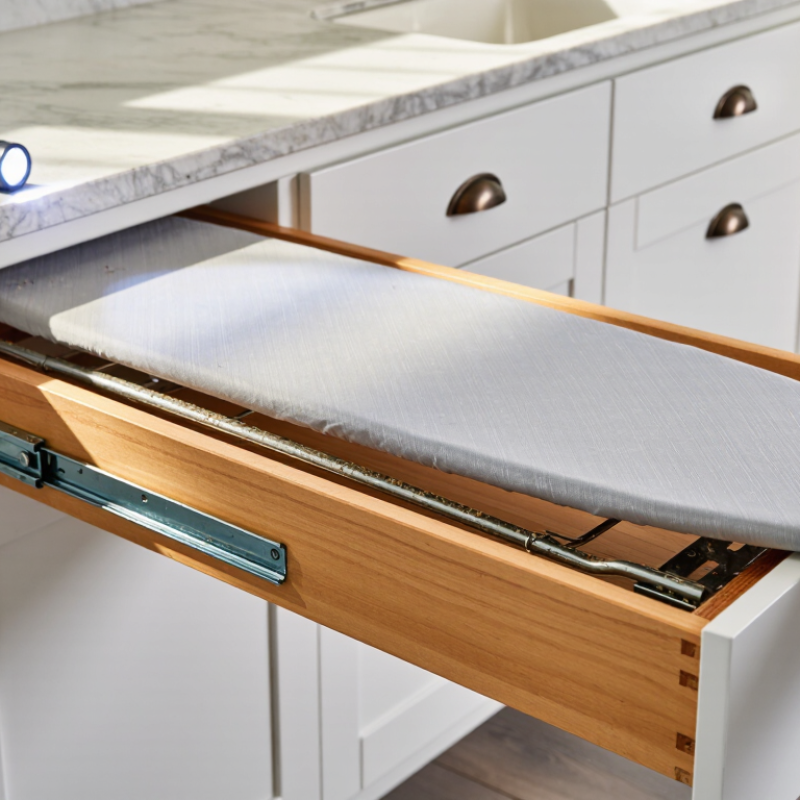
Table of Contents [Hide]
Common Causes of a Stuck Pull-Out Ironing Board Drawer
Why Is My Pull Out Ironing Board Drawer Stuck?
Common Causes of a Stuck Pull-Out Ironing Board Drawer
A pull-out ironing board drawer often sticks because something inside has shifted. An overloaded compartment can press against the sliding rails. Even one folded towel may create enough pressure. Check whether the iron, spray bottle, or board cover is catching on the cabinet frame. Remove everything first, and make sure the iron is cool and unplugged.
Dust and fabric lint can collect along the runners. Small particles may feel harmless, but they create rough movement and uneven resistance. Loose mounting screws can also tilt the rails slightly. Look for gaps on one side of the drawer. If the drawer moves farther on one edge, the runners may be misaligned. A small level can help confirm this.
Moisture causes trouble too. Steam from frequent ironing can swell unfinished wood around the opening. The drawer may then rub against the upper or side panel. Do not force it. I once pulled too hard on a similar drawer and loosened the entire frame, which made the repair worse. A flashlight helps locate the contact point. Tighten accessible screws, clear debris, and test the drawer gently. If the rails look bent or the cabinet has swollen, replacing one small part may not solve the real problem. Check the installation carefully.
Why Is My Pull Out Ironing Board Drawer Stuck? - Common Causes of a Stuck Pull-Out Ironing Board Drawer
| Common Cause | Typical Signs | How to Check It | Recommended Solution | Tools or Materials | Difficulty | Typical Time |
|---|---|---|---|---|---|---|
| Overloaded drawer | The drawer feels unusually heavy, sags at the front, or stops after opening a short distance. | Remove the ironing board and any stored items, then test the drawer without the load. | Reduce the stored weight and keep the board centered. Check the cabinet instructions for the permitted load. | None | Easy | 5–10 minutes |
| Misaligned drawer runners | One side is higher than the other, the drawer rubs against the cabinet, or it moves diagonally. | Compare the gaps on both sides and inspect whether the mounting screws are loose or uneven. | Loosen the runner screws slightly, realign the runners, and tighten the screws while the drawer is level. | Screwdriver, level | Moderate | 20–40 minutes |
| Debris in the runners | The drawer catches at one point, makes a scraping sound, or feels gritty during movement. | Use a flashlight to inspect both runners for lint, thread, dust, or small objects. | Remove the obstruction with a vacuum or soft brush. Wipe the runners with a dry, clean cloth. | Flashlight, vacuum, soft brush, cloth | Easy | 10–20 minutes |
| Damaged or worn slide hardware | The drawer wobbles, drops slightly, binds repeatedly, or does not stay on a straight track. | Inspect the rollers, ball bearings, brackets, and locking clips for cracks, bending, or missing parts. | Replace damaged slide components with matching hardware designed for the drawer size and load. | Screwdriver, replacement slides or clips | Moderate | 30–60 minutes |
| Loose mounting screws | The drawer worked normally before becoming crooked, loose, or difficult to close. | Check all visible screws on the drawer sides, cabinet frame, and support brackets. | Support the drawer, realign the hardware, and tighten the screws without overtightening or stripping them. | Screwdriver, replacement screws if needed | Easy | 15–30 minutes |
| Warped cabinet or drawer panel | The drawer binds more in humid conditions or rubs against a fixed cabinet surface. | Look for swelling, bowed panels, uneven gaps, or contact marks along the drawer opening. | Remove pressure from the drawer, correct the panel if practical, and address moisture before reinstalling the hardware. | Level, screwdriver, moisture-control materials | Moderate | 1–3 hours |
| Safety lock or release not disengaged | The drawer opens slightly and then stops firmly, even though the runners appear aligned. | Check both sides for a release lever, locking tab, or anti-removal catch. Do not force the drawer. | Operate the release mechanism as designed while gently supporting the drawer. | Flashlight; screwdriver only if specified by the hardware design | Easy | 5–15 minutes |
| Ironing board frame is folded incorrectly | The drawer stops because the folded legs, hinge, or board edge projects beyond its intended space. | Open the drawer as far as possible and check whether the folded frame touches the cabinet or runner. | Remove the board if possible, refold the legs and support frame, then reinstall it in the correct position. | None | Easy | 10–20 minutes |
| Insufficient clearance | The drawer rubs against a nearby door, shelf, trim piece, or adjacent cabinet component. | Check the full travel path for contact marks and confirm that surrounding doors and panels are properly adjusted. | Adjust the interfering component or reposition the drawer hardware while maintaining safe structural support. | Screwdriver, measuring tape, level | Moderate | 30–90 minutes |
| Rust, dried lubricant, or corrosion | The movement is stiff, uneven, or accompanied by squeaking, especially after prolonged storage. | Inspect metal surfaces for rust, residue, discoloration, or restricted roller movement. | Clean the hardware and apply a lubricant only if the slide manufacturer permits it. Replace severely corroded parts. | Cloth, approved slide lubricant, replacement hardware if necessary | Moderate | 20–45 minutes |
| Drawer front or handle interference | The front panel shifts, the handle feels loose, or the drawer catches near the cabinet face. | Inspect the handle, front panel, and surrounding trim for loose fittings or protruding edges. | Tighten the handle and mounting hardware. Realign or repair the front panel if it has shifted. | Screwdriver, small wrench if required | Easy | 15–30 minutes |
| Excessive force or impact damage | The drawer became stuck immediately after being slammed, pulled sideways, or struck. | Inspect the runners, brackets, drawer box, and cabinet opening for bends, cracks, or displaced parts. | Stop forcing the drawer. Straighten only minor hardware damage; replace cracked or bent load-bearing parts. | Screwdriver, level, replacement hardware | Moderate | 30–90 minutes |

© Copyright - Pro Tool & Supply - Site by SVM E-Marketing Solutions - Sitemap
- Privacy policy