- Products
- Air Compressors & Air Tools
- Climate Control
- Compaction Equipment
- Concrete Cutting Tools & Equipment
- Concrete and Masonry
- Demolition & Excavation
- Electrical & Mechanical
- Fasteners and Anchoring Adhesives
- Floor Protection
- Generators and Welders
- Hand Tools
- Heaters
- Janitorial and Office Supplies
- Jobsite Protection
- Ladders & Storage
- Lighting & Lighting Accessories
- Man Lifts
- Material Handling Equipment
- Power Tools
- Pressure Washers & Pumps
- Safety Gear
- Safety Products
- Saws
- Surface Preparation
- SEASONAL PRODUCTS
- Rentals
- Air Compressor and Air Tool Rentals
- Climate Control Rental
- Compaction Rentals
- Concrete Equipment Rentals
- Demolition & Excavation Equipment Rentals
- Concrete Floor Grinder Rentals
- General Construction Equipment Rentals
- Generator Rentals and Welder Rentals
- Heater Rentals
- Light Tower Rentals
- Man Lift Rentals in Massachusetts and Rhode Island
- Material Handling Equipment Rentals
- Pressure Washer & Pump Rentals
- Saw Rentals in New England
- SEASONAL PRODUCTS
- Products
- Air Compressors & Air Tools
- Climate Control
- Compaction Equipment
- Concrete Cutting Tools & Equipment
- Demolition & Excavation
- Electrical & Mechanical
- Floor Protection
- Generators and Welders
- Construction Heaters
- Construction Ladders, Staging, & Storage
- Construction Lighting
- Man Lifts
- Material Handling Equipment
- Industrial Janitorial and Office Supplies
- Pressure Washers & Pumps
- Construction Safety Products
- Construction Safety Gear
- Surface Preparation
- Building Protection
- Diesel Accessories
- Zero Emissions
- Rentals
- Air Compressor and Air Tool Rentals
- Climate Control Rental
- Compaction Rentals
- Concrete Equipment Rental
- Demolition & Excavation Equipment Rental
- General Construction Equipment Rental
- Generator Rentals and Welder Rentals
- Construction Heaters Rental
- Light Tower Rentals
- Man Lift Rentals
- Material Handling Equipment Rental
- Pressure Washer & Pump Rentals
- Saw Rentals in New England
- Concrete Floor Grinder Rentals
- Zero Emissions Rentals
- Repairs & Used
- Parts
- Blog
- Services
- Resources
- About Us
- Contact Us
Sales & Rental of Construction | Industrial Equipment & Supplies


Why Choose a Power Distribution Strip for Global Sourcing?
Global sourcing often begins with price, but reliable electrical distribution begins with evidence. A Power Distribution Strip can connect servers, laboratory instruments, retail equipment, or industrial controls to one managed supply point. The right model supports stable output, clear labeling, overload protection, and practical installation. It should also match the destination country’s voltage, frequency, plug design, and certification requirements. Small mismatches can stop an entire shipment.
Neil Rasmussen, founder of APC and a respected data-center infrastructure specialist, has said, “A data center is a system, not a collection of products.” That view applies to global sourcing. A Power Distribution Strip is not merely a row of sockets. It forms part of a larger electrical system involving racks, cables, breakers, grounding, monitoring, and maintenance procedures. Buyers should examine load capacity, conductor size, thermal performance, surge protection, materials, and factory testing. Supplier audits matter too. A polished catalog cannot replace inspection records.
The practical advantage is consistency. One qualified design can simplify purchasing across multiple facilities. It can reduce replacement confusion and improve installation speed. Still, standardization has limits. A strip suitable for an office rack may fail in a high-temperature production area. I may be oversimplifying if I treat certifications as universal. They are not. Verification should include current technical documents, sample testing, traceable components, and honest communication about limitations. The best sourcing decision balances cost, safety, serviceability, and long-term performance. That balance is rarely achieved by the cheapest quotation.
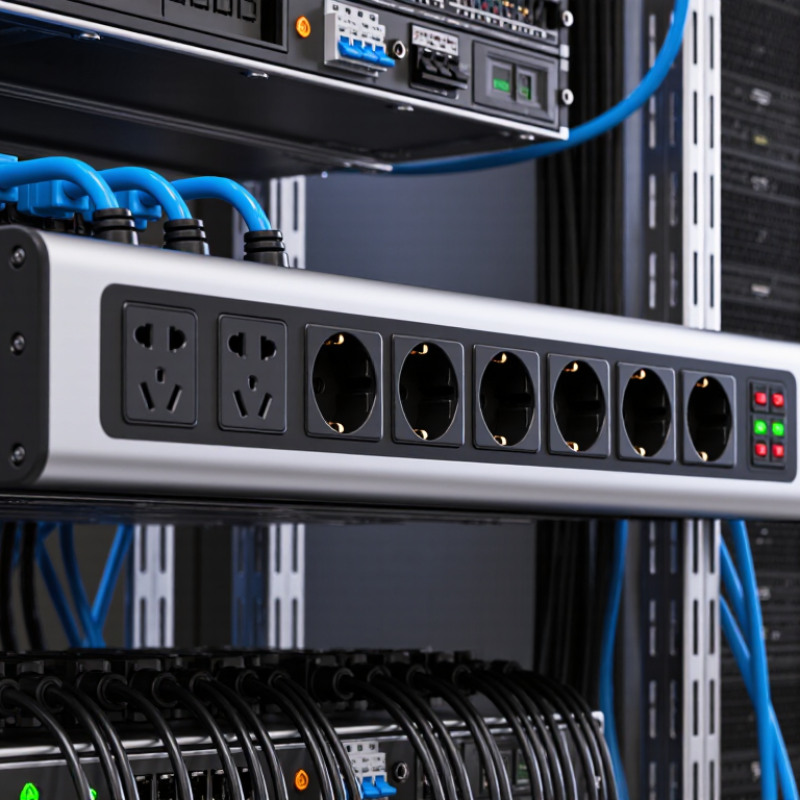
Table of Contents [Hide]
What Is a Power Distribution Strip?
A power distribution strip is a compact device that supplies electricity to several appliances from one wall connection. It usually contains multiple outlets, an input cord, internal wiring, and a protective housing. Some models also include a switch, circuit breaker, overload protection, or surge suppression.
Its purpose is practical. A strip can organize equipment around a workbench, server cabinet, hotel desk, or production line. However, outlet quantity does not define quality. The strip must match the local voltage, frequency, plug design, and current rating. Grounding is equally important. A loose contact or undersized conductor may create heat during continuous use.
Global sourcing requires careful product verification. Buyers should review wiring diagrams, rated load, insulation materials, cord length, and test documentation. Certification requirements differ between markets, so one approval may not satisfy every destination. Surge protection also needs clarification. It can reduce damage from brief voltage spikes, but it cannot correct poor building wiring or unlimited electrical faults.
Small details matter. Check the switch movement. Inspect the plug pins. Look for uneven gaps around each outlet. A longer cord is not always better. It may increase resistance and create storage problems. One common mistake is treating a distribution strip like a permanent replacement for fixed wiring. That assumption deserves reconsideration. Reliable sourcing depends on matching the strip to its actual load, environment, and intended market.

© Copyright - Pro Tool & Supply - Site by SVM E-Marketing Solutions - Sitemap
- Privacy policy