- Products
- Air Compressors & Air Tools
- Climate Control
- Compaction Equipment
- Concrete Cutting Tools & Equipment
- Concrete and Masonry
- Demolition & Excavation
- Electrical & Mechanical
- Fasteners and Anchoring Adhesives
- Floor Protection
- Generators and Welders
- Hand Tools
- Heaters
- Janitorial and Office Supplies
- Jobsite Protection
- Ladders & Storage
- Lighting & Lighting Accessories
- Man Lifts
- Material Handling Equipment
- Power Tools
- Pressure Washers & Pumps
- Safety Gear
- Safety Products
- Saws
- Surface Preparation
- SEASONAL PRODUCTS
- Rentals
- Air Compressor and Air Tool Rentals
- Climate Control Rental
- Compaction Rentals
- Concrete Equipment Rentals
- Demolition & Excavation Equipment Rentals
- Concrete Floor Grinder Rentals
- General Construction Equipment Rentals
- Generator Rentals and Welder Rentals
- Heater Rentals
- Light Tower Rentals
- Man Lift Rentals in Massachusetts and Rhode Island
- Material Handling Equipment Rentals
- Pressure Washer & Pump Rentals
- Saw Rentals in New England
- SEASONAL PRODUCTS
- Products
- Air Compressors & Air Tools
- Climate Control
- Compaction Equipment
- Concrete Cutting Tools & Equipment
- Demolition & Excavation
- Electrical & Mechanical
- Floor Protection
- Generators and Welders
- Construction Heaters
- Construction Ladders, Staging, & Storage
- Construction Lighting
- Man Lifts
- Material Handling Equipment
- Industrial Janitorial and Office Supplies
- Pressure Washers & Pumps
- Construction Safety Products
- Construction Safety Gear
- Surface Preparation
- Building Protection
- Diesel Accessories
- Zero Emissions
- Rentals
- Air Compressor and Air Tool Rentals
- Climate Control Rental
- Compaction Rentals
- Concrete Equipment Rental
- Demolition & Excavation Equipment Rental
- General Construction Equipment Rental
- Generator Rentals and Welder Rentals
- Construction Heaters Rental
- Light Tower Rentals
- Man Lift Rentals
- Material Handling Equipment Rental
- Pressure Washer & Pump Rentals
- Saw Rentals in New England
- Concrete Floor Grinder Rentals
- Zero Emissions Rentals
- Repairs & Used
- Parts
- Blog
- Services
- Resources
- About Us
- Contact Us
Sales & Rental of Construction | Industrial Equipment & Supplies


Why Choose PE Gas Pipes for Global Projects?
Global gas projects demand materials that can handle pressure, ground movement, and long operating periods. PE Gas Pipes are valued for their flexibility, corrosion resistance, and welded joints, which can reduce leak paths when installation and quality controls are sound. They are also relatively light. Crews can handle pipe coils and sections more easily than many rigid alternatives, especially across uneven sites.
Tony Radoszewski, a longtime plastics-pipe industry leader, has highlighted polyethylene’s established role in gas distribution. A careful summary of that perspective is: “A proven service history matters, but every project still needs engineering suited to its conditions.” This is a paraphrase, not a verbatim quotation. That distinction matters. Pipe selection should match the required pressure, gas, temperature range, design life, and local specifications. Engineers should also review joining procedures, inspection plans, and the experience of installation crews. A smooth-looking weld is not proof of a sound joint.
The site tells its own story. A trench may contain sharp stones, wet soil, or tight bends that affect installation choices. PE Gas Pipes can offer practical advantages, but they are not a shortcut around careful design. Compare suppliers’ traceability records and documented test data. Confirm that fittings and equipment are compatible. Small oversights can become expensive later. Even a good material has limits. A reliable project begins with evidence, not assumptions.
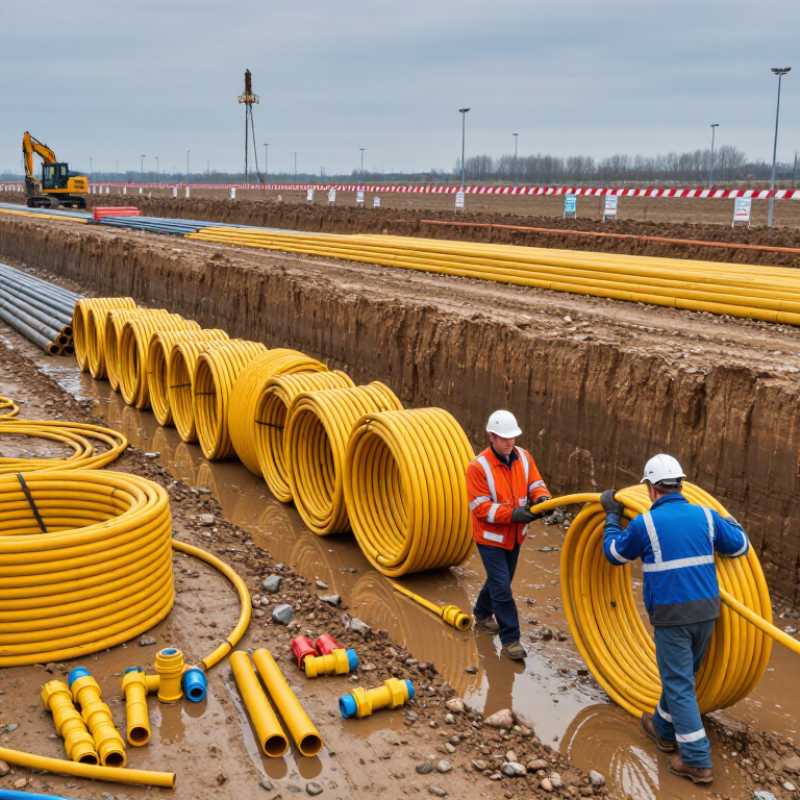
Table of Contents [Hide]
What Are PE Gas Pipes and How Are They Used?
PE gas pipes are pressure-rated pipes made from polyethylene, a flexible thermoplastic. They carry natural gas through distribution networks, from utility mains to service connections. Their flexibility helps installers route pipe around bends and obstacles, often with fewer joints than rigid systems. Fewer joints can mean fewer potential leak points. Still, installation quality matters.
In practice, crews prepare the pipe ends and join compatible sections using approved fusion methods or mechanical fittings. They check alignment, fusion conditions, and pressure-test results before the line enters service. PE is corrosion-resistant and relatively light, which can simplify handling in a trench. It is not suitable for every temperature, pressure, or above-ground exposure; project specifications must determine where it belongs.
The U.S. Pipeline and Hazardous Materials Safety Administration’s 2023 annual gas-distribution data records more than 1.3 million miles of distribution mains nationwide. That scale helps explain why durable, maintainable pipe materials matter. The data describes the network, not a guarantee that any PE installation will perform well. Soil movement, poor joining, and damage during excavation still deserve attention. Small details count. The Plastics Pipe Institute’s PE-piping guidance likewise emphasizes material selection, joining practice, and handling as parts of a reliable system.

© Copyright - Pro Tool & Supply - Site by SVM E-Marketing Solutions - Sitemap
- Privacy policy