- Products
- Air Compressors & Air Tools
- Climate Control
- Compaction Equipment
- Concrete Cutting Tools & Equipment
- Concrete and Masonry
- Demolition & Excavation
- Electrical & Mechanical
- Fasteners and Anchoring Adhesives
- Floor Protection
- Generators and Welders
- Hand Tools
- Heaters
- Janitorial and Office Supplies
- Jobsite Protection
- Ladders & Storage
- Lighting & Lighting Accessories
- Man Lifts
- Material Handling Equipment
- Power Tools
- Pressure Washers & Pumps
- Safety Gear
- Safety Products
- Saws
- Surface Preparation
- SEASONAL PRODUCTS
- Rentals
- Air Compressor and Air Tool Rentals
- Climate Control Rental
- Compaction Rentals
- Concrete Equipment Rentals
- Demolition & Excavation Equipment Rentals
- Concrete Floor Grinder Rentals
- General Construction Equipment Rentals
- Generator Rentals and Welder Rentals
- Heater Rentals
- Light Tower Rentals
- Man Lift Rentals in Massachusetts and Rhode Island
- Material Handling Equipment Rentals
- Pressure Washer & Pump Rentals
- Saw Rentals in New England
- SEASONAL PRODUCTS
- Products
- Air Compressors & Air Tools
- Climate Control
- Compaction Equipment
- Concrete Cutting Tools & Equipment
- Demolition & Excavation
- Electrical & Mechanical
- Floor Protection
- Generators and Welders
- Construction Heaters
- Construction Ladders, Staging, & Storage
- Construction Lighting
- Man Lifts
- Material Handling Equipment
- Industrial Janitorial and Office Supplies
- Pressure Washers & Pumps
- Construction Safety Products
- Construction Safety Gear
- Surface Preparation
- Building Protection
- Diesel Accessories
- Zero Emissions
- Rentals
- Air Compressor and Air Tool Rentals
- Climate Control Rental
- Compaction Rentals
- Concrete Equipment Rental
- Demolition & Excavation Equipment Rental
- General Construction Equipment Rental
- Generator Rentals and Welder Rentals
- Construction Heaters Rental
- Light Tower Rentals
- Man Lift Rentals
- Material Handling Equipment Rental
- Pressure Washer & Pump Rentals
- Saw Rentals in New England
- Concrete Floor Grinder Rentals
- Zero Emissions Rentals
- Repairs & Used
- Parts
- Blog
- Services
- Resources
- About Us
- Contact Us
Sales & Rental of Construction | Industrial Equipment & Supplies


Why Choose Electrical Track Socket for Global Buyers?
Global buyers are rethinking how power reaches changing workplaces, retail interiors, and hospitality spaces. The IEA’s Electricity 2024 report projects global electricity demand will grow by an average of 3.4% annually from 2024 to 2026. That growth increases pressure on electrical systems to become adaptable, efficient, and easier to maintain. Electrical Track Socket solutions address this need by allowing outlets to move along a powered rail. A desk can shift. The power point can follow.
That flexibility has practical value. Facility teams can reposition sockets without opening walls or replacing fixed wiring. Retailers can support changing displays with fewer visible cables. In a hotel room, a track system may place charging access beside a bed, desk, or reading chair. Small details matter.
The International Energy Agency also reports that buildings remain a major source of global energy demand and emissions. Better space planning cannot solve this issue alone, but flexible distribution can support longer-lasting interiors and reduce unnecessary renovation work. The benefit is not automatic. Product quality, electrical loading, grounding, thermal performance, and installation accuracy still determine safety.
Professional buyers should examine test reports, material specifications, warranty terms, and the manufacturer’s quality-control records. Applicable IEC, EN, UL, or local requirements must be confirmed for each destination market. No single certification covers every installation.
This is where many purchasing decisions become less simple. A low price may hide weak contacts or limited compatibility. Experienced suppliers should provide clear ratings, installation guidance, and traceable inspection evidence. With those checks in place, Electrical Track Socket becomes more than a design feature. It becomes a practical infrastructure choice for global projects.
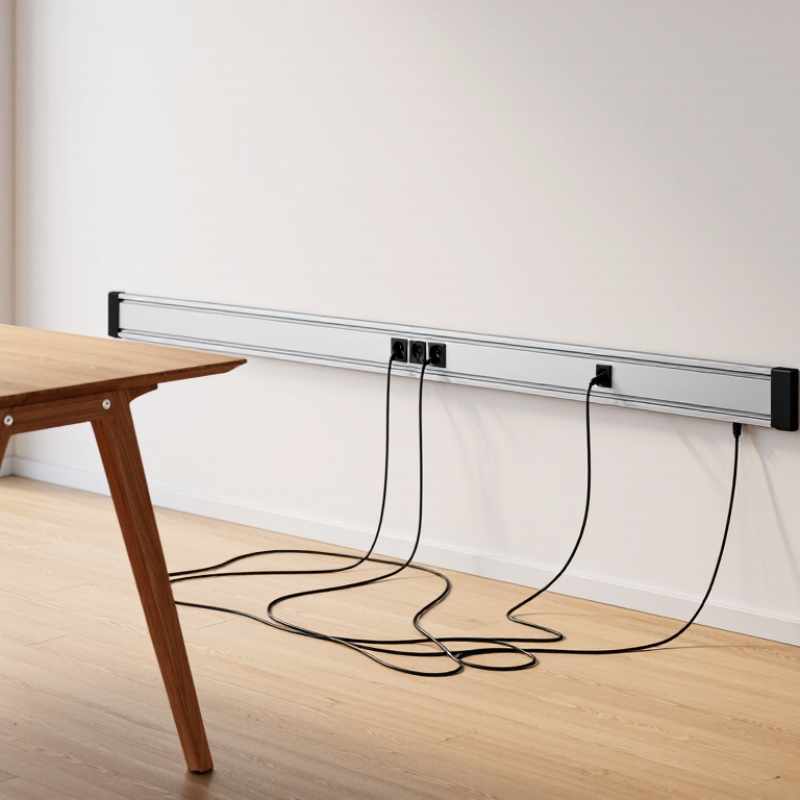
Table of Contents [Hide]
Electrical Track Socket: Definition and Core Operating Principles
Electrical Track Socket: Definition and Core Operating Principles
An electrical track socket is a movable power outlet mounted on an energized track. Inside the track, conductive busbars carry electricity along a fixed route. A socket adapter connects through spring contacts or locking pins. Users can reposition outlets without opening walls or adding new cables. This design suits offices, retail spaces, workshops, and flexible residential interiors.
Its core principle is simple: mechanical locking creates stable contact, while insulation separates live conductors from accessible surfaces. A reliable system should include grounding, overload protection, secure polarity, and heat-resistant materials. The International Energy Agency’s Electricity 2024 report expects global electricity demand to grow by an average 3.3% annually from 2024 to 2026. Flexible distribution may help spaces adjust to changing equipment loads. However, convenience does not replace electrical engineering. Track ratings, socket ratings, installation methods, and local voltage requirements must match. IEC 61535 provides requirements for installation couplers, but not every track socket follows the same product scope. That distinction is easy to miss.
Tips: Check rated voltage, current, grounding, and contact temperature before purchasing. Ask for test reports and installation instructions. Inspect the locking action; a loose adapter is not a minor flaw. I have seen specifications appear complete while regional compatibility remained unclear. Buyers should question that gap. A socket can look universal, yet its conductors, certifications, or adapter geometry may limit real-world use.

© Copyright - Pro Tool & Supply - Site by SVM E-Marketing Solutions - Sitemap
- Privacy policy