- Products
- Air Compressors & Air Tools
- Climate Control
- Compaction Equipment
- Concrete Cutting Tools & Equipment
- Concrete and Masonry
- Demolition & Excavation
- Electrical & Mechanical
- Fasteners and Anchoring Adhesives
- Floor Protection
- Generators and Welders
- Hand Tools
- Heaters
- Janitorial and Office Supplies
- Jobsite Protection
- Ladders & Storage
- Lighting & Lighting Accessories
- Man Lifts
- Material Handling Equipment
- Power Tools
- Pressure Washers & Pumps
- Safety Gear
- Safety Products
- Saws
- Surface Preparation
- SEASONAL PRODUCTS
- Rentals
- Air Compressor and Air Tool Rentals
- Climate Control Rental
- Compaction Rentals
- Concrete Equipment Rentals
- Demolition & Excavation Equipment Rentals
- Concrete Floor Grinder Rentals
- General Construction Equipment Rentals
- Generator Rentals and Welder Rentals
- Heater Rentals
- Light Tower Rentals
- Man Lift Rentals in Massachusetts and Rhode Island
- Material Handling Equipment Rentals
- Pressure Washer & Pump Rentals
- Saw Rentals in New England
- SEASONAL PRODUCTS
- Products
- Air Compressors & Air Tools
- Climate Control
- Compaction Equipment
- Concrete Cutting Tools & Equipment
- Demolition & Excavation
- Electrical & Mechanical
- Floor Protection
- Generators and Welders
- Construction Heaters
- Construction Ladders, Staging, & Storage
- Construction Lighting
- Man Lifts
- Material Handling Equipment
- Industrial Janitorial and Office Supplies
- Pressure Washers & Pumps
- Construction Safety Products
- Construction Safety Gear
- Surface Preparation
- Building Protection
- Diesel Accessories
- Zero Emissions
- Rentals
- Air Compressor and Air Tool Rentals
- Climate Control Rental
- Compaction Rentals
- Concrete Equipment Rental
- Demolition & Excavation Equipment Rental
- General Construction Equipment Rental
- Generator Rentals and Welder Rentals
- Construction Heaters Rental
- Light Tower Rentals
- Man Lift Rentals
- Material Handling Equipment Rental
- Pressure Washer & Pump Rentals
- Saw Rentals in New England
- Concrete Floor Grinder Rentals
- Zero Emissions Rentals
- Repairs & Used
- Parts
- Blog
- Services
- Resources
- About Us
- Contact Us
Sales & Rental of Construction | Industrial Equipment & Supplies


Why Choose Alloy Powder for Global Sourcing?
Why Choose Alloy Powder for Global Sourcing?
Global buyers increasingly view Alloy Powder as a strategic manufacturing input, not simply a commodity. The 2024 Wohlers Report valued the broader additive manufacturing market at $20.035 billion in 2023. However, this figure does not represent Alloy Powder alone. That distinction matters. It prevents exaggerated market claims.
For international sourcing teams, powder quality affects build consistency, surface finish, fatigue performance, and production yield. A reliable supplier should provide lot-specific certificates, particle-size distribution, chemistry results, oxygen readings, and traceability records. Buyers should also review sieve analysis and apparent density before approving samples. Small deviations become expensive. They can produce failed builds, delayed shipments, or costly requalification.
Terry Wohlers, founder of Wohlers Associates, stated, “The AM industry continues to grow, but at a slower rate than in previous years.” His observation supports a careful sourcing strategy. Growth creates opportunity, but it also encourages rushed supplier decisions. ISO and ASTM requirements can strengthen evaluations, especially for aerospace, medical, automotive, and energy applications. Still, certification alone does not guarantee consistent Alloy Powder performance. Supplier audits, retained samples, packaging inspections, and controlled storage remain necessary.
Global sourcing can improve capacity access, pricing flexibility, and supply resilience. Yet distance introduces risks, including customs delays, inconsistent documentation, and communication gaps. A practical approach compares total landed cost, not only the quoted powder price. The best supplier is not always the cheapest. It is the partner that combines metallurgical expertise, transparent data, stable production, and responsive technical support. A stronger process may begin with a small trial order. That is less impressive on paper, but often more reliable in practice.
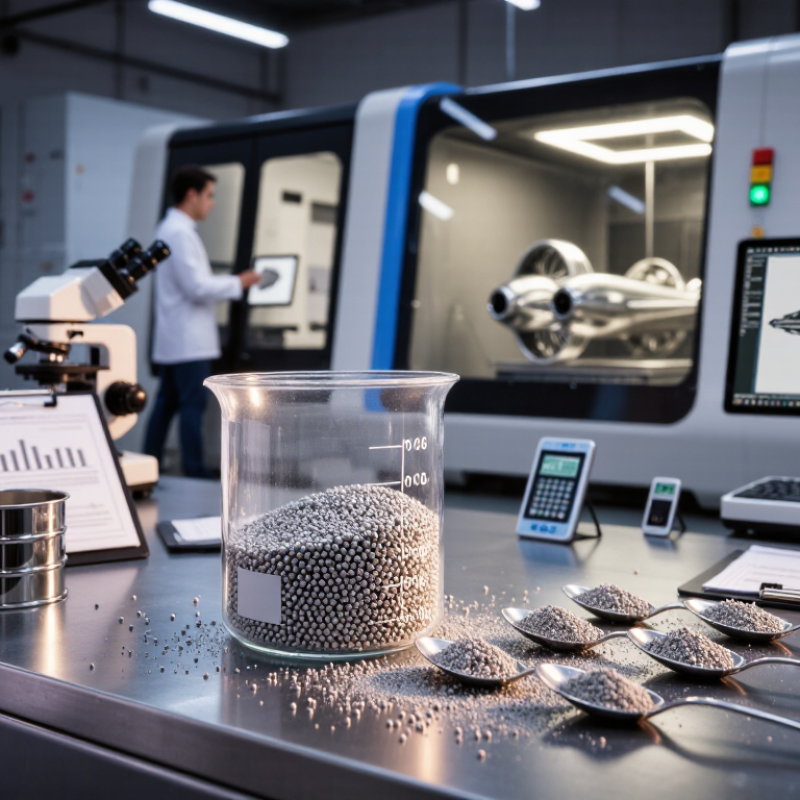
Table of Contents [Hide]
What Is Alloy Powder and Where Is It Used?
Alloy powder is a finely processed metal blend containing two or more elements, such as iron, nickel, cobalt, aluminum, or copper. Its composition can be adjusted to improve strength, corrosion resistance, heat tolerance, or electrical performance. Unlike solid bar, powder offers greater flexibility during manufacturing. Small particles can fill molds, form coatings, or build complex shapes layer by layer. Its behavior depends on particle size, shape, purity, and production method.
Alloy powder is used in powder metallurgy, additive manufacturing, thermal spraying, brazing, and specialized surface treatments. For example, a manufacturer may use spherical powder for smoother flow in a printer. Irregular particles may provide better packing in a pressed component.
In practical sourcing, material certificates, batch traceability, oxygen content, and particle-size distribution deserve close review. A low price can hide inconsistent chemistry or poor flow. That mistake is expensive.
Tips: Match the powder to the process, not only the final product. Ask for recent test data and sampling details. Confirm storage conditions, because moisture can change powder performance. Compare several batches when possible. No powder is perfect. Engineers should test actual production results before approving large global orders. Clear specifications and honest communication reduce avoidable surprises across borders.

© Copyright - Pro Tool & Supply - Site by SVM E-Marketing Solutions - Sitemap
- Privacy policy