- Products
- Air Compressors & Air Tools
- Climate Control
- Compaction Equipment
- Concrete Cutting Tools & Equipment
- Concrete and Masonry
- Demolition & Excavation
- Electrical & Mechanical
- Fasteners and Anchoring Adhesives
- Floor Protection
- Generators and Welders
- Hand Tools
- Heaters
- Janitorial and Office Supplies
- Jobsite Protection
- Ladders & Storage
- Lighting & Lighting Accessories
- Man Lifts
- Material Handling Equipment
- Power Tools
- Pressure Washers & Pumps
- Safety Gear
- Safety Products
- Saws
- Surface Preparation
- SEASONAL PRODUCTS
- Rentals
- Air Compressor and Air Tool Rentals
- Climate Control Rental
- Compaction Rentals
- Concrete Equipment Rentals
- Demolition & Excavation Equipment Rentals
- Concrete Floor Grinder Rentals
- General Construction Equipment Rentals
- Generator Rentals and Welder Rentals
- Heater Rentals
- Light Tower Rentals
- Man Lift Rentals in Massachusetts and Rhode Island
- Material Handling Equipment Rentals
- Pressure Washer & Pump Rentals
- Saw Rentals in New England
- SEASONAL PRODUCTS
- Products
- Air Compressors & Air Tools
- Climate Control
- Compaction Equipment
- Concrete Cutting Tools & Equipment
- Demolition & Excavation
- Electrical & Mechanical
- Floor Protection
- Generators and Welders
- Construction Heaters
- Construction Ladders, Staging, & Storage
- Construction Lighting
- Man Lifts
- Material Handling Equipment
- Industrial Janitorial and Office Supplies
- Pressure Washers & Pumps
- Construction Safety Products
- Construction Safety Gear
- Surface Preparation
- Building Protection
- Diesel Accessories
- Zero Emissions
- Rentals
- Air Compressor and Air Tool Rentals
- Climate Control Rental
- Compaction Rentals
- Concrete Equipment Rental
- Demolition & Excavation Equipment Rental
- General Construction Equipment Rental
- Generator Rentals and Welder Rentals
- Construction Heaters Rental
- Light Tower Rentals
- Man Lift Rentals
- Material Handling Equipment Rental
- Pressure Washer & Pump Rentals
- Saw Rentals in New England
- Concrete Floor Grinder Rentals
- Zero Emissions Rentals
- Repairs & Used
- Parts
- Blog
- Services
- Resources
- About Us
- Contact Us
Sales & Rental of Construction | Industrial Equipment & Supplies

Why Choose an Ac-Dc Converter for Global Sourcing?
Why Choose an Ac-Dc Converter for Global Sourcing?
Global sourcing is no longer only about finding the lowest unit price. It is about securing stable power conversion across markets, climates, and production conditions. An Ac-Dc Converter can transform regional mains electricity into controlled DC power for industrial equipment, medical devices, lighting systems, and consumer products. The right design supports different input ranges, stable output voltage, efficient operation, and dependable thermal performance.
Small details matter. A converter may operate inside a hot factory cabinet, beside sensitive sensors, or within a compact adapter housing. Its efficiency affects energy costs. Its protection features affect product safety. Its certification profile affects market access. EMC behavior matters too. A low-cost model can become expensive after redesigns, testing delays, or repeated field failures.
Christophe Basso, a respected power electronics author and control-design specialist, has emphasized a practical engineering principle: “A converter must be understood as a system, not merely as a circuit.” That view is valuable for international procurement. Buyers should examine topology, isolation, power density, lifecycle support, documentation, and supplier quality controls together. Datasheets alone are not enough.
The choice is rarely perfect. Trade-offs remain between size, efficiency, price, and service life. That is the uncomfortable part. A supplier with attractive samples may still lack consistent production evidence. Careful evaluation should include thermal tests, load regulation checks, waveform measurements, and traceable compliance records. When these steps are handled seriously, an Ac-Dc Converter becomes more than a component. It becomes a reliable foundation for global product development.
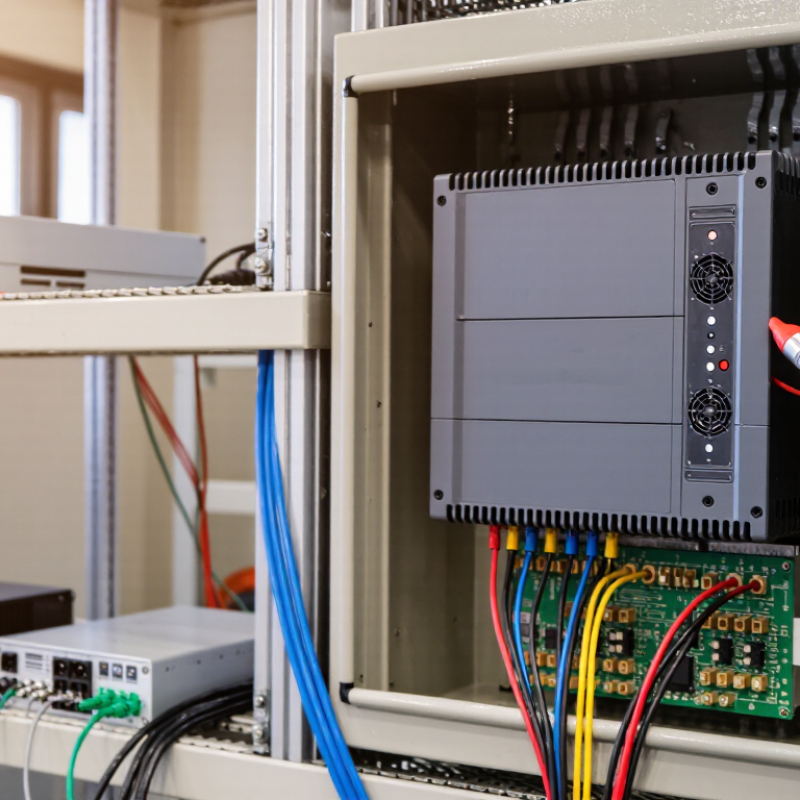
Table of Contents [Hide]
What Is an AC-DC Converter and How Does It Work?
Why Choose an AC-DC Converter for Global Sourcing?
An AC-DC converter changes alternating current from a wall outlet into controlled direct current. Household power rises and falls repeatedly. Electronic circuits need steadier energy. The converter manages that difference.
A typical unit starts with an input fuse and an electromagnetic interference filter. A rectifier then changes AC into pulsating DC. A capacitor smooths the waveform. In switching designs, electronic components rapidly control the voltage. An isolation transformer may improve safety and voltage conversion. A secondary rectifier and regulator create the final DC output. Some compact designs are non-isolated, so their safety requirements differ. The internal path is not always simple.
Input voltage matters greatly. Many sourcing projects require operation across 100–240 volts and several line frequencies. Engineers should also check output tolerance, ripple, efficiency, standby power, thermal limits, and protection features. Overvoltage, overload, and short-circuit protection can prevent costly failures. In practical evaluations, a converter may pass a bench test but fail after hours inside a warm enclosure. That detail is easy to miss. A clean specification sheet does not replace testing. Load changes, connector quality, airflow, and regional certification requirements can alter the result. Global sourcing becomes more reliable when samples are tested under real operating conditions, not only ideal laboratory conditions.

© Copyright - Pro Tool & Supply - Site by SVM E-Marketing Solutions - Sitemap
- Privacy policy