- Products
- Air Compressors & Air Tools
- Climate Control
- Compaction Equipment
- Concrete Cutting Tools & Equipment
- Concrete and Masonry
- Demolition & Excavation
- Electrical & Mechanical
- Fasteners and Anchoring Adhesives
- Floor Protection
- Generators and Welders
- Hand Tools
- Heaters
- Janitorial and Office Supplies
- Jobsite Protection
- Ladders & Storage
- Lighting & Lighting Accessories
- Man Lifts
- Material Handling Equipment
- Power Tools
- Pressure Washers & Pumps
- Safety Gear
- Safety Products
- Saws
- Surface Preparation
- SEASONAL PRODUCTS
- Rentals
- Air Compressor and Air Tool Rentals
- Climate Control Rental
- Compaction Rentals
- Concrete Equipment Rentals
- Demolition & Excavation Equipment Rentals
- Concrete Floor Grinder Rentals
- General Construction Equipment Rentals
- Generator Rentals and Welder Rentals
- Heater Rentals
- Light Tower Rentals
- Man Lift Rentals in Massachusetts and Rhode Island
- Material Handling Equipment Rentals
- Pressure Washer & Pump Rentals
- Saw Rentals in New England
- SEASONAL PRODUCTS
- Products
- Air Compressors & Air Tools
- Climate Control
- Compaction Equipment
- Concrete Cutting Tools & Equipment
- Demolition & Excavation
- Electrical & Mechanical
- Floor Protection
- Generators and Welders
- Construction Heaters
- Construction Ladders, Staging, & Storage
- Construction Lighting
- Man Lifts
- Material Handling Equipment
- Industrial Janitorial and Office Supplies
- Pressure Washers & Pumps
- Construction Safety Products
- Construction Safety Gear
- Surface Preparation
- Building Protection
- Diesel Accessories
- Zero Emissions
- Rentals
- Air Compressor and Air Tool Rentals
- Climate Control Rental
- Compaction Rentals
- Concrete Equipment Rental
- Demolition & Excavation Equipment Rental
- General Construction Equipment Rental
- Generator Rentals and Welder Rentals
- Construction Heaters Rental
- Light Tower Rentals
- Man Lift Rentals
- Material Handling Equipment Rental
- Pressure Washer & Pump Rentals
- Saw Rentals in New England
- Concrete Floor Grinder Rentals
- Zero Emissions Rentals
- Repairs & Used
- Parts
- Blog
- Services
- Resources
- About Us
- Contact Us
Sales & Rental of Construction | Industrial Equipment & Supplies


Why Choose a Wall Mounted Battery Harness?
As home energy storage expands, the Wall Mounted Battery Harness deserves closer attention than its modest appearance suggests. It connects batteries, inverters, monitoring devices, and protection equipment inside a compact installation. The right harness can reduce cable clutter, support consistent routing, and make inspection easier behind a wall-mounted cabinet.
The market is moving quickly. The International Energy Agency reported that global battery demand reached about 750 GWh in 2023, while battery storage deployment increased sharply. Its Batteries and Secure Energy Transitions report also identifies storage as essential for integrating more renewable electricity. BloombergNEF reported further growth in stationary storage installations during 2023. These figures show why installation quality now matters beyond individual projects.
Small details matter.
A properly selected harness should match current, voltage, connector type, insulation rating, bend radius, and expected temperature. It should also follow the battery manufacturer’s instructions and applicable electrical standards. A qualified installer can verify crimp quality, torque settings, polarity, and strain relief before energizing the system. A loose terminal may create heat that remains invisible during a short inspection.
Wall mounting offers practical advantages. Cables can stay elevated, organized, and separated from moisture or accidental contact. Technicians may also trace connections faster during maintenance. Yet this solution is not automatically superior. Wall strength, ventilation, fire separation, and service clearance still require careful evaluation. I have seen neat-looking cable layouts hide excessive bending or unsupported weight.
That limitation matters. A Wall Mounted Battery Harness is a structured installation aid, not a substitute for engineering judgment. This article examines where it helps, where it fails, and how reliable selection improves safety, serviceability, and long-term system performance.
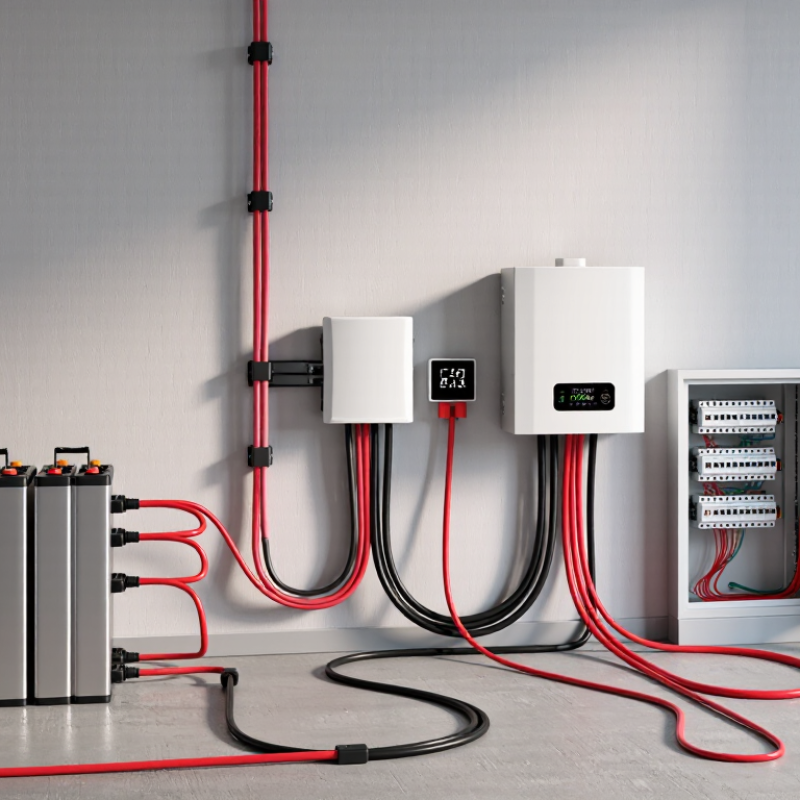
Table of Contents [Hide]
What Is a Wall-Mounted Battery Harness? 48 V and 100 Ah Explained
Why Choose a Wall Mounted Battery Harness?
What Is a Wall-Mounted Battery Harness? 48 V and 100 Ah Explained
A wall-mounted battery harness is the protected wiring assembly around a home energy battery. It links the battery cells, battery management system, inverter, fuse, disconnect, and grounding point. Unlike loose cables, it keeps current paths organized against a wall. Good harnesses use correctly sized conductors, secure terminals, strain relief, and insulation suitable for the installation environment. Small details matter.
A 48 V, 100 Ah battery has a nominal capacity of about 4.8 kWh. The calculation is simple: 48 multiplied by 100. Usable energy is lower after reserve settings, conversion losses, temperature effects, and battery aging. A 1,000-watt load could theoretically run for nearly 4.8 hours, but real operation will be shorter. That estimate is useful, not perfect.
The International Energy Agency’s Batteries and Secure Energy Transitions report states that global battery demand reached nearly 750 GWh in 2023. Its analysis also identifies stationary storage as a fast-growing application. This growth increases the need for clear, serviceable wiring layouts. The International Electrotechnical Commission’s installation standards emphasize protection against electric shock, overheating, and mechanical damage. A wall-mounted harness supports these goals by reducing exposed cable movement and simplifying inspection. It does not replace professional design. Cable length, ambient temperature, fault current, and local requirements still need checking. In practice, the neatest installation can still fail if its terminals are under-torqued or its protection device is poorly selected.

© Copyright - Pro Tool & Supply - Site by SVM E-Marketing Solutions - Sitemap
- Privacy policy