- Products
- Air Compressors & Air Tools
- Climate Control
- Compaction Equipment
- Concrete Cutting Tools & Equipment
- Concrete and Masonry
- Demolition & Excavation
- Electrical & Mechanical
- Fasteners and Anchoring Adhesives
- Floor Protection
- Generators and Welders
- Hand Tools
- Heaters
- Janitorial and Office Supplies
- Jobsite Protection
- Ladders & Storage
- Lighting & Lighting Accessories
- Man Lifts
- Material Handling Equipment
- Power Tools
- Pressure Washers & Pumps
- Safety Gear
- Safety Products
- Saws
- Surface Preparation
- SEASONAL PRODUCTS
- Rentals
- Air Compressor and Air Tool Rentals
- Climate Control Rental
- Compaction Rentals
- Concrete Equipment Rentals
- Demolition & Excavation Equipment Rentals
- Concrete Floor Grinder Rentals
- General Construction Equipment Rentals
- Generator Rentals and Welder Rentals
- Heater Rentals
- Light Tower Rentals
- Man Lift Rentals in Massachusetts and Rhode Island
- Material Handling Equipment Rentals
- Pressure Washer & Pump Rentals
- Saw Rentals in New England
- SEASONAL PRODUCTS
- Products
- Air Compressors & Air Tools
- Climate Control
- Compaction Equipment
- Concrete Cutting Tools & Equipment
- Demolition & Excavation
- Electrical & Mechanical
- Floor Protection
- Generators and Welders
- Construction Heaters
- Construction Ladders, Staging, & Storage
- Construction Lighting
- Man Lifts
- Material Handling Equipment
- Industrial Janitorial and Office Supplies
- Pressure Washers & Pumps
- Construction Safety Products
- Construction Safety Gear
- Surface Preparation
- Building Protection
- Diesel Accessories
- Zero Emissions
- Rentals
- Air Compressor and Air Tool Rentals
- Climate Control Rental
- Compaction Rentals
- Concrete Equipment Rental
- Demolition & Excavation Equipment Rental
- General Construction Equipment Rental
- Generator Rentals and Welder Rentals
- Construction Heaters Rental
- Light Tower Rentals
- Man Lift Rentals
- Material Handling Equipment Rental
- Pressure Washer & Pump Rentals
- Saw Rentals in New England
- Concrete Floor Grinder Rentals
- Zero Emissions Rentals
- Repairs & Used
- Parts
- Blog
- Services
- Resources
- About Us
- Contact Us
Sales & Rental of Construction | Industrial Equipment & Supplies


Why Choose a Manhole Cover With Smart Lock?
A manhole cover is easy to overlook until it shifts, goes missing, or delays a crew on a rainy night. A Manhole Cover With Smart Lock adds controlled access to this familiar piece of infrastructure. Depending on its design, it can restrict opening, record access events, and alert staff to unauthorized movement. It does not replace sound inspection or maintenance. It adds another useful layer.
The scale of the challenge is substantial. The U.S. Environmental Protection Agency’s 2022 Clean Watersheds Needs Survey estimated $630.1 billion in wastewater and stormwater infrastructure needs over 20 years. That figure does not measure demand for smart locks, but it highlights the pressure on utilities to protect and manage assets more carefully. A digital access record can help crews check who opened a cover and when. Small details matter.
The case is strongest where covers sit in busy streets, remote service areas, or sites with repeated access problems. Yet smart hardware is not a magic fix. Batteries, signal coverage, corrosion, and emergency access all deserve practical review before purchase. I cannot responsibly attribute a direct quotation on this specific topic to a named industry expert without a verifiable source. Reliable guidance should be sourced, not invented.
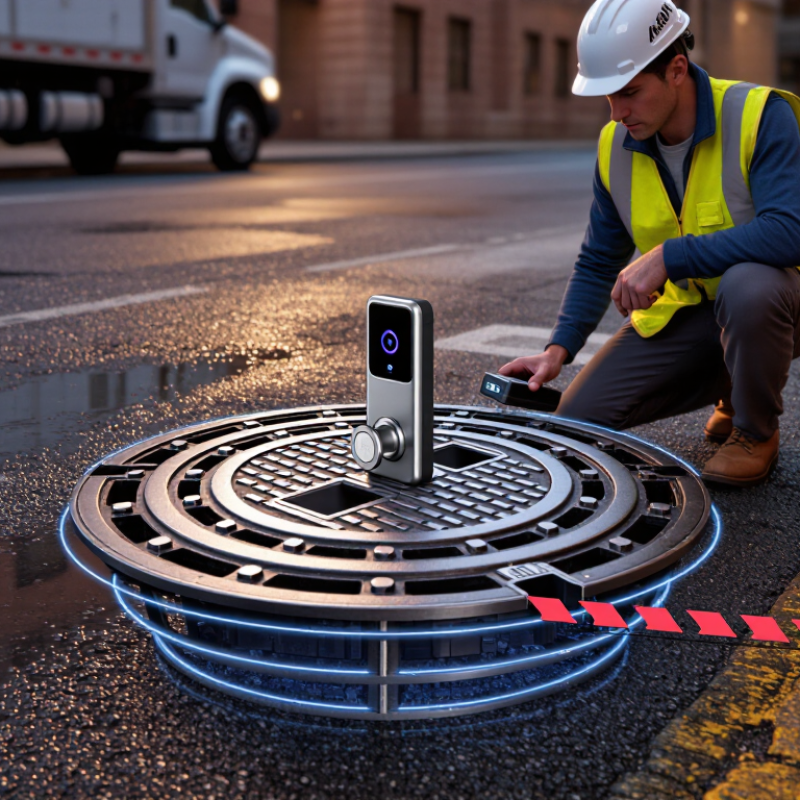
Table of Contents [Hide]
What Is a Manhole Cover With a Smart Lock?
A manhole cover with a smart lock is a utility access cover fitted with an electronic locking mechanism. Unlike a standard cover, it can require an authorized credential, such as a secure key or access device, before it opens. The lock is usually built into the cover or its frame, while a sealed housing helps protect electronic parts from rain, grit, and road spray. Exact designs vary by site.
In practice, a technician arrives with the approved access device, unlocks the mechanism, and lifts the cover with suitable equipment. Some systems can record access events or send alerts when a cover is opened, depending on their configuration. That can help operators track inspections and notice unexpected access. It is not magic. Batteries, seals, and moving parts still need regular checks, and poor signal coverage may limit remote features. A lock also does not replace a properly rated cover or safe work procedures. Not every site needs one. Busy streets, remote assets, or locations where access must be monitored may benefit most, while simpler sites may be better served by a conventional lock. The maintenance plan is easy to overlook. A smart lock is useful only when staff can operate it reliably and keep it working.
© Copyright - Pro Tool & Supply - Site by SVM E-Marketing Solutions - Sitemap
- Privacy policy