- Products
- Air Compressors & Air Tools
- Climate Control
- Compaction Equipment
- Concrete Cutting Tools & Equipment
- Concrete and Masonry
- Demolition & Excavation
- Electrical & Mechanical
- Fasteners and Anchoring Adhesives
- Floor Protection
- Generators and Welders
- Hand Tools
- Heaters
- Janitorial and Office Supplies
- Jobsite Protection
- Ladders & Storage
- Lighting & Lighting Accessories
- Man Lifts
- Material Handling Equipment
- Power Tools
- Pressure Washers & Pumps
- Safety Gear
- Safety Products
- Saws
- Surface Preparation
- SEASONAL PRODUCTS
- Rentals
- Air Compressor and Air Tool Rentals
- Climate Control Rental
- Compaction Rentals
- Concrete Equipment Rentals
- Demolition & Excavation Equipment Rentals
- Concrete Floor Grinder Rentals
- General Construction Equipment Rentals
- Generator Rentals and Welder Rentals
- Heater Rentals
- Light Tower Rentals
- Man Lift Rentals in Massachusetts and Rhode Island
- Material Handling Equipment Rentals
- Pressure Washer & Pump Rentals
- Saw Rentals in New England
- SEASONAL PRODUCTS
- Products
- Air Compressors & Air Tools
- Climate Control
- Compaction Equipment
- Concrete Cutting Tools & Equipment
- Demolition & Excavation
- Electrical & Mechanical
- Floor Protection
- Generators and Welders
- Construction Heaters
- Construction Ladders, Staging, & Storage
- Construction Lighting
- Man Lifts
- Material Handling Equipment
- Industrial Janitorial and Office Supplies
- Pressure Washers & Pumps
- Construction Safety Products
- Construction Safety Gear
- Surface Preparation
- Building Protection
- Diesel Accessories
- Zero Emissions
- Rentals
- Air Compressor and Air Tool Rentals
- Climate Control Rental
- Compaction Rentals
- Concrete Equipment Rental
- Demolition & Excavation Equipment Rental
- General Construction Equipment Rental
- Generator Rentals and Welder Rentals
- Construction Heaters Rental
- Light Tower Rentals
- Man Lift Rentals
- Material Handling Equipment Rental
- Pressure Washer & Pump Rentals
- Saw Rentals in New England
- Concrete Floor Grinder Rentals
- Zero Emissions Rentals
- Repairs & Used
- Parts
- Blog
- Services
- Resources
- About Us
- Contact Us
Sales & Rental of Construction | Industrial Equipment & Supplies

Why Choose a Galvanized Steel Coil Manufacturer?
Choosing the right Galvanized Steel Coil Manufacturer affects durability, processing efficiency, and long-term project cost. It is not merely a purchasing decision. The supplier controls coating consistency, steel chemistry, surface quality, and delivery reliability.
World Steel Association data reports approximately 1.89 billion tonnes of crude steel production in 2023. That scale shows the importance of dependable steel supply. However, global volume does not guarantee suitable galvanized coil. A construction panel may need a clean surface for painting, while an automotive component may require tighter dimensional control. Small coating defects can become visible around cut edges, bends, and drilled holes.
Performance begins with measurable controls.
A qualified manufacturer should document zinc coating mass, mechanical properties, coil width, thickness tolerance, and inspection results. Standards such as ASTM A653 and EN 10346 provide useful reference points, while ISO 1461 is widely used for hot-dip galvanized products. Buyers should also review traceability records, mill certificates, testing equipment, and corrective-action procedures. Certificates alone are not enough.
Zinc-industry expert Dr. Frank Goodwin has stated, “Zinc is a natural, essential element, and it is infinitely recyclable.” That principle supports galvanized steel’s practical sustainability story, but it should not become careless marketing. Coating life still depends on exposure, design, drainage, handling, and maintenance.
The supplier matters greatly.
An experienced Galvanized Steel Coil Manufacturer can recommend coating grades, improve forming performance, and reduce avoidable waste. Yet no manufacturer can solve every design weakness. A realistic evaluation compares technical evidence, production experience, response speed, and total cost—not only the lowest quoted price.
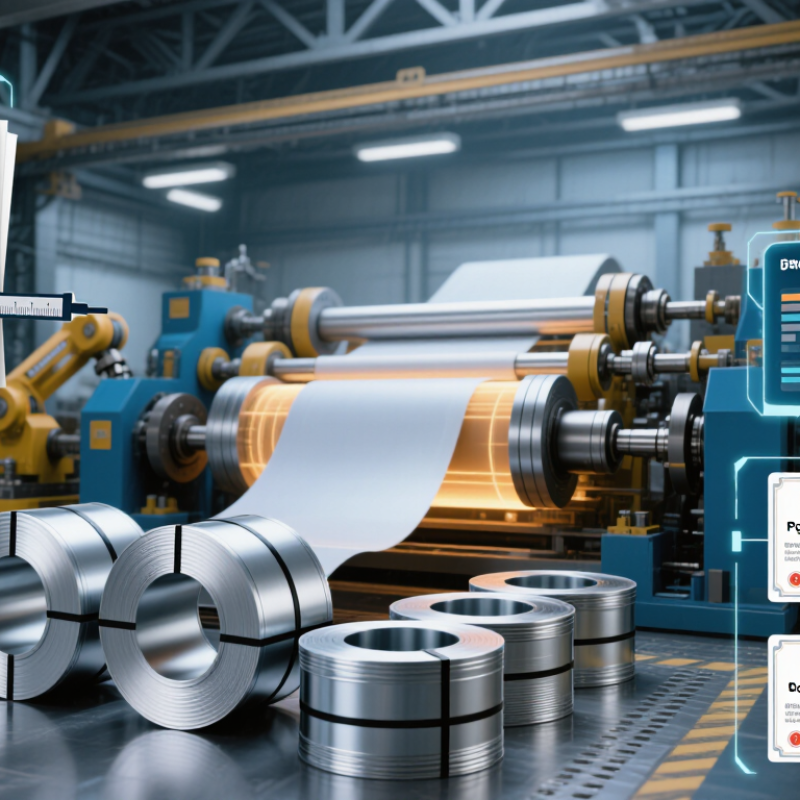
Table of Contents [Hide]
What Is a Galvanized Steel Coil Manufacturer?
A galvanized steel coil manufacturer produces steel coils with a protective zinc coating. The coating helps reduce rust when steel faces moisture, air, or outdoor exposure. The process usually includes cleaning, heating, coating, cooling, and careful inspection.
A reliable manufacturer controls each stage with measured procedures. Technicians check coating thickness, surface appearance, coil width, and mechanical strength. They may use continuous galvanizing lines for stable production and consistent coverage. Samples are tested for adhesion and corrosion resistance. Batch records also support traceability when questions arise later.
In practical work, small defects matter. Uneven zinc, rough edges, or poor coiling can create problems during stamping and forming. Experienced teams adjust line speed, bath temperature, and tension when conditions change. No process is flawless. Even accurate equipment needs human judgment and regular maintenance. A manufacturer should explain its testing methods instead of making vague promises. It should also provide clear data about coating mass, steel grade, tolerances, and delivery condition. Some suppliers focus heavily on appearance, but internal strength may deserve equal attention. Buyers often need technical guidance, not only a price. A serious manufacturer listens to the final application and recommends a suitable coil specification.

© Copyright - Pro Tool & Supply - Site by SVM E-Marketing Solutions - Sitemap
- Privacy policy