- Products
- Air Compressors & Air Tools
- Climate Control
- Compaction Equipment
- Concrete Cutting Tools & Equipment
- Concrete and Masonry
- Demolition & Excavation
- Electrical & Mechanical
- Fasteners and Anchoring Adhesives
- Floor Protection
- Generators and Welders
- Hand Tools
- Heaters
- Janitorial and Office Supplies
- Jobsite Protection
- Ladders & Storage
- Lighting & Lighting Accessories
- Man Lifts
- Material Handling Equipment
- Power Tools
- Pressure Washers & Pumps
- Safety Gear
- Safety Products
- Saws
- Surface Preparation
- SEASONAL PRODUCTS
- Rentals
- Air Compressor and Air Tool Rentals
- Climate Control Rental
- Compaction Rentals
- Concrete Equipment Rentals
- Demolition & Excavation Equipment Rentals
- Concrete Floor Grinder Rentals
- General Construction Equipment Rentals
- Generator Rentals and Welder Rentals
- Heater Rentals
- Light Tower Rentals
- Man Lift Rentals in Massachusetts and Rhode Island
- Material Handling Equipment Rentals
- Pressure Washer & Pump Rentals
- Saw Rentals in New England
- SEASONAL PRODUCTS
- Products
- Air Compressors & Air Tools
- Climate Control
- Compaction Equipment
- Concrete Cutting Tools & Equipment
- Demolition & Excavation
- Electrical & Mechanical
- Floor Protection
- Generators and Welders
- Construction Heaters
- Construction Ladders, Staging, & Storage
- Construction Lighting
- Man Lifts
- Material Handling Equipment
- Industrial Janitorial and Office Supplies
- Pressure Washers & Pumps
- Construction Safety Products
- Construction Safety Gear
- Surface Preparation
- Building Protection
- Diesel Accessories
- Zero Emissions
- Rentals
- Air Compressor and Air Tool Rentals
- Climate Control Rental
- Compaction Rentals
- Concrete Equipment Rental
- Demolition & Excavation Equipment Rental
- General Construction Equipment Rental
- Generator Rentals and Welder Rentals
- Construction Heaters Rental
- Light Tower Rentals
- Man Lift Rentals
- Material Handling Equipment Rental
- Pressure Washer & Pump Rentals
- Saw Rentals in New England
- Concrete Floor Grinder Rentals
- Zero Emissions Rentals
- Repairs & Used
- Parts
- Blog
- Services
- Resources
- About Us
- Contact Us
Sales & Rental of Construction | Industrial Equipment & Supplies


Why Choose 18650 Battery for Global Sourcing?
Why Choose 18650 Battery for Global Sourcing?
Global sourcing teams continue to choose the 18650 Battery because it combines proven design, broad availability, and flexible integration. Its cylindrical format fits power tools, backup systems, medical devices, and light electric mobility products. A single cell is small enough to handle easily. A battery pack can still deliver serious energy.
Battery researcher Jeff Dahn has described lithium-ion technology plainly: “The lithium-ion battery is a very complicated device.” That warning matters when comparing international suppliers. An 18650 Battery is not defined by size alone. Chemistry, capacity, discharge rate, internal resistance, thermal behavior, and manufacturing consistency all affect performance.
A reliable sourcing program begins with samples and documented test data. Engineers should check capacity at the intended current, not only the supplier’s headline rating. They should also review cycle-life results, safety testing, production dates, and traceability records. Certification claims deserve verification. So do factory addresses and quality-control procedures.
Look closely.
In practical testing, a quality cell should perform consistently across repeated charge and discharge cycles. Its label should match laboratory results. The supplier should explain storage limits and temperature conditions clearly. These details can prevent costly redesigns, field failures, and unsafe pack behavior.
However, global sourcing is not automatically simple. Prices fluctuate, counterfeit cells exist, and one successful sample cannot represent every production batch. This is where buyers must remain cautious. The 18650 Battery remains a strong sourcing option, but only when technical validation, supplier experience, and responsible compliance guide the decision. Reliability is earned through evidence, not attractive quotations.
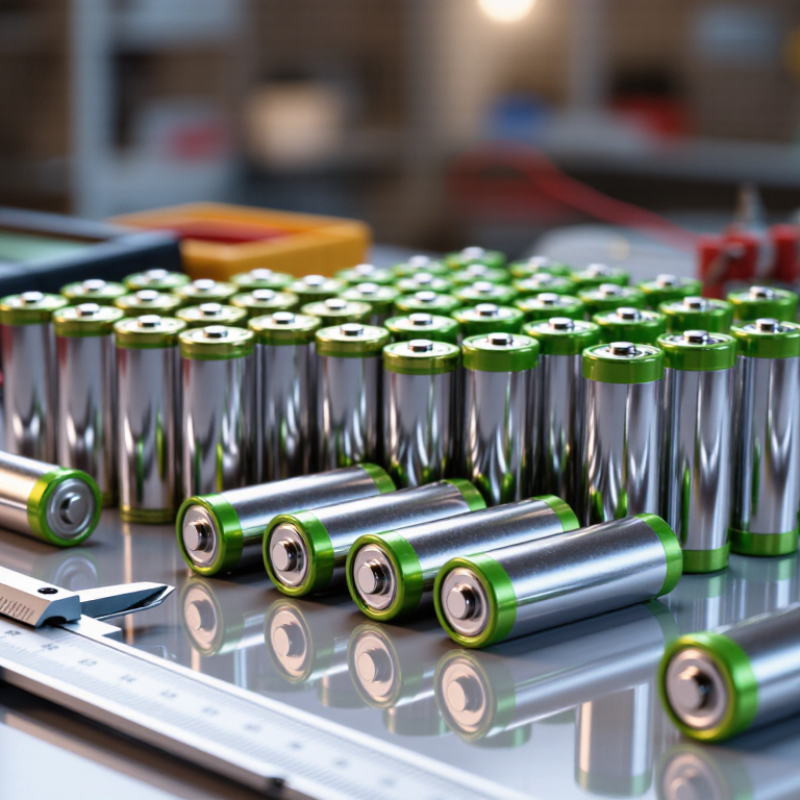
Table of Contents [Hide]
What Is an 18650 Battery and How Does It Work?
An 18650 battery is a rechargeable lithium-ion cell measuring about 18 millimeters wide and 65 millimeters long. The final “0” describes its cylindrical shape. Inside, a graphite anode, a metal-oxide cathode, a separator, and electrolyte control energy movement. During charging, lithium ions travel toward the anode. During use, they move back toward the cathode and create an electrical current.
This design offers a useful balance of energy density, size, and production availability. A protection circuit or battery management system can monitor voltage, temperature, and current in assembled packs. That control matters during global sourcing. Cell chemistry, capacity, internal resistance, cycle life, and certification documents can vary between suppliers. Identical labels do not guarantee identical performance. That assumption can be wrong. In practical inspections, engineers often compare sample test results with factory data before approving a shipment.
Tips: Check the exact cell specification, not only the 18650 name. Request test reports, safety documentation, and traceability records. Confirm whether the cell is designed for high-drain equipment or lower-power applications. Measure capacity under a stated test method. Storage temperature also deserves attention. A small detail can change results. Suppliers should explain inspection methods clearly, including sampling levels and rejection limits. I would also repeat key tests after transport, because vibration, heat, and storage time may affect performance.
Why Choose 18650 Battery for Global Sourcing? - What Is an 18650 Battery and How Does It Work?
| Data Dimension | Typical 18650 Battery Information | Global Sourcing Relevance | Practical Considerations |
|---|---|---|---|
| Battery Type | Rechargeable cylindrical lithium-ion cell | Suitable for repeated-use products and battery packs | Requires a compatible charger, protection system, and proper battery management |
| Standard Size | Approximately 18 mm in diameter and 65 mm in length | Common dimensions simplify mechanical design and pack integration | Actual dimensions may vary slightly because of insulation, terminals, and protection components |
| Nominal Voltage | Approximately 3.6–3.7 V per cell | Allows battery packs to be configured for different voltage requirements | Charging voltage is higher than nominal voltage and must match the selected chemistry |
| Full-Charge Voltage | Commonly 4.2 V for standard lithium-ion chemistries | Provides a consistent reference for charger and protection-system design | Overcharging beyond the specified limit can create safety risks and permanently damage the cell |
| Discharge Cut-Off | Often approximately 2.5–3.0 V, depending on cell specifications | Helps protect cells during transportation, storage, and product operation | The battery management system should follow the manufacturer’s specified limits |
| Typical Capacity Range | Approximately 1,500–3,600 mAh for many commercially available cells | Offers options for balancing runtime, current output, and purchase cost | Higher capacity does not always mean higher continuous-discharge capability |
| Energy per Cell | Approximately 5.4–13.3 Wh, calculated from nominal voltage and rated capacity | Supports modular energy-storage designs for portable and stationary equipment | Usable energy depends on load, temperature, cutoff voltage, age, and operating conditions |
| Common Chemistry | Several lithium-ion chemistries are available, including nickel-manganese-cobalt and nickel-cobalt-aluminum systems | Enables sourcing according to energy density, power output, cycle life, and safety needs | Chemistry affects voltage profile, thermal behavior, charging requirements, and service life |
| Energy Density | Generally higher than nickel-based rechargeable cells of comparable size | Can reduce battery-pack size and weight for a given energy requirement | Energy density varies by chemistry, electrode design, capacity, and operating conditions |
| Discharge Capability | Ranges from standard-purpose output to high-current output, depending on cell design | Supports applications ranging from moderate-load electronics to power-demanding equipment | Continuous and pulse current ratings should be verified separately; misleading ratings should be avoided |
| Cycle Life | Often several hundred charge-discharge cycles under controlled test conditions | Helps estimate replacement frequency and total operating cost | Real-world cycle life is affected by depth of discharge, temperature, charging speed, and storage level |
| Operating Temperature | Many cells operate near 0–45 °C while charging and approximately −20–60 °C while discharging | Provides a reference for international product design and logistics planning | Exact limits differ by cell; performance and capacity decrease at temperature extremes |
| Protection Requirements | Unprotected cells rely on an external battery management system or protection circuit | Allows flexible pack architecture for products with different voltage and current requirements | Protection should address overcharge, over-discharge, overcurrent, short circuit, and temperature conditions |
| Cell Configuration | Series connections increase voltage; parallel connections increase capacity and current capability | Supports scalable battery-pack designs for different markets and product specifications | Cells should be closely matched in capacity, internal resistance, age, and state of charge |
| Quality-Control Data | Capacity, internal resistance, voltage consistency, leakage, appearance, and weld quality | Improves batch consistency and reduces field failures across international shipments | Request test records, sampling procedures, acceptance criteria, and traceability information |
| Transportation Classification | Standalone lithium-ion cells are generally regulated as dangerous goods during transport | Accurate documentation helps reduce customs delays and shipping compliance risks | Packaging, labeling, testing documentation, and transport mode requirements must be checked for each destination |
| Storage Guidance | Store in a cool, dry location away from direct sunlight, moisture, and conductive materials | Proper storage helps preserve capacity and reduces safety risks before production or resale | Long-term storage is commonly recommended at a partial state of charge rather than fully charged |
| Sourcing Advantages | Standardized form factor, broad technical availability, modular design, and multiple performance options | Simplifies supplier comparison, product development, and multi-region procurement | Technical specifications and compliance documents should be verified independently for every production batch |

© Copyright - Pro Tool & Supply - Site by SVM E-Marketing Solutions - Sitemap
- Privacy policy