- Products
- Air Compressors & Air Tools
- Climate Control
- Compaction Equipment
- Concrete Cutting Tools & Equipment
- Concrete and Masonry
- Demolition & Excavation
- Electrical & Mechanical
- Fasteners and Anchoring Adhesives
- Floor Protection
- Generators and Welders
- Hand Tools
- Heaters
- Janitorial and Office Supplies
- Jobsite Protection
- Ladders & Storage
- Lighting & Lighting Accessories
- Man Lifts
- Material Handling Equipment
- Power Tools
- Pressure Washers & Pumps
- Safety Gear
- Safety Products
- Saws
- Surface Preparation
- SEASONAL PRODUCTS
- Rentals
- Air Compressor and Air Tool Rentals
- Climate Control Rental
- Compaction Rentals
- Concrete Equipment Rentals
- Demolition & Excavation Equipment Rentals
- Concrete Floor Grinder Rentals
- General Construction Equipment Rentals
- Generator Rentals and Welder Rentals
- Heater Rentals
- Light Tower Rentals
- Man Lift Rentals in Massachusetts and Rhode Island
- Material Handling Equipment Rentals
- Pressure Washer & Pump Rentals
- Saw Rentals in New England
- SEASONAL PRODUCTS
- Products
- Air Compressors & Air Tools
- Climate Control
- Compaction Equipment
- Concrete Cutting Tools & Equipment
- Demolition & Excavation
- Electrical & Mechanical
- Floor Protection
- Generators and Welders
- Construction Heaters
- Construction Ladders, Staging, & Storage
- Construction Lighting
- Man Lifts
- Material Handling Equipment
- Industrial Janitorial and Office Supplies
- Pressure Washers & Pumps
- Construction Safety Products
- Construction Safety Gear
- Surface Preparation
- Building Protection
- Diesel Accessories
- Zero Emissions
- Rentals
- Air Compressor and Air Tool Rentals
- Climate Control Rental
- Compaction Rentals
- Concrete Equipment Rental
- Demolition & Excavation Equipment Rental
- General Construction Equipment Rental
- Generator Rentals and Welder Rentals
- Construction Heaters Rental
- Light Tower Rentals
- Man Lift Rentals
- Material Handling Equipment Rental
- Pressure Washer & Pump Rentals
- Saw Rentals in New England
- Concrete Floor Grinder Rentals
- Zero Emissions Rentals
- Repairs & Used
- Parts
- Blog
- Services
- Resources
- About Us
- Contact Us
Sales & Rental of Construction | Industrial Equipment & Supplies


What Is the Best China Sprinkler Irrigation Controller?
Choosing the best Sprinkler Irrigation Controller is not simply a matter of selecting the most expensive model. It requires evidence, field experience, and careful attention to local conditions. FAO AQUASTAT reports that agriculture accounts for roughly 70% of global freshwater withdrawals. That figure makes efficient scheduling more than a technical preference. It becomes a practical responsibility.
The U.S. Environmental Protection Agency’s WaterSense program states that weather-based irrigation controllers can reduce landscape water use by about 15%. For an average household, that may save nearly 8,800 gallons annually. The result depends on correct installation, functioning rain sensors, and realistic soil settings. A sophisticated controller cannot repair poor nozzle placement. That point is often missed.
Dr. Charles M. Burt, an irrigation engineer and founder of the Irrigation Training and Research Center, described effective irrigation with a clear principle: “Apply water according to the crop’s needs, not according to habit.” His observation remains highly relevant to residential landscapes, farms, and commercial sites. A reliable Sprinkler Irrigation Controller should therefore respond to rainfall, temperature, soil moisture, and plant requirements. It should also offer readable data and simple manual adjustments.
No controller fits every property. Clay soil may need slower cycles, while sandy soil drains quickly. A shaded garden behaves differently from a sunny lawn. This guide compares controller intelligence, sensor compatibility, installation demands, durability, and verified water-saving performance. Some product claims remain difficult to confirm. That deserves honest scrutiny.
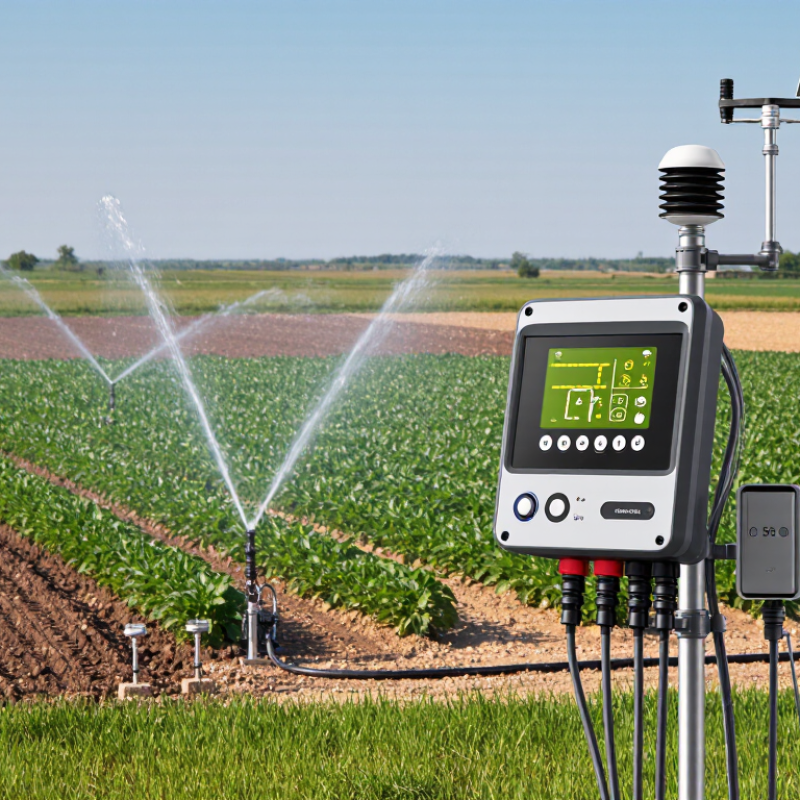
Table of Contents [Hide]
What Is a Sprinkler Irrigation Controller?
A sprinkler irrigation controller is the system’s timing and decision center. It tells valves when to open, how long to run, and when to stop. Some controllers use fixed schedules, while advanced units respond to soil moisture, rainfall, temperature, or water pressure. In practical installations, this small device protects plants from irregular watering. It also helps reduce runoff around paths and planting beds.
A reliable China sprinkler irrigation controller should offer clear programming, stable valve control, and protection from dust and moisture. Check its input voltage before installation. Outdoor units need suitable enclosures and secure cable connections.
I often test each zone with a bucket and a pressure gauge. This simple check reveals blocked nozzles, weak flow, or uneven coverage. The controller cannot repair poor hydraulic design.
Weather-based scheduling can improve efficiency, but it is not always accurate. A shaded garden may remain wet after a hot day. A sensor may also respond slowly after sudden rain. I once trusted an automatic schedule too much and overlooked compacted soil. That mistake taught me to inspect plants, soil, and spray patterns regularly. The best controller is not merely feature-rich; it must match the site, water source, maintenance skills, and local climate. Simple controls are sometimes safer.

© Copyright - Pro Tool & Supply - Site by SVM E-Marketing Solutions - Sitemap
- Privacy policy