- Products
- Air Compressors & Air Tools
- Climate Control
- Compaction Equipment
- Concrete Cutting Tools & Equipment
- Concrete and Masonry
- Demolition & Excavation
- Electrical & Mechanical
- Fasteners and Anchoring Adhesives
- Floor Protection
- Generators and Welders
- Hand Tools
- Heaters
- Janitorial and Office Supplies
- Jobsite Protection
- Ladders & Storage
- Lighting & Lighting Accessories
- Man Lifts
- Material Handling Equipment
- Power Tools
- Pressure Washers & Pumps
- Safety Gear
- Safety Products
- Saws
- Surface Preparation
- SEASONAL PRODUCTS
- Rentals
- Air Compressor and Air Tool Rentals
- Climate Control Rental
- Compaction Rentals
- Concrete Equipment Rentals
- Demolition & Excavation Equipment Rentals
- Concrete Floor Grinder Rentals
- General Construction Equipment Rentals
- Generator Rentals and Welder Rentals
- Heater Rentals
- Light Tower Rentals
- Man Lift Rentals in Massachusetts and Rhode Island
- Material Handling Equipment Rentals
- Pressure Washer & Pump Rentals
- Saw Rentals in New England
- SEASONAL PRODUCTS
- Products
- Air Compressors & Air Tools
- Climate Control
- Compaction Equipment
- Concrete Cutting Tools & Equipment
- Demolition & Excavation
- Electrical & Mechanical
- Floor Protection
- Generators and Welders
- Construction Heaters
- Construction Ladders, Staging, & Storage
- Construction Lighting
- Man Lifts
- Material Handling Equipment
- Industrial Janitorial and Office Supplies
- Pressure Washers & Pumps
- Construction Safety Products
- Construction Safety Gear
- Surface Preparation
- Building Protection
- Diesel Accessories
- Zero Emissions
- Rentals
- Air Compressor and Air Tool Rentals
- Climate Control Rental
- Compaction Rentals
- Concrete Equipment Rental
- Demolition & Excavation Equipment Rental
- General Construction Equipment Rental
- Generator Rentals and Welder Rentals
- Construction Heaters Rental
- Light Tower Rentals
- Man Lift Rentals
- Material Handling Equipment Rental
- Pressure Washer & Pump Rentals
- Saw Rentals in New England
- Concrete Floor Grinder Rentals
- Zero Emissions Rentals
- Repairs & Used
- Parts
- Blog
- Services
- Resources
- About Us
- Contact Us
Sales & Rental of Construction | Industrial Equipment & Supplies


What Is a Hex Head Capscrew?
A Capscrew Hex Head is more than a simple threaded fastener. Its six-sided head accepts a wrench or socket, while its cylindrical body provides a dependable clamping connection. In machinery, the head may sit against a steel bracket, a painted frame, or a precisely machined flange. That contact area matters.
John H. Bickford, a recognized fastener engineering author, stated, “The strength of a bolted joint depends on more than the strength of the bolt.” This principle explains why material grade, thread engagement, tightening torque, and joint design must be considered together. A high-strength capscrew can still fail when the joint is poorly aligned or the threads are damaged.
Not just the head.
This guide examines what defines a Capscrew Hex Head and how it differs from related bolts. It will discuss common standards, including ASME B18.2.1 and ISO specifications, along with grades such as Grade 8 and Class 10.9. Dimensions also deserve attention. Head height, across-flats size, thread pitch, and under-head length affect tool access and installation accuracy.
In practical use, the correct fastener is rarely chosen by appearance alone. A zinc-plated carbon steel screw may suit indoor equipment, but it can perform poorly in salt spray. Stainless steel resists corrosion, yet it may gall during installation. These details are easy to overlook.
The terminology is not always perfectly consistent across suppliers. That is worth remembering. This article therefore treats the Capscrew Hex Head as both a product category and an engineering subject, using measurable specifications rather than assumptions.
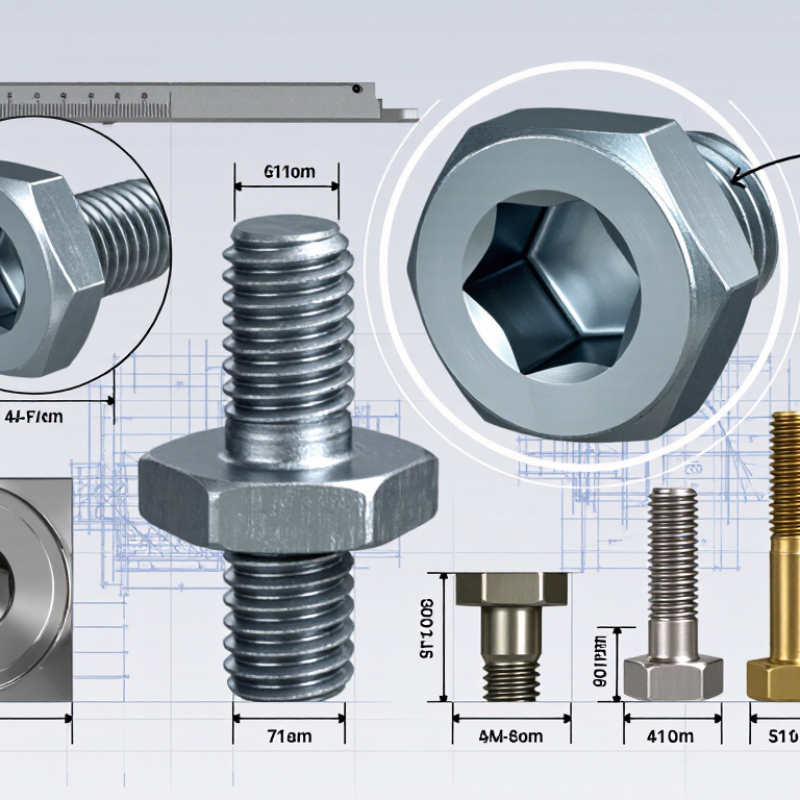
Table of Contents [Hide]
Hex Head Capscrew Geometry Under ASME B18.2.1 Dimensions
What Is a Hex Head Capscrew?
Hex Head Capscrew Geometry Under ASME B18.2.1 Dimensions
A hex head capscrew has a six-sided head and a threaded or partially threaded shank. Its geometry is more controlled than its simple appearance suggests. ASME B18.2.1 defines inch-series dimensions for head width, head height, bearing surface, shank diameter, thread length, and overall length. These values help engineers select compatible sockets, washers, and tapped holes.
The dimensional tables use minimum and maximum limits, not one perfect measurement. For example, a 1/2-inch capscrew commonly uses a 3/4-inch nominal across-flats head. Its head height is approximately 5/16 inch, subject to the specified tolerance range. These limits matter during assembly. A slightly oversized head can block socket access. A reduced bearing surface can increase local pressure under load.
ASME B18.2.1 should be read with the applicable thread specification and material requirements. ASTM F606/F606M provides recognized methods for checking tensile, proof-load, and hardness performance. Those tests do not replace dimensional inspection. They support it. In production, inspectors often verify across-flats size with a calibrated micrometer or gauge, then check head height separately.
A practical caution: drawings sometimes copy nominal values without tolerances. That is risky. The standard controls geometry, but plating, forming variation, and measurement technique still influence fit. Field experience shows that a socket may fit visually yet fail under torque. The mistake is easy to miss.

© Copyright - Pro Tool & Supply - Site by SVM E-Marketing Solutions - Sitemap
- Privacy policy