- Products
- Air Compressors & Air Tools
- Climate Control
- Compaction Equipment
- Concrete Cutting Tools & Equipment
- Concrete and Masonry
- Demolition & Excavation
- Electrical & Mechanical
- Fasteners and Anchoring Adhesives
- Floor Protection
- Generators and Welders
- Hand Tools
- Heaters
- Janitorial and Office Supplies
- Jobsite Protection
- Ladders & Storage
- Lighting & Lighting Accessories
- Man Lifts
- Material Handling Equipment
- Power Tools
- Pressure Washers & Pumps
- Safety Gear
- Safety Products
- Saws
- Surface Preparation
- SEASONAL PRODUCTS
- Rentals
- Air Compressor and Air Tool Rentals
- Climate Control Rental
- Compaction Rentals
- Concrete Equipment Rentals
- Demolition & Excavation Equipment Rentals
- Concrete Floor Grinder Rentals
- General Construction Equipment Rentals
- Generator Rentals and Welder Rentals
- Heater Rentals
- Light Tower Rentals
- Man Lift Rentals in Massachusetts and Rhode Island
- Material Handling Equipment Rentals
- Pressure Washer & Pump Rentals
- Saw Rentals in New England
- SEASONAL PRODUCTS
- Products
- Air Compressors & Air Tools
- Climate Control
- Compaction Equipment
- Concrete Cutting Tools & Equipment
- Demolition & Excavation
- Electrical & Mechanical
- Floor Protection
- Generators and Welders
- Construction Heaters
- Construction Ladders, Staging, & Storage
- Construction Lighting
- Man Lifts
- Material Handling Equipment
- Industrial Janitorial and Office Supplies
- Pressure Washers & Pumps
- Construction Safety Products
- Construction Safety Gear
- Surface Preparation
- Building Protection
- Diesel Accessories
- Zero Emissions
- Rentals
- Air Compressor and Air Tool Rentals
- Climate Control Rental
- Compaction Rentals
- Concrete Equipment Rental
- Demolition & Excavation Equipment Rental
- General Construction Equipment Rental
- Generator Rentals and Welder Rentals
- Construction Heaters Rental
- Light Tower Rentals
- Man Lift Rentals
- Material Handling Equipment Rental
- Pressure Washer & Pump Rentals
- Saw Rentals in New England
- Concrete Floor Grinder Rentals
- Zero Emissions Rentals
- Repairs & Used
- Parts
- Blog
- Services
- Resources
- About Us
- Contact Us
Sales & Rental of Construction | Industrial Equipment & Supplies


What Is a TRV Radiator and How Does It Work?
A Trv Radiator is a small device with a practical purpose: controlling room temperature without constant manual adjustment. It senses surrounding air through a thermostatic head. When the room warms, the valve reduces hot-water flow. When the room cools, it opens again. Simple, but not always perfectly.
The International Energy Agency reports that buildings account for about 30% of global final energy demand and 26% of energy-related emissions. Better heating controls can therefore support wider efficiency goals, although a TRV alone cannot solve poor insulation or an unbalanced heating system. The UK Energy Saving Trust also advises using room-by-room controls to avoid heating empty spaces. That detail matters. A warm hallway and an unused bedroom should not receive identical heat.
Dr. Richard Lowes, a heating-policy researcher at the University of Exeter, has repeatedly stressed the importance of effective heating control: “Heat controls are essential for reducing energy demand while maintaining comfort.” His point is easy to test at home. Stand beside a radiator on a cold morning. Turn the TRV slowly, listen for water flow, and watch how the room responds over time. Do not expect instant changes.
This guide explains what a Trv Radiator does, how its sensor and valve operate, and where installation mistakes reduce performance. It also questions a common assumption: turning the dial higher does not heat a room faster. Correct settings, system balancing, and realistic expectations matter more.
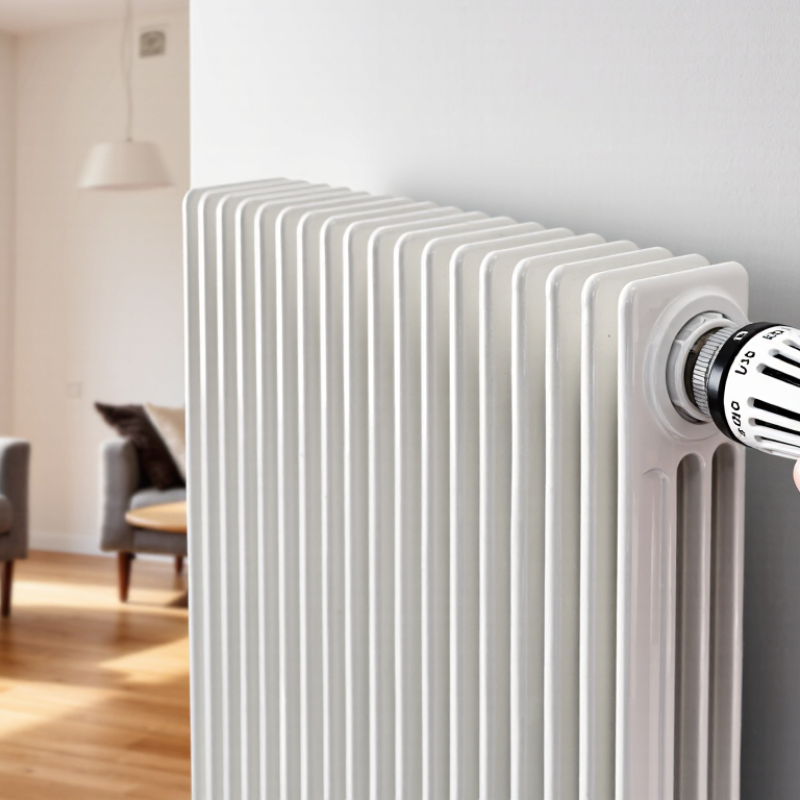
Table of Contents [Hide]
What Is a TRV? Definition, Components, and EN 215 Standards
What Is a TRV Radiator and How Does It Work?
What Is a TRV? Definition, Components, and EN 215 Standards
A TRV is a thermostatic radiator valve fitted to a radiator inlet. It controls hot-water flow according to room temperature. The valve does not heat the room by itself. Instead, it adjusts radiator output as conditions change.
A typical TRV has a sensor head, valve body, internal pin, and flow seat. The sensor may contain wax or liquid. As room temperature rises, the sensor expands and pushes the pin inward. Flow decreases. When the room cools, the sensor contracts and allows more hot water through. The numbered dial represents temperature ranges, not exact degrees. A setting of 3 is often comfortable, but room size and insulation can change the result.
EN 215 specifies performance, dimensions, testing methods, and marking requirements for thermostatic radiator valves. It helps manufacturers and installers assess control accuracy, response, durability, and resistance to pressure. However, compliance with EN 215 does not guarantee perfect performance in every heating system. Installation quality still matters. The sensor needs free air around it. Curtains, furniture, or a nearby heat source can distort its reading. A common mistake is forcing the adjustment dial when the pin is sticking. Gentle inspection is safer, although professional servicing may be necessary. I would also avoid treating the scale as a laboratory measurement; it is only a practical control reference.

© Copyright - Pro Tool & Supply - Site by SVM E-Marketing Solutions - Sitemap
- Privacy policy