- Products
- Air Compressors & Air Tools
- Climate Control
- Compaction Equipment
- Concrete Cutting Tools & Equipment
- Concrete and Masonry
- Demolition & Excavation
- Electrical & Mechanical
- Fasteners and Anchoring Adhesives
- Floor Protection
- Generators and Welders
- Hand Tools
- Heaters
- Janitorial and Office Supplies
- Jobsite Protection
- Ladders & Storage
- Lighting & Lighting Accessories
- Man Lifts
- Material Handling Equipment
- Power Tools
- Pressure Washers & Pumps
- Safety Gear
- Safety Products
- Saws
- Surface Preparation
- SEASONAL PRODUCTS
- Rentals
- Air Compressor and Air Tool Rentals
- Climate Control Rental
- Compaction Rentals
- Concrete Equipment Rentals
- Demolition & Excavation Equipment Rentals
- Concrete Floor Grinder Rentals
- General Construction Equipment Rentals
- Generator Rentals and Welder Rentals
- Heater Rentals
- Light Tower Rentals
- Man Lift Rentals in Massachusetts and Rhode Island
- Material Handling Equipment Rentals
- Pressure Washer & Pump Rentals
- Saw Rentals in New England
- SEASONAL PRODUCTS
- Products
- Air Compressors & Air Tools
- Climate Control
- Compaction Equipment
- Concrete Cutting Tools & Equipment
- Demolition & Excavation
- Electrical & Mechanical
- Floor Protection
- Generators and Welders
- Construction Heaters
- Construction Ladders, Staging, & Storage
- Construction Lighting
- Man Lifts
- Material Handling Equipment
- Industrial Janitorial and Office Supplies
- Pressure Washers & Pumps
- Construction Safety Products
- Construction Safety Gear
- Surface Preparation
- Building Protection
- Diesel Accessories
- Zero Emissions
- Rentals
- Air Compressor and Air Tool Rentals
- Climate Control Rental
- Compaction Rentals
- Concrete Equipment Rental
- Demolition & Excavation Equipment Rental
- General Construction Equipment Rental
- Generator Rentals and Welder Rentals
- Construction Heaters Rental
- Light Tower Rentals
- Man Lift Rentals
- Material Handling Equipment Rental
- Pressure Washer & Pump Rentals
- Saw Rentals in New England
- Concrete Floor Grinder Rentals
- Zero Emissions Rentals
- Repairs & Used
- Parts
- Blog
- Services
- Resources
- About Us
- Contact Us
Sales & Rental of Construction | Industrial Equipment & Supplies

What Are the Top Types of Laser Cut Parts?
Laser Cut Parts range from simple flat blanks to precision components that must fit into demanding assemblies. A laser-cut bracket may have two mounting holes and a sharp bend line; an equipment enclosure may need dozens of openings for connectors, vents, and fasteners. The process suits many shapes, but the “top” part depends on material, thickness, tolerance, and production volume. Small details matter.
The market is expanding alongside wider industrial use. Grand View Research estimated the global laser cutting machines market at USD 5.26 billion in 2023 and projected a 6.7% compound annual growth rate from 2024 to 2030. This figure describes equipment, not parts demand directly. Still, it signals growing investment in the process. Dr. Reinhart Poprawe, former director of Fraunhofer ILT, has described laser technology as “a key technology of the 21st century.” That perspective helps explain its reach, though it does not mean every component benefits from laser cutting.
This guide explores common types, including sheet-metal brackets, panels, enclosures, gears, stencils, and tube-cut components. It also considers where each type is used and which design choices affect accuracy, edge quality, and cost. A tidy drawing can still produce a poor fit if kerf width or material variation is overlooked. That distinction is easy to blur. The most useful overview is not a ranking alone, but a practical comparison of what each part does, how it is made, and where the process has limits.
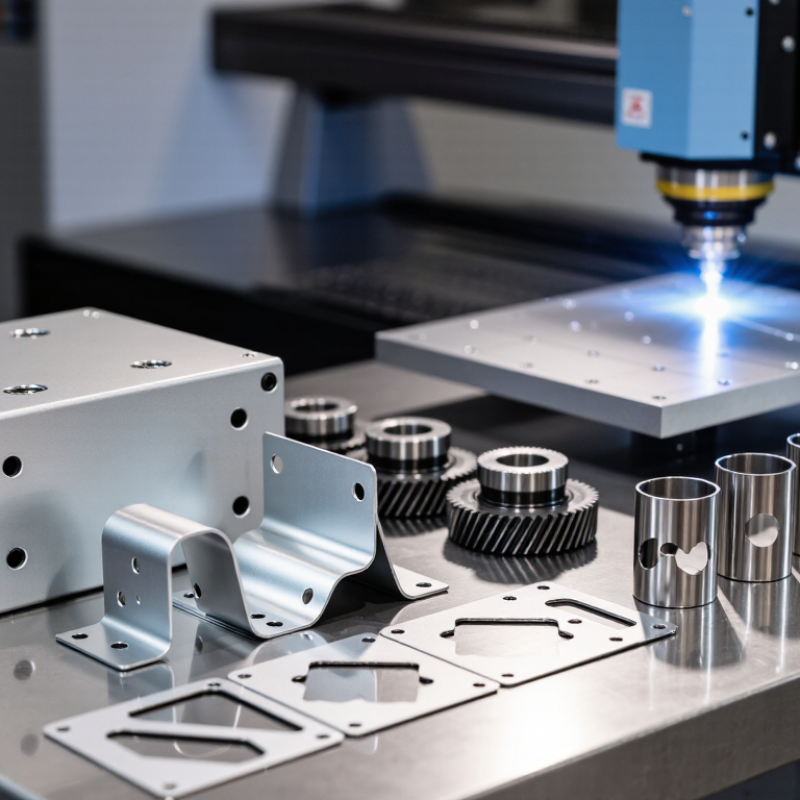
Table of Contents [Hide]
How Laser-Cut Parts Are Classified by Shape and Function
Laser-cut parts are best classified by both shape and job. Flat profiles include tabs, brackets, gussets, and irregular outlines cut from sheet. Panels and plates often become machine guards, access covers, or mounting faces. Tube-cut parts add slots, notches, and end shapes to frames and handrails. The outline tells only part of the story.
Function clarifies the design. Structural parts carry loads, while joining parts use holes or slots for bolts and alignment. Enclosure parts shield components; perforated parts manage airflow or reduce weight.
World Steel Association’s World Steel in Figures 2024 reports about 1.89 billion tonnes of crude steel production in 2023. That scale helps explain why sheet steel is widely available, but it does not determine the right thickness or cut geometry for a specific part. A small bracket can still distort if its narrow arms heat unevenly. Classification is useful, though real parts often serve more than one function.
Tips: Mark the material, thickness, critical holes, and load direction on the drawing. Check edge quality and fit on a first sample. A tidy shape can still be a poor fit.
© Copyright - Pro Tool & Supply - Site by SVM E-Marketing Solutions - Sitemap
- Privacy policy