- Products
- Air Compressors & Air Tools
- Climate Control
- Compaction Equipment
- Concrete Cutting Tools & Equipment
- Concrete and Masonry
- Demolition & Excavation
- Electrical & Mechanical
- Fasteners and Anchoring Adhesives
- Floor Protection
- Generators and Welders
- Hand Tools
- Heaters
- Janitorial and Office Supplies
- Jobsite Protection
- Ladders & Storage
- Lighting & Lighting Accessories
- Man Lifts
- Material Handling Equipment
- Power Tools
- Pressure Washers & Pumps
- Safety Gear
- Safety Products
- Saws
- Surface Preparation
- SEASONAL PRODUCTS
- Rentals
- Air Compressor and Air Tool Rentals
- Climate Control Rental
- Compaction Rentals
- Concrete Equipment Rentals
- Demolition & Excavation Equipment Rentals
- Concrete Floor Grinder Rentals
- General Construction Equipment Rentals
- Generator Rentals and Welder Rentals
- Heater Rentals
- Light Tower Rentals
- Man Lift Rentals in Massachusetts and Rhode Island
- Material Handling Equipment Rentals
- Pressure Washer & Pump Rentals
- Saw Rentals in New England
- SEASONAL PRODUCTS
- Products
- Air Compressors & Air Tools
- Climate Control
- Compaction Equipment
- Concrete Cutting Tools & Equipment
- Demolition & Excavation
- Electrical & Mechanical
- Floor Protection
- Generators and Welders
- Construction Heaters
- Construction Ladders, Staging, & Storage
- Construction Lighting
- Man Lifts
- Material Handling Equipment
- Industrial Janitorial and Office Supplies
- Pressure Washers & Pumps
- Construction Safety Products
- Construction Safety Gear
- Surface Preparation
- Building Protection
- Diesel Accessories
- Zero Emissions
- Rentals
- Air Compressor and Air Tool Rentals
- Climate Control Rental
- Compaction Rentals
- Concrete Equipment Rental
- Demolition & Excavation Equipment Rental
- General Construction Equipment Rental
- Generator Rentals and Welder Rentals
- Construction Heaters Rental
- Light Tower Rentals
- Man Lift Rentals
- Material Handling Equipment Rental
- Pressure Washer & Pump Rentals
- Saw Rentals in New England
- Concrete Floor Grinder Rentals
- Zero Emissions Rentals
- Repairs & Used
- Parts
- Blog
- Services
- Resources
- About Us
- Contact Us
Sales & Rental of Construction | Industrial Equipment & Supplies


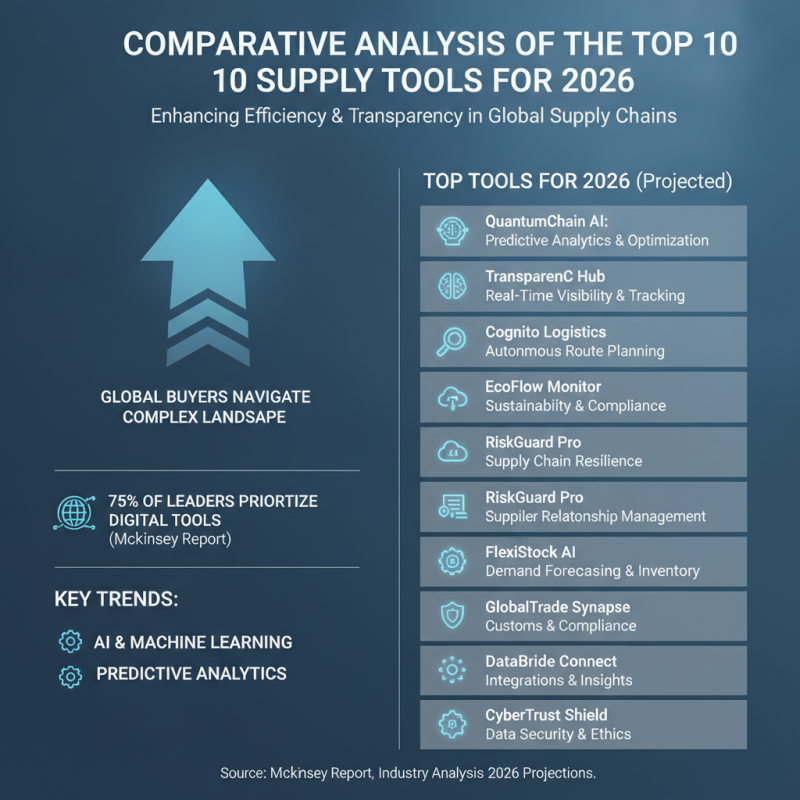
Top 10 Supply Tools for Global Buyers in 2026?
In the fast-evolving landscape of global procurement, the significance of effective supply tools cannot be overstated. By 2026, businesses will increasingly rely on innovative solutions to navigate complexities in the supply chain. According to a recent report by Supply Chain Insights, 74% of organizations expect supply tools to enhance their operational efficiency. This trend underscores the growing importance of technology in supporting global buyers.
Industry expert Dr. Karen James, a leading voice in supply chain research, emphasizes, "The right supply tools can transform how buyers interact with suppliers." As companies adapt to demand fluctuations and geopolitical challenges, selecting the right tools becomes critical. Features such as real-time data analytics and artificial intelligence capabilities will be indispensable for future procurement strategies.
However, leveraging these tools effectively requires a realistic understanding of their limitations. While advanced supply tools promise efficiency, businesses must address gaps in training and implementation. Neglecting these aspects could lead to underwhelming results. The journey to optimize supply chain management involves continuous learning and adaptation, ensuring that global buyers remain competitive in 2026 and beyond.

Table of Contents
[Hide]
Emerging Trends in Global Supply Tools for Buyers in 2026
In 2026, global buyers will experience a significant shift in supply tools. Emerging technologies are transforming how procurement operates. Digital platforms will enhance transparency and streamline communication. Buyers will find themselves relying on advanced analytics for smarter decision-making. This trend signals a move towards data-driven procurement strategies.
Additionally, sustainability is becoming a core focus. Buyers will need tools that measure environmental impacts. Supply chains must adapt to new regulations and consumer demands. Tracking carbon footprints will not only be essential but also expected. However, the tools available may not always meet these evolving needs effectively. Buyers will face challenges in balancing cost and sustainability.
Collaboration tools will rise in importance too. They will foster teamwork across global teams. Communication barriers might still exist, causing delays and misunderstandings. Buyers will have to navigate these hurdles carefully. This environment will push procurement professionals to think creatively about resource management. As these trends unfold, staying informed will be key to successful global buying strategies.
Related Posts
-

2026 Top Tools for Effective Project Management and Collaboration Tools?
-

Top All Tools for Efficiency and Productivity in Every Domain?
-
Top 5 Essential Contractor Tools for 2025: Boost Your Efficiency Today!
-
Top 5 Essential Hand Tools Every DIY Enthusiast Should Own
-

Top China Pro Tools for Global Buyers to Consider?
-

10 Essential Tips for Choosing the Right Construction Tools for Your Projects?

© Copyright - Pro Tool & Supply - Site by SVM E-Marketing Solutions - Sitemap
- Privacy policy