- Products
- Air Compressors & Air Tools
- Climate Control
- Compaction Equipment
- Concrete Cutting Tools & Equipment
- Concrete and Masonry
- Demolition & Excavation
- Electrical & Mechanical
- Fasteners and Anchoring Adhesives
- Floor Protection
- Generators and Welders
- Hand Tools
- Heaters
- Janitorial and Office Supplies
- Jobsite Protection
- Ladders & Storage
- Lighting & Lighting Accessories
- Man Lifts
- Material Handling Equipment
- Power Tools
- Pressure Washers & Pumps
- Safety Gear
- Safety Products
- Saws
- Surface Preparation
- SEASONAL PRODUCTS
- Rentals
- Air Compressor and Air Tool Rentals
- Climate Control Rental
- Compaction Rentals
- Concrete Equipment Rentals
- Demolition & Excavation Equipment Rentals
- Concrete Floor Grinder Rentals
- General Construction Equipment Rentals
- Generator Rentals and Welder Rentals
- Heater Rentals
- Light Tower Rentals
- Man Lift Rentals in Massachusetts and Rhode Island
- Material Handling Equipment Rentals
- Pressure Washer & Pump Rentals
- Saw Rentals in New England
- SEASONAL PRODUCTS
- Products
- Air Compressors & Air Tools
- Climate Control
- Compaction Equipment
- Concrete Cutting Tools & Equipment
- Demolition & Excavation
- Electrical & Mechanical
- Floor Protection
- Generators and Welders
- Construction Heaters
- Construction Ladders, Staging, & Storage
- Construction Lighting
- Man Lifts
- Material Handling Equipment
- Industrial Janitorial and Office Supplies
- Pressure Washers & Pumps
- Construction Safety Products
- Construction Safety Gear
- Surface Preparation
- Building Protection
- Diesel Accessories
- Zero Emissions
- Rentals
- Air Compressor and Air Tool Rentals
- Climate Control Rental
- Compaction Rentals
- Concrete Equipment Rental
- Demolition & Excavation Equipment Rental
- General Construction Equipment Rental
- Generator Rentals and Welder Rentals
- Construction Heaters Rental
- Light Tower Rentals
- Man Lift Rentals
- Material Handling Equipment Rental
- Pressure Washer & Pump Rentals
- Saw Rentals in New England
- Concrete Floor Grinder Rentals
- Zero Emissions Rentals
- Repairs & Used
- Parts
- Blog
- Services
- Resources
- About Us
- Contact Us
Sales & Rental of Construction | Industrial Equipment & Supplies


What Are the Top Shipping Container Types in 2026?
Choosing a Shipping Container in 2026 is less about finding one “best” box and more about matching its design to the cargo, route, and handling equipment. A Dry Container remains the familiar workhorse for boxed goods and palletized freight. High-cube models add extra vertical space. Reefer containers carry temperature-sensitive products, while open-top and flat-rack units accommodate tall or unusually shaped loads. Tank containers serve liquid cargo.
Maritime historian Marc Levinson’s work on containerization offers a useful perspective: standardization matters as much as the container itself. That is a paraphrase of his documented analysis, not a direct quotation. It helps explain why common dimensions and handling compatibility remain practical selection factors. Yet the details matter. A reefer needs dependable power and temperature monitoring; a flat rack needs suitable cargo support and securing arrangements. Small choices count.
This guide compares the main container types buyers are likely to encounter in 2026, including their uses, strengths, and trade-offs. It also considers less common options, such as side-opening and insulated containers. No single type fits every shipment. A high-cube unit may offer useful volume, but extra space alone does not guarantee a better fit. Specifications, condition, and the cargo’s actual dimensions deserve a careful check. That part is easy to overlook. It can be.
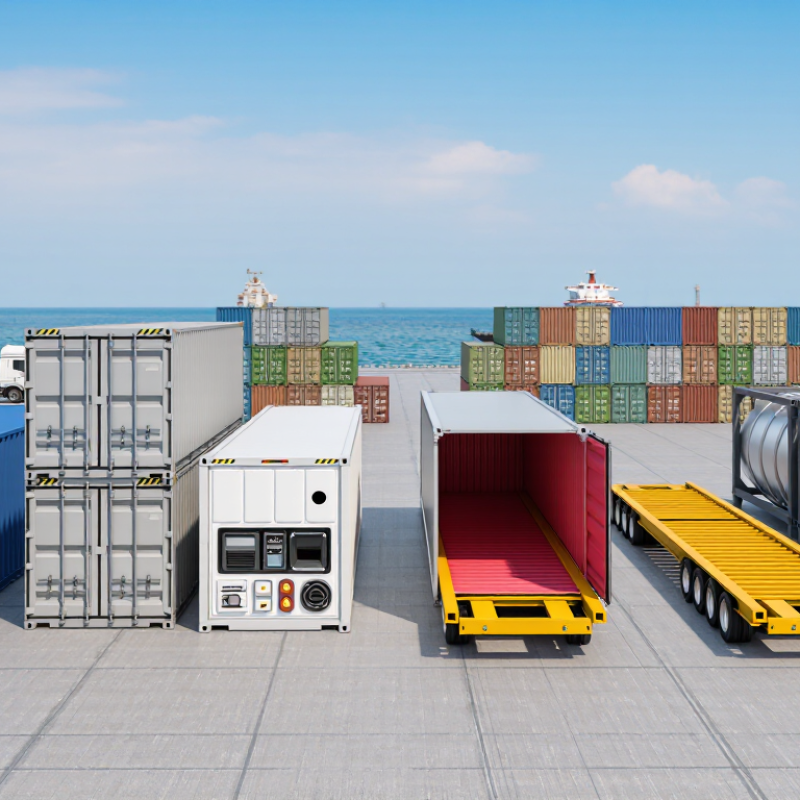
Table of Contents [Hide]
How ISO 668 Sets the Standard for 20-Foot and 40-Foot Containers
ISO 668:2020 defines the classification, external dimensions, and ratings of Series 1 freight containers. A nominal 20-foot unit measures 6.058 metres long; a 40-foot unit measures 12.192 metres. Both are 2.438 metres wide. Standard height is 2.591 metres, while high-cube units are typically 2.896 metres tall. A 40-foot container counts as two TEUs, or twenty-foot equivalent units. These shared dimensions help cranes, ship cells, and chassis handle containers across different routes.
On a busy quay, those measurements matter: a few centimetres can affect clearance or fit. Still, ISO dimensions do not guarantee identical internal space. Wall thickness, doors, and construction details vary, so shippers should check each unit’s actual specifications. Easy to overlook. UNCTAD’s Review of Maritime Transport 2024 reports that global container-port throughput reached 858.9 million TEUs in 2023. That scale makes consistent sizing essential, but it also shows why capacity planning cannot rely on nominal length alone.
ISO 668 sets the common frame; operational checks fill in the practical details.

© Copyright - Pro Tool & Supply - Site by SVM E-Marketing Solutions - Sitemap
- Privacy policy