- Products
- Air Compressors & Air Tools
- Climate Control
- Compaction Equipment
- Concrete Cutting Tools & Equipment
- Concrete and Masonry
- Demolition & Excavation
- Electrical & Mechanical
- Fasteners and Anchoring Adhesives
- Floor Protection
- Generators and Welders
- Hand Tools
- Heaters
- Janitorial and Office Supplies
- Jobsite Protection
- Ladders & Storage
- Lighting & Lighting Accessories
- Man Lifts
- Material Handling Equipment
- Power Tools
- Pressure Washers & Pumps
- Safety Gear
- Safety Products
- Saws
- Surface Preparation
- SEASONAL PRODUCTS
- Rentals
- Air Compressor and Air Tool Rentals
- Climate Control Rental
- Compaction Rentals
- Concrete Equipment Rentals
- Demolition & Excavation Equipment Rentals
- Concrete Floor Grinder Rentals
- General Construction Equipment Rentals
- Generator Rentals and Welder Rentals
- Heater Rentals
- Light Tower Rentals
- Man Lift Rentals in Massachusetts and Rhode Island
- Material Handling Equipment Rentals
- Pressure Washer & Pump Rentals
- Saw Rentals in New England
- SEASONAL PRODUCTS
- Products
- Air Compressors & Air Tools
- Climate Control
- Compaction Equipment
- Concrete Cutting Tools & Equipment
- Demolition & Excavation
- Electrical & Mechanical
- Floor Protection
- Generators and Welders
- Construction Heaters
- Construction Ladders, Staging, & Storage
- Construction Lighting
- Man Lifts
- Material Handling Equipment
- Industrial Janitorial and Office Supplies
- Pressure Washers & Pumps
- Construction Safety Products
- Construction Safety Gear
- Surface Preparation
- Building Protection
- Diesel Accessories
- Zero Emissions
- Rentals
- Air Compressor and Air Tool Rentals
- Climate Control Rental
- Compaction Rentals
- Concrete Equipment Rental
- Demolition & Excavation Equipment Rental
- General Construction Equipment Rental
- Generator Rentals and Welder Rentals
- Construction Heaters Rental
- Light Tower Rentals
- Man Lift Rentals
- Material Handling Equipment Rental
- Pressure Washer & Pump Rentals
- Saw Rentals in New England
- Concrete Floor Grinder Rentals
- Zero Emissions Rentals
- Repairs & Used
- Parts
- Blog
- Services
- Resources
- About Us
- Contact Us
Sales & Rental of Construction | Industrial Equipment & Supplies


Top 10 Plastic Cup Lids Making Machines for Global Buyers
The global market for plastic packaging is becoming more technical, measurable, and demanding. Plastics Europe reported global plastics production of approximately 413.8 million tonnes in 2023. Packaging remained one of the largest application areas. Meanwhile, Smithers continues to identify lightweighting, recycled content, and production efficiency as major packaging trends.
These changes make the Plastic Cup Lids Making Machine an important investment for international buyers. A suitable machine must deliver stable forming, accurate cutting, low material waste, and consistent sealing performance. It should also support different lid shapes, thicknesses, polymers, and production volumes. Small details matter. A poorly adjusted heating zone can create cloudy surfaces or weak edges. Excessive trimming can leave kilograms of scrap beside the production line.
Quality-management expert W. Edwards Deming stated, “Quality comes not from inspection, but from the improvement of the production process.” His principle remains practical for thermoforming factories. Buyers should examine cycle time, mold-change design, temperature control, automation, maintenance access, and after-sales support. Certifications and technical documents also deserve careful review. Marketing claims alone are not enough.
This guide introduces ten Plastic Cup Lids Making Machine options for global buyers. The comparison considers output capacity, forming accuracy, energy use, customization, and long-term serviceability. It is a useful starting point, not a final verdict. Factory conditions differ. A machine that performs well in one plant may require different tooling, cooling, or automation elsewhere. That uncertainty should be tested through samples, factory audits, and transparent performance data.
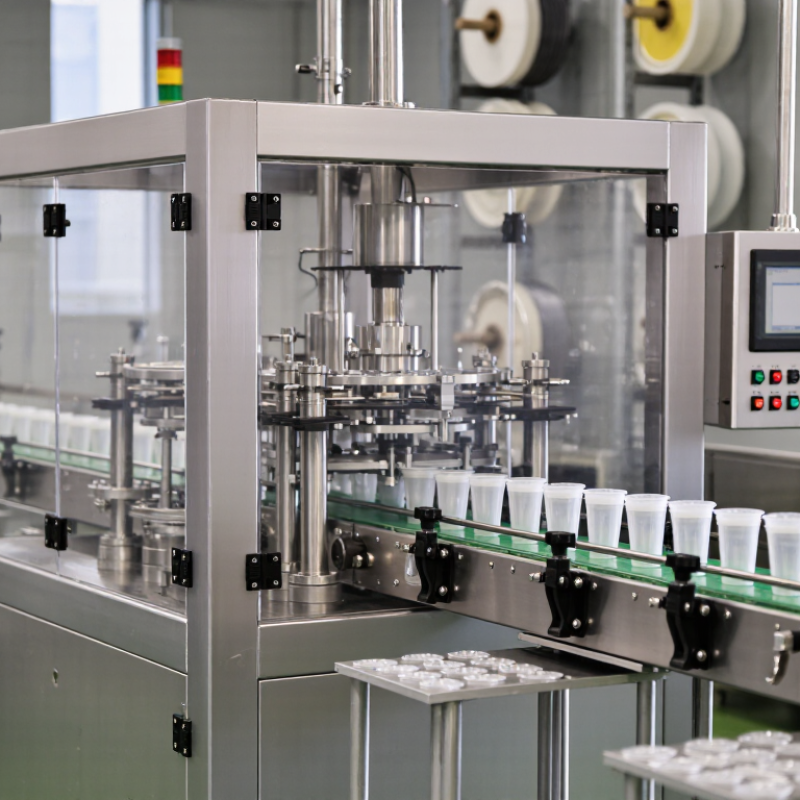
Table of Contents [Hide]
PlasticsEurope 2022: Global Plastics Production Reached 400.3 Mt
PlasticsEurope reported that global plastics production reached 400.3 million tonnes in 2022. This scale shows why efficient processing matters across packaging supply chains. However, total production does not equal sustainable progress. Cup-lid manufacturers still need to reduce scrap, energy use, and unnecessary material thickness.
Material choices matter. Common lid-making machines use thermoforming or injection molding, depending on design and output targets. Thermoforming can suit lightweight lids with consistent wall thickness. Injection molding may support sharper features and stronger fit. Recycled content can reduce reliance on virgin resin, but it may affect clarity, odor, and processing stability. Practical trials remain essential.
Top 10 machine evaluations should include more than advertised speed. Check mold temperature control, cycle consistency, trimming accuracy, and compatibility with approved food-contact materials. Measure rejected lids during extended production, not only during a short demonstration. Inspect stacking, sealing, and opening force with real cup sizes. Small details matter.
Energy monitoring also deserves attention. A machine using less electricity per thousand lids can reduce operating costs over time. Maintenance access is equally important, especially around heaters, molds, sensors, and cutting units. Experienced operators often find problems before automated reports do. That human judgment still matters. Yet relying on experience alone can hide inconsistent measurements, so documented testing and independent quality checks should support every purchasing decision.

© Copyright - Pro Tool & Supply - Site by SVM E-Marketing Solutions - Sitemap
- Privacy policy