- Products
- Air Compressors & Air Tools
- Climate Control
- Compaction Equipment
- Concrete Cutting Tools & Equipment
- Concrete and Masonry
- Demolition & Excavation
- Electrical & Mechanical
- Fasteners and Anchoring Adhesives
- Floor Protection
- Generators and Welders
- Hand Tools
- Heaters
- Janitorial and Office Supplies
- Jobsite Protection
- Ladders & Storage
- Lighting & Lighting Accessories
- Man Lifts
- Material Handling Equipment
- Power Tools
- Pressure Washers & Pumps
- Safety Gear
- Safety Products
- Saws
- Surface Preparation
- SEASONAL PRODUCTS
- Rentals
- Air Compressor and Air Tool Rentals
- Climate Control Rental
- Compaction Rentals
- Concrete Equipment Rentals
- Demolition & Excavation Equipment Rentals
- Concrete Floor Grinder Rentals
- General Construction Equipment Rentals
- Generator Rentals and Welder Rentals
- Heater Rentals
- Light Tower Rentals
- Man Lift Rentals in Massachusetts and Rhode Island
- Material Handling Equipment Rentals
- Pressure Washer & Pump Rentals
- Saw Rentals in New England
- SEASONAL PRODUCTS
- Products
- Air Compressors & Air Tools
- Climate Control
- Compaction Equipment
- Concrete Cutting Tools & Equipment
- Demolition & Excavation
- Electrical & Mechanical
- Floor Protection
- Generators and Welders
- Construction Heaters
- Construction Ladders, Staging, & Storage
- Construction Lighting
- Man Lifts
- Material Handling Equipment
- Industrial Janitorial and Office Supplies
- Pressure Washers & Pumps
- Construction Safety Products
- Construction Safety Gear
- Surface Preparation
- Building Protection
- Diesel Accessories
- Zero Emissions
- Rentals
- Air Compressor and Air Tool Rentals
- Climate Control Rental
- Compaction Rentals
- Concrete Equipment Rental
- Demolition & Excavation Equipment Rental
- General Construction Equipment Rental
- Generator Rentals and Welder Rentals
- Construction Heaters Rental
- Light Tower Rentals
- Man Lift Rentals
- Material Handling Equipment Rental
- Pressure Washer & Pump Rentals
- Saw Rentals in New England
- Concrete Floor Grinder Rentals
- Zero Emissions Rentals
- Repairs & Used
- Parts
- Blog
- Services
- Resources
- About Us
- Contact Us
Sales & Rental of Construction | Industrial Equipment & Supplies


Top 10 Types of Lifting Bolts for Global Buyers
Lifting Bolts sit quietly beneath cranes, frames, engine assemblies, and temporary lifting points. Yet a small thread defect can create a serious failure. Global buyers therefore need more than attractive pricing. They need traceability, correct grades, tested capacity, and clear installation guidance.
The Fortune Business Insights report valued the global lifting equipment market at approximately USD 74.60 billion in 2024. It also forecasts continued growth through 2032. Grand View Research identifies construction, manufacturing, logistics, and energy as major demand sectors. These figures describe lifting equipment broadly, not Lifting Bolts alone. That distinction matters. Market growth cannot replace engineering judgment.
Ross Moloney, former chief executive of the Lifting Equipment Engineers Association, has stated, “Competence is the foundation of safe lifting.” His point applies directly to bolt selection. A buyer must examine working load limits, proof testing, thread form, material grade, corrosion protection, and certification. ISO 898-1 supports mechanical-property verification for carbon-steel fasteners. ASME B30.26 provides guidance for rigging hardware, including marking and inspection expectations. Regional requirements may still differ.
This guide examines the top 10 types of Lifting Bolts used by international buyers. It compares shoulder eye bolts, swivel eye bolts, lifting eyebolts, hoist rings, and specialized designs. The practical details are visible on a workshop floor: a stamped grade, a clean thread, a fully seated shoulder, and no bent eye. Some product descriptions remain incomplete. That is a weakness worth admitting. Buyers should verify manufacturer data, independent test records, and application limits before purchase. A bolt can look strong. Appearance is not proof.
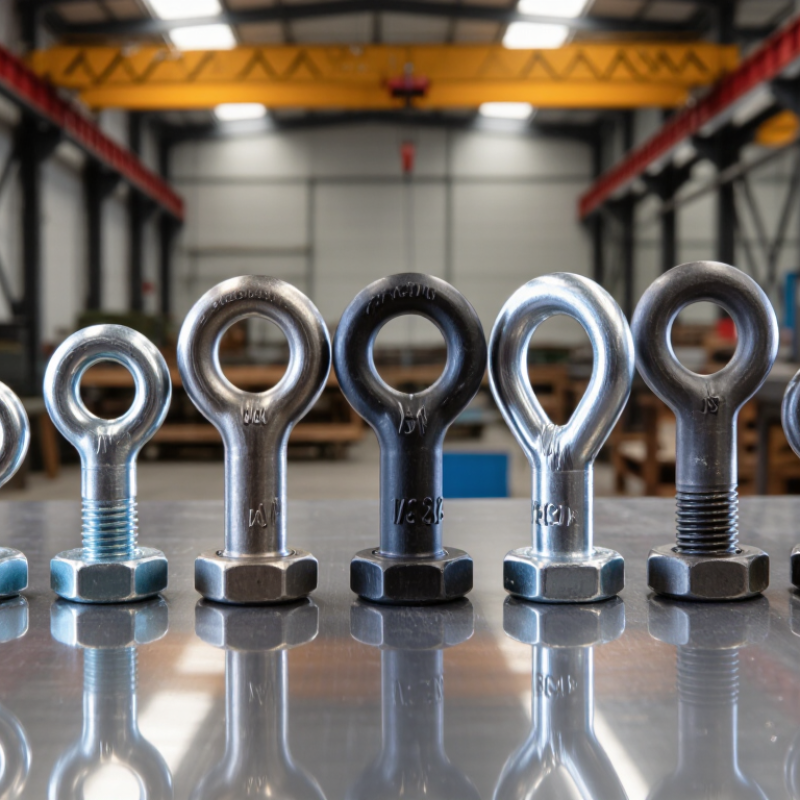
Table of Contents [Hide]
Lifting Bolts: Definition, Structure, and Working Principles
Lifting bolts are threaded lifting hardware designed to connect a load to a hoist, sling, or lifting fixture. Unlike ordinary bolts, they include a formed eye, shoulder, or swivel head for controlled force transfer. Common types include eye bolts, shoulder eye bolts, swivel lifting bolts, ring bolts, and hoist rings. Their shape affects installation, load direction, and handling performance.
A typical lifting bolt has a load-bearing head, a shank, and threaded engagement. The head receives the hook or sling. The shank transfers tension into the bolt body, while the threads secure it to the lifting point. Some designs use a shoulder to seat against the surface. Swivel versions allow limited rotation and can reduce twisting during movement. In practice, the bolt should carry force along its intended axis. Side loading can sharply reduce capacity. That detail is often underestimated.
Working principles are simple, but not forgiving. A properly seated bolt transfers lifting force through the head, shank, threads, and supporting structure. The receiving hole must match the thread size and condition. Damaged threads, bent heads, corrosion, or unclear markings require removal from service. I have seen clean-looking hardware fail inspection because the base material was too thin. A rating on the bolt cannot compensate for weak equipment.
Tips: Check the marked working load limit, thread engagement, and contact surface before every lift. Keep the load balanced and avoid sudden movement. Do not modify, weld, or force a lifting bolt into alignment. If the lifting angle is uncertain, stop and obtain qualified technical guidance.

© Copyright - Pro Tool & Supply - Site by SVM E-Marketing Solutions - Sitemap
- Privacy policy