- Products
- Air Compressors & Air Tools
- Climate Control
- Compaction Equipment
- Concrete Cutting Tools & Equipment
- Concrete and Masonry
- Demolition & Excavation
- Electrical & Mechanical
- Fasteners and Anchoring Adhesives
- Floor Protection
- Generators and Welders
- Hand Tools
- Heaters
- Janitorial and Office Supplies
- Jobsite Protection
- Ladders & Storage
- Lighting & Lighting Accessories
- Man Lifts
- Material Handling Equipment
- Power Tools
- Pressure Washers & Pumps
- Safety Gear
- Safety Products
- Saws
- Surface Preparation
- SEASONAL PRODUCTS
- Rentals
- Air Compressor and Air Tool Rentals
- Climate Control Rental
- Compaction Rentals
- Concrete Equipment Rentals
- Demolition & Excavation Equipment Rentals
- Concrete Floor Grinder Rentals
- General Construction Equipment Rentals
- Generator Rentals and Welder Rentals
- Heater Rentals
- Light Tower Rentals
- Man Lift Rentals in Massachusetts and Rhode Island
- Material Handling Equipment Rentals
- Pressure Washer & Pump Rentals
- Saw Rentals in New England
- SEASONAL PRODUCTS
- Products
- Air Compressors & Air Tools
- Climate Control
- Compaction Equipment
- Concrete Cutting Tools & Equipment
- Demolition & Excavation
- Electrical & Mechanical
- Floor Protection
- Generators and Welders
- Construction Heaters
- Construction Ladders, Staging, & Storage
- Construction Lighting
- Man Lifts
- Material Handling Equipment
- Industrial Janitorial and Office Supplies
- Pressure Washers & Pumps
- Construction Safety Products
- Construction Safety Gear
- Surface Preparation
- Building Protection
- Diesel Accessories
- Zero Emissions
- Rentals
- Air Compressor and Air Tool Rentals
- Climate Control Rental
- Compaction Rentals
- Concrete Equipment Rental
- Demolition & Excavation Equipment Rental
- General Construction Equipment Rental
- Generator Rentals and Welder Rentals
- Construction Heaters Rental
- Light Tower Rentals
- Man Lift Rentals
- Material Handling Equipment Rental
- Pressure Washer & Pump Rentals
- Saw Rentals in New England
- Concrete Floor Grinder Rentals
- Zero Emissions Rentals
- Repairs & Used
- Parts
- Blog
- Services
- Resources
- About Us
- Contact Us
Sales & Rental of Construction | Industrial Equipment & Supplies


What Are the Top Solvent Free Lamination Machine Suppliers?
Solvent Free Lamination is reshaping flexible packaging production, but choosing a supplier requires more than comparing machine speed. Smithers’ The Future of Flexible Packaging to 2028 reports continued growth in sustainable packaging formats, driven by recyclability, lower emissions, and material efficiency. These pressures are strengthening demand for solvent-free equipment.
The technology uses no drying oven for solvent evaporation. It can reduce factory energy consumption, shorten production layouts, and support cleaner working conditions. However, results depend on adhesive chemistry, web tension, curing time, and operator discipline. A fast machine can still produce weak bonds or visible bubbles.
Industry leader Marcello De Rosa of Nordmeccanica has stated, “Solventless lamination is a process, not merely a machine purchase.” That point deserves attention. Supplier quality affects much more than the laminator frame. It includes metering accuracy, automatic thickness control, curing support, troubleshooting, and after-sales training.
MarketsandMarkets’ research on industrial adhesives also identifies sustainability and solvent reduction as important demand drivers. Yet market estimates vary between reports. That uncertainty should encourage careful comparison, not careless purchasing.
This guide examines the top Solvent Free Lamination machine suppliers through practical criteria. These include working width, production speed, adhesive consumption, substrate compatibility, automation, installation support, and lifecycle cost. Some suppliers advertise impressive output figures. Real factories may achieve less. The difference often appears during changeovers, cold-weather production, or thin-film applications. Reliable buyers should request trial runs, verified references, and documented performance data before selecting a long-term equipment partner.
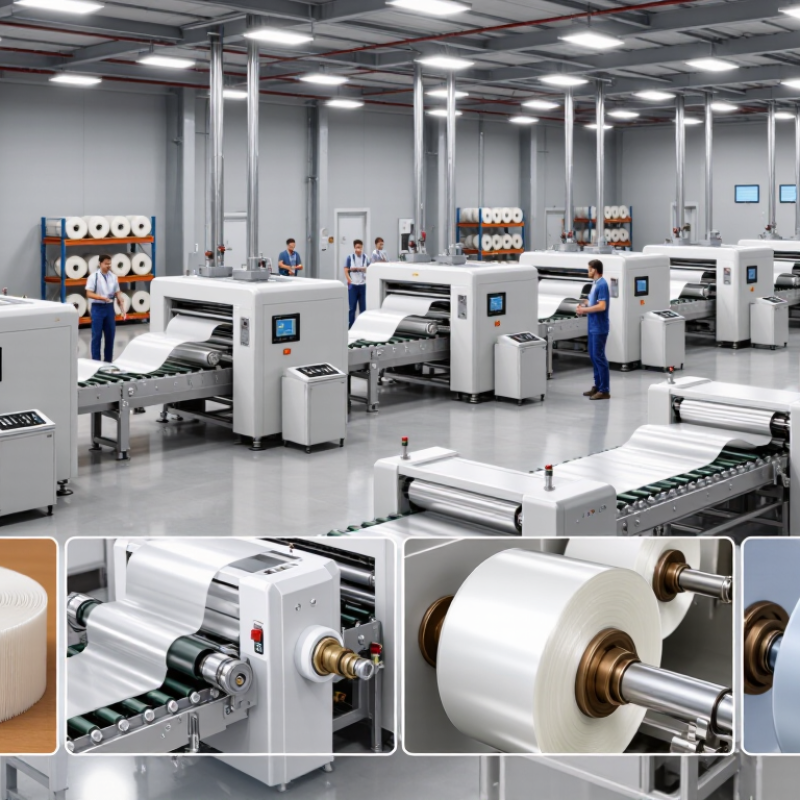
Table of Contents [Hide]
What Is a Solvent-Free Lamination Machine?
A solvent-free lamination machine bonds flexible substrates without liquid solvents. It usually meters two reactive polyurethane components onto a film, foil, or paper web. The adhesive then passes through a heated or controlled nip. Curing continues after rewinding, often for several days.
This design removes the drying oven used by solvent-based systems. It can reduce solvent handling, exhaust requirements, and energy demand. However, it is not automatically simple. Mixing accuracy, adhesive temperature, coating weight, and web tension strongly affect bond quality. A small dosing error may create tunnels, wrinkles, or weak edges. Smithers’ report, The Future of Flexible Packaging to 2028, estimates the global flexible packaging market will reach about US$236 billion by 2028. That growth increases demand for stable, efficient lamination equipment. The report also highlights sustainability pressure across packaging production, although actual benefits depend on plant operation.
Tips: Compare suppliers by application testing, control precision, curing support, and technician response time. Ask for trial data using your real film structure. Check whether the machine handles narrow webs and low coating weights. Do not judge performance from speed alone. Faster is not always better. In practice, operators may need a longer setup period than expected, especially when switching adhesive systems. Some specifications look impressive on paper, but factory results can differ. Independent testing remains the safer purchasing step.

© Copyright - Pro Tool & Supply - Site by SVM E-Marketing Solutions - Sitemap
- Privacy policy