- Products
- Air Compressors & Air Tools
- Climate Control
- Compaction Equipment
- Concrete Cutting Tools & Equipment
- Concrete and Masonry
- Demolition & Excavation
- Electrical & Mechanical
- Fasteners and Anchoring Adhesives
- Floor Protection
- Generators and Welders
- Hand Tools
- Heaters
- Janitorial and Office Supplies
- Jobsite Protection
- Ladders & Storage
- Lighting & Lighting Accessories
- Man Lifts
- Material Handling Equipment
- Power Tools
- Pressure Washers & Pumps
- Safety Gear
- Safety Products
- Saws
- Surface Preparation
- SEASONAL PRODUCTS
- Rentals
- Air Compressor and Air Tool Rentals
- Climate Control Rental
- Compaction Rentals
- Concrete Equipment Rentals
- Demolition & Excavation Equipment Rentals
- Concrete Floor Grinder Rentals
- General Construction Equipment Rentals
- Generator Rentals and Welder Rentals
- Heater Rentals
- Light Tower Rentals
- Man Lift Rentals in Massachusetts and Rhode Island
- Material Handling Equipment Rentals
- Pressure Washer & Pump Rentals
- Saw Rentals in New England
- SEASONAL PRODUCTS
- Products
- Air Compressors & Air Tools
- Climate Control
- Compaction Equipment
- Concrete Cutting Tools & Equipment
- Demolition & Excavation
- Electrical & Mechanical
- Floor Protection
- Generators and Welders
- Construction Heaters
- Construction Ladders, Staging, & Storage
- Construction Lighting
- Man Lifts
- Material Handling Equipment
- Industrial Janitorial and Office Supplies
- Pressure Washers & Pumps
- Construction Safety Products
- Construction Safety Gear
- Surface Preparation
- Building Protection
- Diesel Accessories
- Zero Emissions
- Rentals
- Air Compressor and Air Tool Rentals
- Climate Control Rental
- Compaction Rentals
- Concrete Equipment Rental
- Demolition & Excavation Equipment Rental
- General Construction Equipment Rental
- Generator Rentals and Welder Rentals
- Construction Heaters Rental
- Light Tower Rentals
- Man Lift Rentals
- Material Handling Equipment Rental
- Pressure Washer & Pump Rentals
- Saw Rentals in New England
- Concrete Floor Grinder Rentals
- Zero Emissions Rentals
- Repairs & Used
- Parts
- Blog
- Services
- Resources
- About Us
- Contact Us
Sales & Rental of Construction | Industrial Equipment & Supplies


China Top Surface Drilling Rig Manufacturers and Suppliers
China’s surface mining sector is expanding, but equipment selection is becoming less forgiving. Surface Drilling Rig performance now affects penetration rate, hole accuracy, fuel use, dust control, and blast consistency. A machine may look powerful on paper and still underperform in fractured rock.
Mordor Intelligence identifies automation, electric drives, and lower-emission systems as important trends in the surface drilling rigs market. Fortune Business Insights also projects continued growth across the wider mining equipment sector, supported by infrastructure demand and mineral production. These reports use different definitions, so their figures should not be compared blindly. That limitation matters.
Mining engineer Dr. John S. Read has often stressed, “The rock mass controls the blast, not the drill.” This principle remains practical. A supplier must understand geology, bench height, hole diameter, compressor capacity, and local service conditions. Experienced manufacturers test these details in real quarries and open-pit mines, not only in brochures.
China’s leading Surface Drilling Rig manufacturers and suppliers compete through hydraulic stability, intelligent monitoring, operator visibility, and parts availability. Buyers should examine drilling records, maintenance intervals, warranty terms, and field support response times. Ask for evidence.
The strongest supplier is not always the largest. Sometimes, regional service decides everything. A rig that waits weeks for a valve can erase its expected productivity gains. This outline compares major Chinese manufacturers through technical capability, product reliability, customization, safety design, and export experience. It also recognizes an uncomfortable truth: published specifications rarely reveal total ownership cost. Real performance must be verified at the bench.
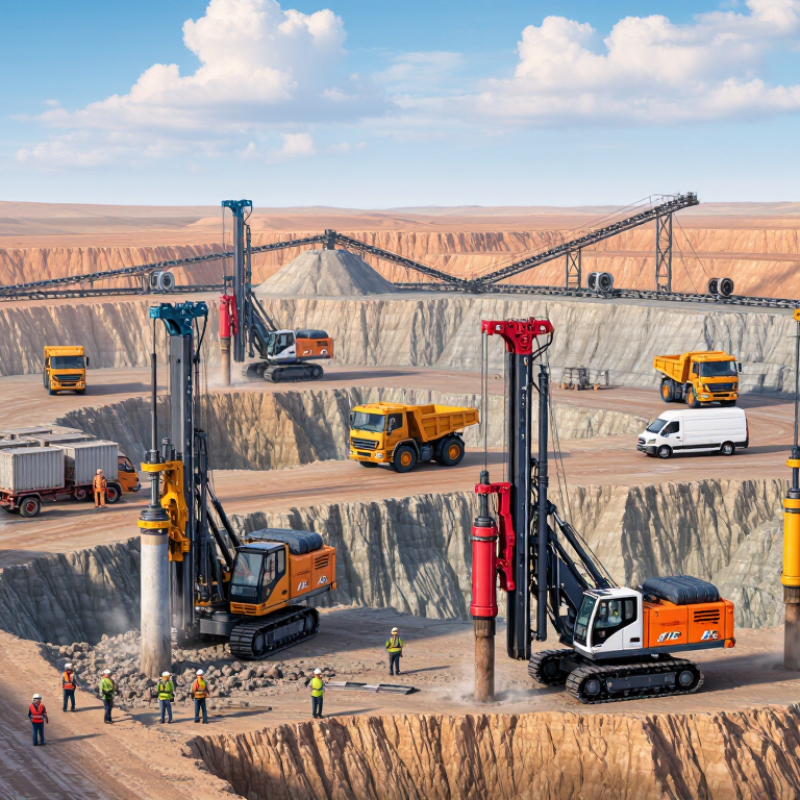
Table of Contents [Hide]
Types of Surface Drilling Rigs Made in China
China Top Surface Drilling Rig Manufacturers and Suppliers
Types of Surface Drilling Rigs Made in China
Chinese manufacturers produce several surface drilling rig types for mining, quarrying, construction, and water-well work. Crawler-mounted rigs suit uneven benches and soft ground. Their steel tracks improve stability near quarry edges. Truck-mounted rigs offer faster relocation between sites. They are useful for road projects and scattered drilling points.
Top-hammer rigs handle shallow to medium-depth holes with strong drilling speed. Down-the-hole rigs deliver straighter holes in hard rock and support controlled blasting patterns. Rotary rigs are common for large-diameter holes, foundation work, and mineral exploration. According to Grand View Research’s 2024 mining equipment analysis, the global mining equipment market is expected to expand at about 5.6% annually through 2030. This growth supports demand for safer, more efficient surface drilling systems. However, the correct rig depends on rock strength, hole diameter, dust control, and service access. A high rated output does not guarantee better field results.
Tips: Check compressor capacity, feed force, drilling angle, and spare-part availability together. Ask for test-hole records from similar rock conditions. Inspect the mast, hydraulic lines, and control panel before shipment. Chinese factory specifications can be detailed, but real performance still needs verification. That part is often overlooked. Geological variation can change fuel use, penetration speed, and tool life. Choose measured evidence over attractive numbers.

© Copyright - Pro Tool & Supply - Site by SVM E-Marketing Solutions - Sitemap
- Privacy policy