- Products
- Air Compressors & Air Tools
- Climate Control
- Compaction Equipment
- Concrete Cutting Tools & Equipment
- Concrete and Masonry
- Demolition & Excavation
- Electrical & Mechanical
- Fasteners and Anchoring Adhesives
- Floor Protection
- Generators and Welders
- Hand Tools
- Heaters
- Janitorial and Office Supplies
- Jobsite Protection
- Ladders & Storage
- Lighting & Lighting Accessories
- Man Lifts
- Material Handling Equipment
- Power Tools
- Pressure Washers & Pumps
- Safety Gear
- Safety Products
- Saws
- Surface Preparation
- SEASONAL PRODUCTS
- Rentals
- Air Compressor and Air Tool Rentals
- Climate Control Rental
- Compaction Rentals
- Concrete Equipment Rentals
- Demolition & Excavation Equipment Rentals
- Concrete Floor Grinder Rentals
- General Construction Equipment Rentals
- Generator Rentals and Welder Rentals
- Heater Rentals
- Light Tower Rentals
- Man Lift Rentals in Massachusetts and Rhode Island
- Material Handling Equipment Rentals
- Pressure Washer & Pump Rentals
- Saw Rentals in New England
- SEASONAL PRODUCTS
- Products
- Air Compressors & Air Tools
- Climate Control
- Compaction Equipment
- Concrete Cutting Tools & Equipment
- Demolition & Excavation
- Electrical & Mechanical
- Floor Protection
- Generators and Welders
- Construction Heaters
- Construction Ladders, Staging, & Storage
- Construction Lighting
- Man Lifts
- Material Handling Equipment
- Industrial Janitorial and Office Supplies
- Pressure Washers & Pumps
- Construction Safety Products
- Construction Safety Gear
- Surface Preparation
- Building Protection
- Diesel Accessories
- Zero Emissions
- Rentals
- Air Compressor and Air Tool Rentals
- Climate Control Rental
- Compaction Rentals
- Concrete Equipment Rental
- Demolition & Excavation Equipment Rental
- General Construction Equipment Rental
- Generator Rentals and Welder Rentals
- Construction Heaters Rental
- Light Tower Rentals
- Man Lift Rentals
- Material Handling Equipment Rental
- Pressure Washer & Pump Rentals
- Saw Rentals in New England
- Concrete Floor Grinder Rentals
- Zero Emissions Rentals
- Repairs & Used
- Parts
- Blog
- Services
- Resources
- About Us
- Contact Us
Sales & Rental of Construction | Industrial Equipment & Supplies


China Top Lead Apron Manufacturers for Global Buyers
China has become a major sourcing destination for lead apron products used in hospitals, dental clinics, laboratories, and imaging centers. Buyers often compare factories by more than price. They examine shielding performance, garment weight, stitching quality, sizing accuracy, and inspection records. A reliable lead apron should feel flexible, close securely, and cover the torso without restricting movement. Small details matter.
Radiation protection specialist Dr. Fred A. Mettler Jr. is widely associated with a practical principle: “The goal is to prevent unnecessary exposure while preserving the benefits of medical imaging.” That principle should guide every supplier evaluation. Responsible manufacturers should provide clear lead-equivalence data, material specifications, batch testing, and care instructions. They should also explain whether their products use lead, lead-free, or composite shielding materials. Documentation must be understandable. Claims need evidence.
China’s strongest manufacturers often support private labeling, multiple sizes, custom colors, and export packaging. Some also offer protective skirts, thyroid collars, and storage racks. However, no supplier is perfect. Factory photographs can look impressive, yet they cannot replace independent testing or physical sample inspection. Buyers should request recent certificates, production samples, and quality-control procedures before placing large orders. Fit remains an overlooked issue. A heavy apron hanging from one shoulder can create discomfort during long procedures. The best purchasing decision balances protection, ergonomics, durability, compliance, and after-sales support. This guide introduces leading Chinese manufacturers and the practical questions global buyers should ask before choosing a long-term partner.
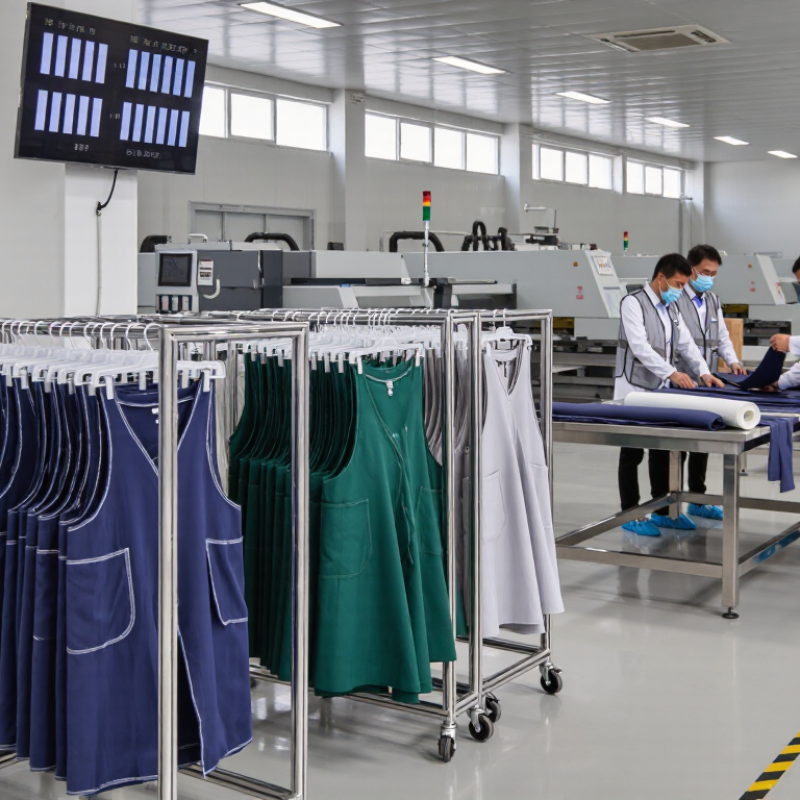
Table of Contents [Hide]
China’s Lead Apron Market: 0.25–0.50 mm Pb-Equivalent Protection
China Top Lead Apron Manufacturers for Global Buyers
China’s lead apron market commonly offers 0.25–0.50 mm Pb-equivalent protection. This range supports different diagnostic imaging environments, from routine radiography to interventional procedures. However, Pb-equivalent does not mean identical protection at every tube voltage. Performance depends on material composition, thickness, overlap, and testing conditions. NCRP Report No. 147 emphasizes reducing occupational exposure through time, distance, shielding, and proper operating procedures. An apron is only one control.
The IAEA’s Safety Reports Series No. 39 recommends using protective clothing that meets relevant performance and quality requirements. Buyers should request independent test reports, stated beam qualities, and measured attenuation results. EN 61331-3 and IEC 61331-3 provide useful references for protective clothing evaluation. Check the label carefully. A 0.50 mm claim may describe front-panel protection only. Sleeves, seams, and side closures can provide different coverage. This detail is often missed.
Tips: Match protection to the procedure, not marketing language. Confirm Pb-equivalent values at the intended energy range. Inspect samples for cracks, stiffness, and uneven weight. Store aprons flat or on approved hangers. Practical experience shows that poor storage can damage shielding layers. Buyers should also review sizing, fasteners, cleaning instructions, and inspection records. A low-cost apron may look efficient, but comfort affects whether staff wear it correctly. The market still needs better transparency.

© Copyright - Pro Tool & Supply - Site by SVM E-Marketing Solutions - Sitemap
- Privacy policy