- Products
- Air Compressors & Air Tools
- Climate Control
- Compaction Equipment
- Concrete Cutting Tools & Equipment
- Concrete and Masonry
- Demolition & Excavation
- Electrical & Mechanical
- Fasteners and Anchoring Adhesives
- Floor Protection
- Generators and Welders
- Hand Tools
- Heaters
- Janitorial and Office Supplies
- Jobsite Protection
- Ladders & Storage
- Lighting & Lighting Accessories
- Man Lifts
- Material Handling Equipment
- Power Tools
- Pressure Washers & Pumps
- Safety Gear
- Safety Products
- Saws
- Surface Preparation
- SEASONAL PRODUCTS
- Rentals
- Air Compressor and Air Tool Rentals
- Climate Control Rental
- Compaction Rentals
- Concrete Equipment Rentals
- Demolition & Excavation Equipment Rentals
- Concrete Floor Grinder Rentals
- General Construction Equipment Rentals
- Generator Rentals and Welder Rentals
- Heater Rentals
- Light Tower Rentals
- Man Lift Rentals in Massachusetts and Rhode Island
- Material Handling Equipment Rentals
- Pressure Washer & Pump Rentals
- Saw Rentals in New England
- SEASONAL PRODUCTS
- Products
- Air Compressors & Air Tools
- Climate Control
- Compaction Equipment
- Concrete Cutting Tools & Equipment
- Demolition & Excavation
- Electrical & Mechanical
- Floor Protection
- Generators and Welders
- Construction Heaters
- Construction Ladders, Staging, & Storage
- Construction Lighting
- Man Lifts
- Material Handling Equipment
- Industrial Janitorial and Office Supplies
- Pressure Washers & Pumps
- Construction Safety Products
- Construction Safety Gear
- Surface Preparation
- Building Protection
- Diesel Accessories
- Zero Emissions
- Rentals
- Air Compressor and Air Tool Rentals
- Climate Control Rental
- Compaction Rentals
- Concrete Equipment Rental
- Demolition & Excavation Equipment Rental
- General Construction Equipment Rental
- Generator Rentals and Welder Rentals
- Construction Heaters Rental
- Light Tower Rentals
- Man Lift Rentals
- Material Handling Equipment Rental
- Pressure Washer & Pump Rentals
- Saw Rentals in New England
- Concrete Floor Grinder Rentals
- Zero Emissions Rentals
- Repairs & Used
- Parts
- Blog
- Services
- Resources
- About Us
- Contact Us
Sales & Rental of Construction | Industrial Equipment & Supplies


China Top Bath Towel Making Machine Manufacturers?
Choosing among China’s leading Bath Towel Making Machine manufacturers requires more than comparing prices or polished factory photographs. Buyers should examine real production experience, machine stability, towel quality, and after-sales support. A reliable supplier should explain how its equipment handles different yarn counts, GSM ranges, loop heights, and towel dimensions. It should also provide test samples, performance data, installation guidance, and accessible spare parts.
Textile machinery consultant Dr. Michael A. James states, “A towel machine earns trust through consistent loops, controlled tension, and dependable service—not promises alone.” This practical view matters on the factory floor. A machine may look impressive during a short demonstration. However, uneven terry loops can appear after continuous operation. Small defects become expensive when thousands of towels require rework.
China has many experienced manufacturers, yet their strengths differ. Some focus on automatic weaving systems. Others specialize in cutting, hemming, embroidery, or complete towel production lines. Energy consumption, control-system quality, operator training, and maintenance response deserve equal attention. Factory audits can reveal details that brochures often omit, including workshop organization, component sources, and quality inspection routines.
No ranking is completely objective. That is worth admitting. The best choice depends on production volume, fabric specifications, budget, and export requirements. This guide compares China’s top Bath Towel Making Machine manufacturers through practical criteria, verified capabilities, and buyer-focused evidence. Readers should still request current quotations, technical drawings, sample towels, and references before making a final decision.
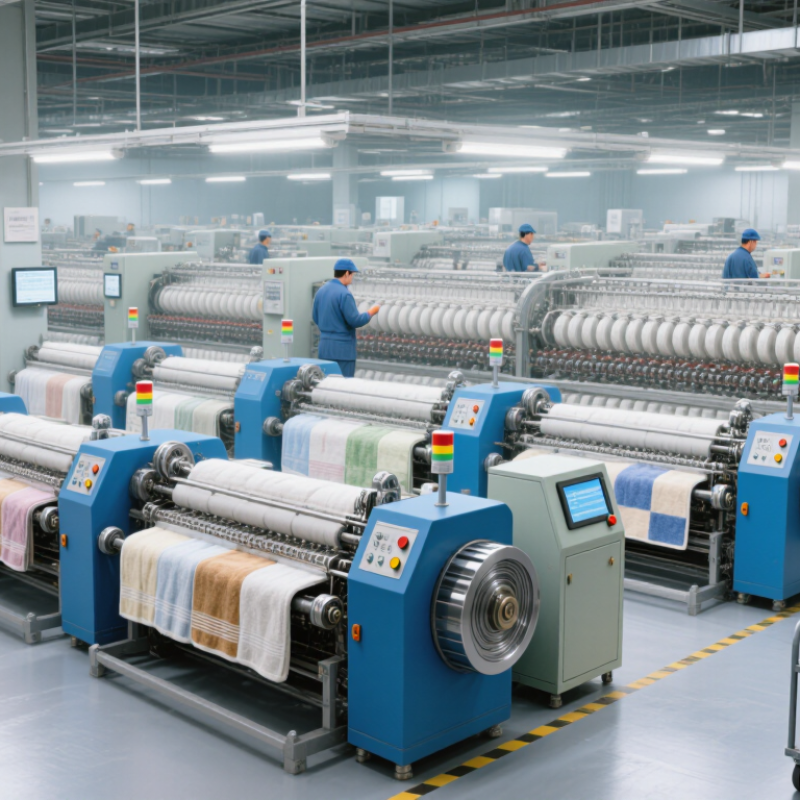
Table of Contents [Hide]
Bath Towel Making Machines: Types, Functions, and Production Stages
China’s bath towel making machine manufacturers supply equipment for different production stages, from yarn preparation to final packing. A towel loom creates terry fabric with raised loops, while a warping machine arranges yarn under controlled tension. Loop height and fabric density affect softness, absorbency, and drying speed.
After weaving, shearing machines trim uneven pile surfaces. Washing and drying units remove loose fibers and improve hand feel. Some production lines include embroidery machines, edge sewing units, folding systems, and automatic packaging equipment. Sensors can monitor temperature, fabric speed, and moisture levels. These functions reduce waste, but they cannot replace skilled inspection.
A practical buyer should test several towel sizes and weights before choosing a machine. Ask the manufacturer to demonstrate settings for cotton yarn, recycled yarn, and dense hotel-grade fabric. Check motor stability, spare-part availability, operator training, and maintenance access. Factory trial records are useful evidence of reliable performance.
Small details matter. A poorly aligned guide can create visible stripes across the towel. That problem may appear only after hours of operation. I have found that production speed figures often need careful interpretation, because they may exclude setup and cleaning time. A realistic evaluation should include energy use, reject rates, changeover time, and local technical support. Sometimes, a simpler line performs better.

© Copyright - Pro Tool & Supply - Site by SVM E-Marketing Solutions - Sitemap
- Privacy policy