- Products
- Air Compressors & Air Tools
- Climate Control
- Compaction Equipment
- Concrete Cutting Tools & Equipment
- Concrete and Masonry
- Demolition & Excavation
- Electrical & Mechanical
- Fasteners and Anchoring Adhesives
- Floor Protection
- Generators and Welders
- Hand Tools
- Heaters
- Janitorial and Office Supplies
- Jobsite Protection
- Ladders & Storage
- Lighting & Lighting Accessories
- Man Lifts
- Material Handling Equipment
- Power Tools
- Pressure Washers & Pumps
- Safety Gear
- Safety Products
- Saws
- Surface Preparation
- SEASONAL PRODUCTS
- Rentals
- Air Compressor and Air Tool Rentals
- Climate Control Rental
- Compaction Rentals
- Concrete Equipment Rentals
- Demolition & Excavation Equipment Rentals
- Concrete Floor Grinder Rentals
- General Construction Equipment Rentals
- Generator Rentals and Welder Rentals
- Heater Rentals
- Light Tower Rentals
- Man Lift Rentals in Massachusetts and Rhode Island
- Material Handling Equipment Rentals
- Pressure Washer & Pump Rentals
- Saw Rentals in New England
- SEASONAL PRODUCTS
- Products
- Air Compressors & Air Tools
- Climate Control
- Compaction Equipment
- Concrete Cutting Tools & Equipment
- Demolition & Excavation
- Electrical & Mechanical
- Floor Protection
- Generators and Welders
- Construction Heaters
- Construction Ladders, Staging, & Storage
- Construction Lighting
- Man Lifts
- Material Handling Equipment
- Industrial Janitorial and Office Supplies
- Pressure Washers & Pumps
- Construction Safety Products
- Construction Safety Gear
- Surface Preparation
- Building Protection
- Diesel Accessories
- Zero Emissions
- Rentals
- Air Compressor and Air Tool Rentals
- Climate Control Rental
- Compaction Rentals
- Concrete Equipment Rental
- Demolition & Excavation Equipment Rental
- General Construction Equipment Rental
- Generator Rentals and Welder Rentals
- Construction Heaters Rental
- Light Tower Rentals
- Man Lift Rentals
- Material Handling Equipment Rental
- Pressure Washer & Pump Rentals
- Saw Rentals in New England
- Concrete Floor Grinder Rentals
- Zero Emissions Rentals
- Repairs & Used
- Parts
- Blog
- Services
- Resources
- About Us
- Contact Us
Sales & Rental of Construction | Industrial Equipment & Supplies


What Are the Top Chemical IBC Tank Types in 2026?
Choosing the right Chemical IBC Tank in 2026 requires more than comparing capacity, price, or delivery time. Chemical compatibility remains the central decision. A tote holding dilute detergent may fail quickly with an aggressive solvent or oxidizing liquid. Small material differences matter.
As Daniel J. Kaczmarek, a chemical packaging consultant with decades of field experience, explains, “The best IBC is the one that matches the chemical, the handling method, and the risk.” This practical view guides the discussion ahead. It also prevents a common mistake: treating every 1,000-liter container as interchangeable.
The coming sections examine the leading Chemical IBC Tank types used across modern industrial supply chains. High-density polyethylene composite tanks offer broad chemical resistance and efficient handling. Stainless steel IBCs provide strength, durability, and easier cleaning for demanding applications. Conductive and antistatic models support safer movement of flammable liquids when correctly grounded. Insulated, heated, and food-grade designs serve more specialized operations.
There is no universal winner.
A tank can perform well in one plant and disappoint in another. Temperature, filling speed, valve design, storage duration, and forklift movement all influence performance. Even a certified container needs suitable inspection and maintenance. That point is easy to overlook.
This guide compares construction, protection, usability, and practical limitations. It also considers where each type may create extra cost or operational work. The goal is not to promote one design. It is to help buyers ask sharper questions before selecting a Chemical IBC Tank for 2026 operations.
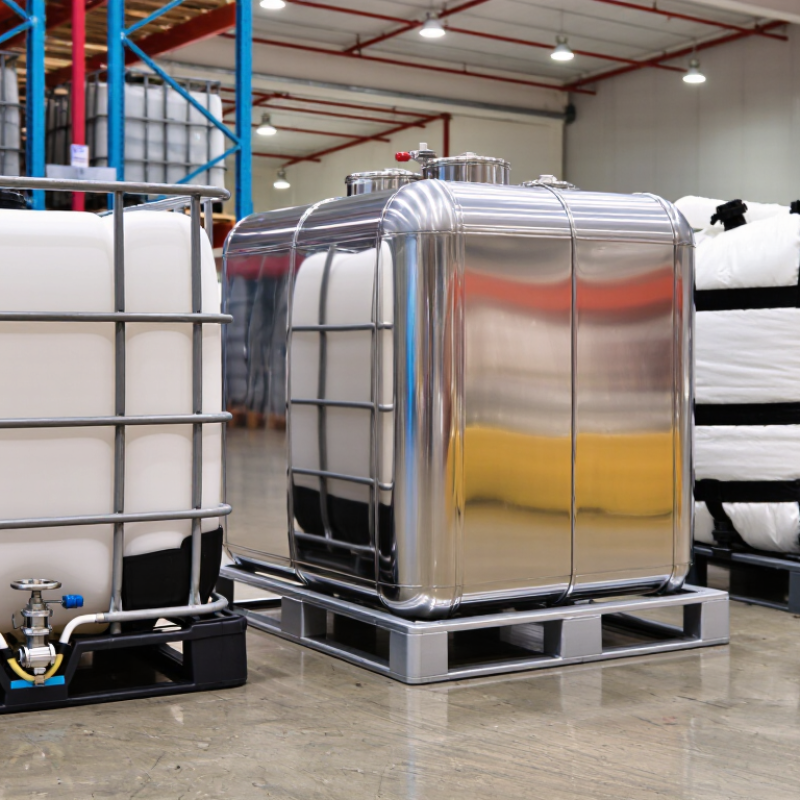
Table of Contents [Hide]
What Is a Chemical IBC Tank and How Is It Used?
A chemical IBC tank is a reusable container designed to store and move liquids in larger volumes than ordinary drums. Most units hold about 1,000 liters, with a rigid inner bottle and protective outer cage. The inner bottle often uses high-density polyethylene for acids, cleaners, and other compatible chemicals. Stainless steel IBC tanks suit higher temperatures or aggressive liquids. Conductive models can help control static risks during filling and discharge. However, no tank type fits every chemical.
In daily operations, an IBC tank supports blending, temporary storage, transport, and controlled dispensing. Its bottom valve allows connection to hoses, pumps, or filling equipment. Experienced operators check the chemical’s safety data, concentration, temperature, and specific gravity before selection. They also inspect valves, seals, cages, and lifting points before use. A practical mistake is choosing by capacity alone. Compatibility can change with heat, pressure, or extended storage. Tank performance markings and applicable transport requirements should also be verified.
Tips: Confirm chemical compatibility with technical documentation, not assumptions. Keep tanks on level surfaces and protect them from sharp impacts. Label contents clearly, even during short-term storage. Clean residue safely and record inspection dates. If a tank looks acceptable but feels questionable, replace it or request a professional assessment. Small doubts deserve attention.

© Copyright - Pro Tool & Supply - Site by SVM E-Marketing Solutions - Sitemap
- Privacy policy