- Products
- Air Compressors & Air Tools
- Climate Control
- Compaction Equipment
- Concrete Cutting Tools & Equipment
- Concrete and Masonry
- Demolition & Excavation
- Electrical & Mechanical
- Fasteners and Anchoring Adhesives
- Floor Protection
- Generators and Welders
- Hand Tools
- Heaters
- Janitorial and Office Supplies
- Jobsite Protection
- Ladders & Storage
- Lighting & Lighting Accessories
- Man Lifts
- Material Handling Equipment
- Power Tools
- Pressure Washers & Pumps
- Safety Gear
- Safety Products
- Saws
- Surface Preparation
- SEASONAL PRODUCTS
- Rentals
- Air Compressor and Air Tool Rentals
- Climate Control Rental
- Compaction Rentals
- Concrete Equipment Rentals
- Demolition & Excavation Equipment Rentals
- Concrete Floor Grinder Rentals
- General Construction Equipment Rentals
- Generator Rentals and Welder Rentals
- Heater Rentals
- Light Tower Rentals
- Man Lift Rentals in Massachusetts and Rhode Island
- Material Handling Equipment Rentals
- Pressure Washer & Pump Rentals
- Saw Rentals in New England
- SEASONAL PRODUCTS
- Products
- Air Compressors & Air Tools
- Climate Control
- Compaction Equipment
- Concrete Cutting Tools & Equipment
- Demolition & Excavation
- Electrical & Mechanical
- Floor Protection
- Generators and Welders
- Construction Heaters
- Construction Ladders, Staging, & Storage
- Construction Lighting
- Man Lifts
- Material Handling Equipment
- Industrial Janitorial and Office Supplies
- Pressure Washers & Pumps
- Construction Safety Products
- Construction Safety Gear
- Surface Preparation
- Building Protection
- Diesel Accessories
- Zero Emissions
- Rentals
- Air Compressor and Air Tool Rentals
- Climate Control Rental
- Compaction Rentals
- Concrete Equipment Rental
- Demolition & Excavation Equipment Rental
- General Construction Equipment Rental
- Generator Rentals and Welder Rentals
- Construction Heaters Rental
- Light Tower Rentals
- Man Lift Rentals
- Material Handling Equipment Rental
- Pressure Washer & Pump Rentals
- Saw Rentals in New England
- Concrete Floor Grinder Rentals
- Zero Emissions Rentals
- Repairs & Used
- Parts
- Blog
- Services
- Resources
- About Us
- Contact Us
Sales & Rental of Construction | Industrial Equipment & Supplies


Top 10 Aluminum French Doors for Global Buyers
Choosing the right French Doors Aluminum system requires more than comparing photographs, prices, and profile colors. Global buyers must examine thermal performance, structural strength, drainage design, glazing options, and installation support. A door may look elegant in a showroom yet perform poorly beside a windy coastline or a humid tropical patio.
Dr. Helen Sanders, a respected fenestration and building-science specialist, offers a useful principle: “A window or door performs as a system, not as a single component.” That view shapes this guide to the Top 10 Aluminum French Doors for Global Buyers. Each selection deserves attention to frame design, thermal breaks, weather seals, hinges, locking points, and glass specifications. Small details matter.
Very much.
The strongest products usually combine narrow sightlines with stable aluminum profiles, insulated glazing, durable powder coating, and predictable hardware performance. However, no ranking can remove every purchasing risk. Supplier documentation may be incomplete. Installation quality can vary sharply between regions. Some advertised claims also need independent verification.
This guide therefore considers practical evidence, not marketing language alone. It highlights doors suitable for villas, apartments, hospitality projects, and modern commercial spaces. Readers should still request test reports, warranty terms, sample finishes, and local installation references before ordering. French Doors Aluminum can deliver light, ventilation, and architectural character. Only careful specification makes those benefits dependable across different climates and building conditions.
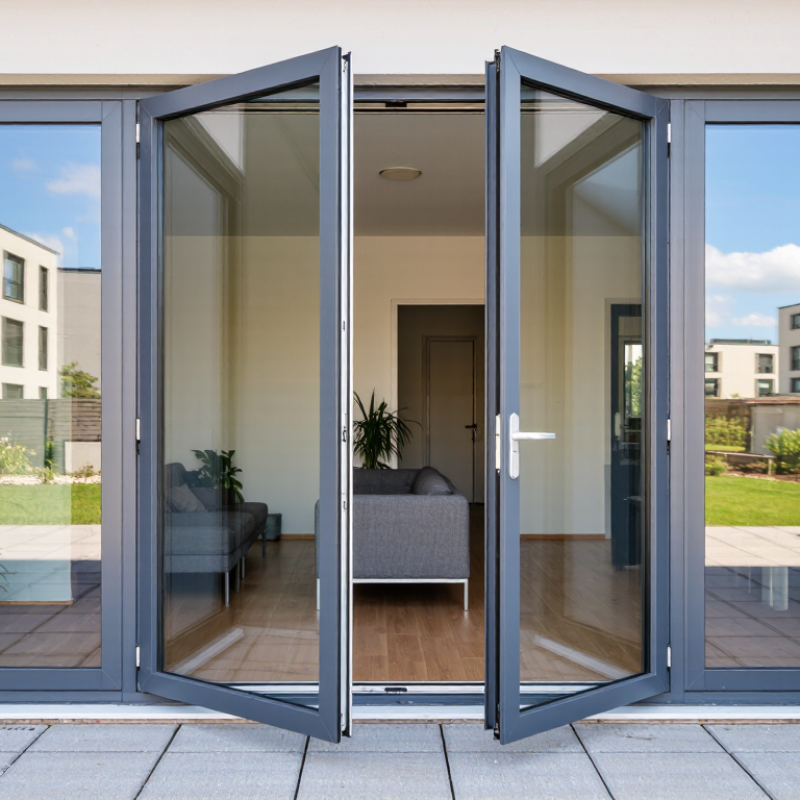
Table of Contents [Hide]
What Defines an Aluminum French Door for Global Buyers
What Defines an Aluminum French Door for Global Buyers
An aluminum French door is more than two glazed panels in a decorative frame. It usually features paired, hinged leaves with a central meeting stile. Global buyers assess thermal performance, weather resistance, security, and service life together. According to the International Energy Agency’s 2023 Global Status Report for Buildings and Construction, buildings consume about 30% of global final energy. This makes frame insulation and glass selection commercially important.
A reliable door should use thermally broken aluminum profiles, insulated glazing, and continuous weather seals. Low U-values matter, but they do not tell the whole story. Solar heat gain, air leakage, drainage, and installation quality also affect comfort. Look for documented air, water, and wind-load test results under recognized regional standards. A 1.8-meter opening may look elegant, yet weak hinges can create alignment problems over time. That detail is easy to overlook.
Material origin matters, too. The International Aluminium Institute reports that recycled aluminum can require up to 95% less energy than primary production. Buyers should request recycled-content evidence and traceability records. Coastal projects need suitable corrosion protection, while cold climates need stronger thermal breaks. “Global” does not mean universal. A specification suitable for a dry inland apartment may fail beside a humid shoreline. Buyers should question impressive laboratory figures when installation details remain unclear. That is where many promises become less convincing.

© Copyright - Pro Tool & Supply - Site by SVM E-Marketing Solutions - Sitemap
- Privacy policy