- Products
- Air Compressors & Air Tools
- Climate Control
- Compaction Equipment
- Concrete Cutting Tools & Equipment
- Concrete and Masonry
- Demolition & Excavation
- Electrical & Mechanical
- Fasteners and Anchoring Adhesives
- Floor Protection
- Generators and Welders
- Hand Tools
- Heaters
- Janitorial and Office Supplies
- Jobsite Protection
- Ladders & Storage
- Lighting & Lighting Accessories
- Man Lifts
- Material Handling Equipment
- Power Tools
- Pressure Washers & Pumps
- Safety Gear
- Safety Products
- Saws
- Surface Preparation
- SEASONAL PRODUCTS
- Rentals
- Air Compressor and Air Tool Rentals
- Climate Control Rental
- Compaction Rentals
- Concrete Equipment Rentals
- Demolition & Excavation Equipment Rentals
- Concrete Floor Grinder Rentals
- General Construction Equipment Rentals
- Generator Rentals and Welder Rentals
- Heater Rentals
- Light Tower Rentals
- Man Lift Rentals in Massachusetts and Rhode Island
- Material Handling Equipment Rentals
- Pressure Washer & Pump Rentals
- Saw Rentals in New England
- SEASONAL PRODUCTS
- Products
- Air Compressors & Air Tools
- Climate Control
- Compaction Equipment
- Concrete Cutting Tools & Equipment
- Demolition & Excavation
- Electrical & Mechanical
- Floor Protection
- Generators and Welders
- Construction Heaters
- Construction Ladders, Staging, & Storage
- Construction Lighting
- Man Lifts
- Material Handling Equipment
- Industrial Janitorial and Office Supplies
- Pressure Washers & Pumps
- Construction Safety Products
- Construction Safety Gear
- Surface Preparation
- Building Protection
- Diesel Accessories
- Zero Emissions
- Rentals
- Air Compressor and Air Tool Rentals
- Climate Control Rental
- Compaction Rentals
- Concrete Equipment Rental
- Demolition & Excavation Equipment Rental
- General Construction Equipment Rental
- Generator Rentals and Welder Rentals
- Construction Heaters Rental
- Light Tower Rentals
- Man Lift Rentals
- Material Handling Equipment Rental
- Pressure Washer & Pump Rentals
- Saw Rentals in New England
- Concrete Floor Grinder Rentals
- Zero Emissions Rentals
- Repairs & Used
- Parts
- Blog
- Services
- Resources
- About Us
- Contact Us
Sales & Rental of Construction | Industrial Equipment & Supplies


What Are the Top 10 Types of Air Conditioning?
Air Conditioning is no longer a simple comfort purchase. It affects household budgets, indoor health, electricity grids, and global emissions. This guide examines the top 10 types of Air Conditioning, from split systems and ducted units to portable, window, VRF, evaporative, and geothermal designs. Each system behaves differently in a real building.
The International Energy Agency’s The Future of Cooling report warns that space-cooling energy demand could more than triple by 2050 without stronger efficiency measures. The report also identifies air conditioners as a major driver of future electricity demand. Fatih Birol, the IEA’s Executive Director, described this issue clearly: “The growing use of air conditioners is one of the most critical blind spots in today’s energy debate.” That warning still feels underappreciated.
The United Nations Environment Programme and IEA also connect efficient cooling with refrigerant management and climate protection. However, efficiency labels do not tell the whole story. A high-rated unit can perform poorly in a poorly insulated room. Installation quality matters. So does maintenance.
This overview compares cooling performance, installation needs, operating costs, noise, flexibility, and environmental impact. It also considers practical details, such as a compressor running beside a bedroom window or warm air leaking through an old duct. Some rankings remain debatable. Regional climate, building design, and electricity prices can change the best choice. That uncertainty deserves attention. The right system is not always the newest one.
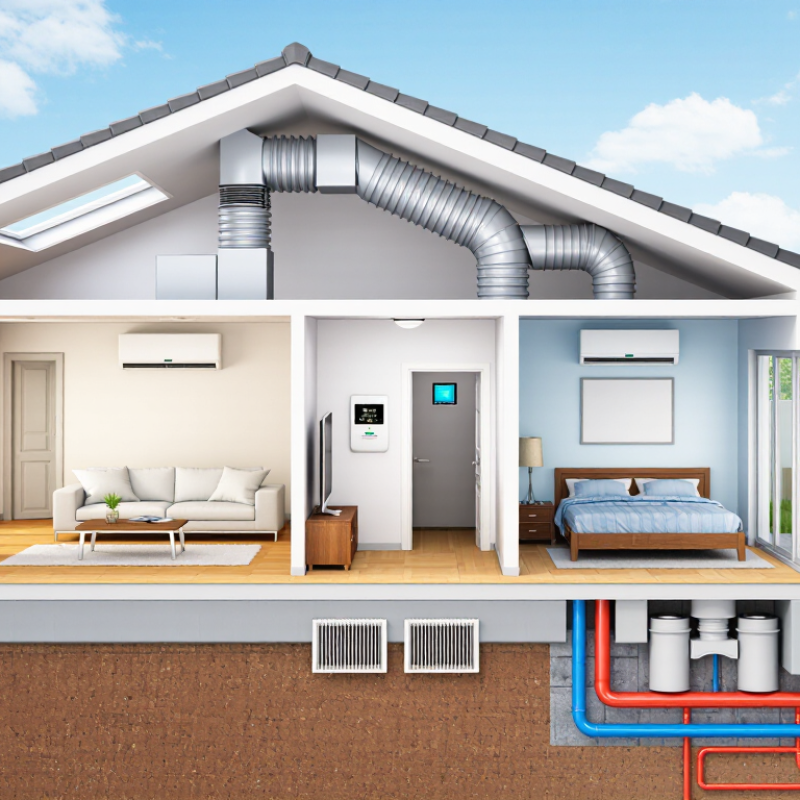
Table of Contents [Hide]
What Defines an Air Conditioning System and Its Main Categories
What Are the Top 10 Types of Air Conditioning?
An air conditioning system moves heat, moisture, and air to create controlled indoor comfort. It normally includes a compressor, condenser, expansion device, evaporator, fan, filters, and controls. The U.S. Department of Energy explains that cooling efficiency depends strongly on equipment design, airflow, insulation, and installation quality. A powerful unit can still perform poorly when ducts leak or filters remain blocked.
The main categories include window, portable, split, multi-split, ducted split, packaged, rooftop, central, evaporative, and variable refrigerant flow systems. Window and portable units suit small spaces with limited installation options. Split and multi-split systems place noisy components outdoors. Ducted and central systems distribute conditioned air through hidden pathways. Packaged and rooftop systems combine major components in one enclosure. Evaporative systems use water and work best in dry climates. Variable refrigerant flow systems adjust refrigerant delivery across several indoor zones.
The distinction matters. Space cooling already uses roughly 10% of global electricity, according to the International Energy Agency’s The Future of Cooling report. The United Nations Environment Programme also projects cooling demand could more than triple by 2050 without stronger efficiency measures. In practice, I assess room size, climate, occupancy, humidity, noise, maintenance access, and electrical capacity before selecting a system. This classification is useful, but imperfect. Real buildings often combine several types. Efficiency ratings alone cannot predict comfort when installation quality is weak.

© Copyright - Pro Tool & Supply - Site by SVM E-Marketing Solutions - Sitemap
- Privacy policy