- Products
- Air Compressors & Air Tools
- Climate Control
- Compaction Equipment
- Concrete Cutting Tools & Equipment
- Concrete and Masonry
- Demolition & Excavation
- Electrical & Mechanical
- Fasteners and Anchoring Adhesives
- Floor Protection
- Generators and Welders
- Hand Tools
- Heaters
- Janitorial and Office Supplies
- Jobsite Protection
- Ladders & Storage
- Lighting & Lighting Accessories
- Man Lifts
- Material Handling Equipment
- Power Tools
- Pressure Washers & Pumps
- Safety Gear
- Safety Products
- Saws
- Surface Preparation
- SEASONAL PRODUCTS
- Rentals
- Air Compressor and Air Tool Rentals
- Climate Control Rental
- Compaction Rentals
- Concrete Equipment Rentals
- Demolition & Excavation Equipment Rentals
- Concrete Floor Grinder Rentals
- General Construction Equipment Rentals
- Generator Rentals and Welder Rentals
- Heater Rentals
- Light Tower Rentals
- Man Lift Rentals in Massachusetts and Rhode Island
- Material Handling Equipment Rentals
- Pressure Washer & Pump Rentals
- Saw Rentals in New England
- SEASONAL PRODUCTS
- Products
- Air Compressors & Air Tools
- Climate Control
- Compaction Equipment
- Concrete Cutting Tools & Equipment
- Demolition & Excavation
- Electrical & Mechanical
- Floor Protection
- Generators and Welders
- Construction Heaters
- Construction Ladders, Staging, & Storage
- Construction Lighting
- Man Lifts
- Material Handling Equipment
- Industrial Janitorial and Office Supplies
- Pressure Washers & Pumps
- Construction Safety Products
- Construction Safety Gear
- Surface Preparation
- Building Protection
- Diesel Accessories
- Zero Emissions
- Rentals
- Air Compressor and Air Tool Rentals
- Climate Control Rental
- Compaction Rentals
- Concrete Equipment Rental
- Demolition & Excavation Equipment Rental
- General Construction Equipment Rental
- Generator Rentals and Welder Rentals
- Construction Heaters Rental
- Light Tower Rentals
- Man Lift Rentals
- Material Handling Equipment Rental
- Pressure Washer & Pump Rentals
- Saw Rentals in New England
- Concrete Floor Grinder Rentals
- Zero Emissions Rentals
- Repairs & Used
- Parts
- Blog
- Services
- Resources
- About Us
- Contact Us
Sales & Rental of Construction | Industrial Equipment & Supplies


Top 10 Metal Stamping Parts Manufacturers Worldwide
Metal stamping supports countless products, from automotive brackets and appliance panels to precision contacts inside electronic devices. Behind these parts are manufacturers balancing tooling accuracy, production speed, material control, and consistent quality. This guide, “Top 10 Metal Stamping Parts Manufacturers Worldwide,” introduces companies recognized for their manufacturing capabilities, technical experience, and service reliability across demanding industrial markets.
The evaluation considers practical factors such as press capacity, die design, progressive stamping, secondary operations, and inspection systems. It also examines how manufacturers handle materials like stainless steel, aluminum, copper, and high-strength steel. Strong suppliers usually provide clear engineering communication, stable production processes, and traceable quality records. Details matter. A poorly controlled burr, uneven bend, or small dimensional shift can cause costly assembly problems.
Public certifications and customer information offer useful evidence, but they do not tell the entire story. A company may operate advanced presses yet struggle with communication or delivery discipline. Another may be smaller but highly responsive to complex prototypes. This list therefore should not be treated as a permanent ranking. Supplier performance can change with leadership, equipment investment, and market pressure.
Readers can use these profiles as a starting point when comparing Metal Stamping Parts manufacturers. Request samples, review inspection reports, and confirm production tolerances before making a decision. The strongest partnership is not always the largest one. It is the manufacturer that understands your drawings, identifies risks early, and delivers dependable parts repeatedly.
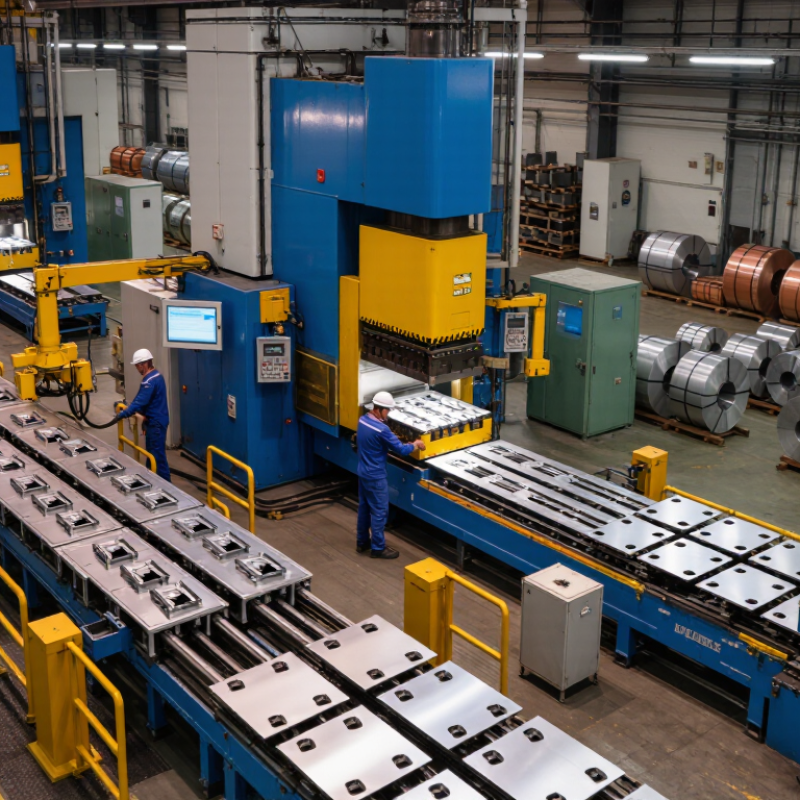
Table of Contents [Hide]
Metal Stamping Parts Manufacturing: Definition and Industry Scope
Metal stamping parts manufacturing converts sheet metal or coil stock into precise components through controlled pressing operations. A die shapes the material while a mechanical or servo press applies measured force. Common operations include blanking, piercing, bending, coining, and deep drawing.
The industry covers small clips, brackets, terminals, shields, housings, and structural components. Materials may include carbon steel, stainless steel, aluminum, copper, and selected alloys. Each material reacts differently to pressure, springback, heat, and lubrication. A practical manufacturer studies these factors before designing the tooling.
Production scale ranges from short prototype runs to millions of parts. Progressive dies can complete several operations during one press stroke. Transfer systems move larger parts between stations. Engineers check strip layout, grain direction, tolerances, and expected material waste. A part may look simple.
Quality control often includes dimensional gauges, optical inspection, hardness checks, and burr measurement. Traceable records help connect each batch with its material certificate and production settings. Tool maintenance also matters. A worn punch can create rough edges, distorted holes, or gradual size changes.
The process is not flawless. A drawing can hide difficult bends, and a low-cost die may increase later repairs. Experienced teams usually test samples, review failed features, and adjust clearances before full production. That extra review can prevent costly interruptions. Scrap rates, energy use, packaging, and worker safety also influence responsible manufacturing decisions worldwide.

© Copyright - Pro Tool & Supply - Site by SVM E-Marketing Solutions - Sitemap
- Privacy policy