- Products
- Air Compressors & Air Tools
- Climate Control
- Compaction Equipment
- Concrete Cutting Tools & Equipment
- Concrete and Masonry
- Demolition & Excavation
- Electrical & Mechanical
- Fasteners and Anchoring Adhesives
- Floor Protection
- Generators and Welders
- Hand Tools
- Heaters
- Janitorial and Office Supplies
- Jobsite Protection
- Ladders & Storage
- Lighting & Lighting Accessories
- Man Lifts
- Material Handling Equipment
- Power Tools
- Pressure Washers & Pumps
- Safety Gear
- Safety Products
- Saws
- Surface Preparation
- SEASONAL PRODUCTS
- Rentals
- Air Compressor and Air Tool Rentals
- Climate Control Rental
- Compaction Rentals
- Concrete Equipment Rentals
- Demolition & Excavation Equipment Rentals
- Concrete Floor Grinder Rentals
- General Construction Equipment Rentals
- Generator Rentals and Welder Rentals
- Heater Rentals
- Light Tower Rentals
- Man Lift Rentals in Massachusetts and Rhode Island
- Material Handling Equipment Rentals
- Pressure Washer & Pump Rentals
- Saw Rentals in New England
- SEASONAL PRODUCTS
- Products
- Air Compressors & Air Tools
- Climate Control
- Compaction Equipment
- Concrete Cutting Tools & Equipment
- Demolition & Excavation
- Electrical & Mechanical
- Floor Protection
- Generators and Welders
- Construction Heaters
- Construction Ladders, Staging, & Storage
- Construction Lighting
- Man Lifts
- Material Handling Equipment
- Industrial Janitorial and Office Supplies
- Pressure Washers & Pumps
- Construction Safety Products
- Construction Safety Gear
- Surface Preparation
- Building Protection
- Diesel Accessories
- Zero Emissions
- Rentals
- Air Compressor and Air Tool Rentals
- Climate Control Rental
- Compaction Rentals
- Concrete Equipment Rental
- Demolition & Excavation Equipment Rental
- General Construction Equipment Rental
- Generator Rentals and Welder Rentals
- Construction Heaters Rental
- Light Tower Rentals
- Man Lift Rentals
- Material Handling Equipment Rental
- Pressure Washer & Pump Rentals
- Saw Rentals in New England
- Concrete Floor Grinder Rentals
- Zero Emissions Rentals
- Repairs & Used
- Parts
- Blog
- Services
- Resources
- About Us
- Contact Us
Sales & Rental of Construction | Industrial Equipment & Supplies


Top 10 Control Room Console Desk Manufacturers for Global Buyers
A control room is judged during the difficult hours: when alarms compete for attention, operators switch between screens, and a shift runs longer than planned. The Control Room Console Desk is more than a work surface. Its reach, sightlines, adjustability, cable routing, and equipment access can shape how comfortably a team works. Small details matter. A monitor positioned too high or a control placed just out of reach can become a persistent irritation.
Human-centered design authority Don Norman offers a useful lens: “Good design is actually a lot harder to notice than poor design.” His observation is not specific to control rooms, but it fits them well. The best console may not draw attention to itself; it supports clear sightlines, sensible movement, and steady use. Buyers should still test that impression against real operating needs. A polished rendering cannot show every pinch point, awkward reach, or maintenance issue.
This guide introduces ten manufacturers for global buyers and considers the practical details behind their offerings. It looks at customization, ergonomics, materials, integration, service, and project support. These factors deserve careful comparison, not just attractive product photographs. A manufacturer’s suitability depends on the room, operators, equipment, and procurement requirements. No single desk fits every control room. Some choices will involve trade-offs, and specifications alone may not reveal them. Use the shortlist as a starting point, then ask vendors for drawings, dimensions, finish samples, and references from comparable installations. A little skepticism helps. A console is a long-term workplace, not simply a piece of furniture.
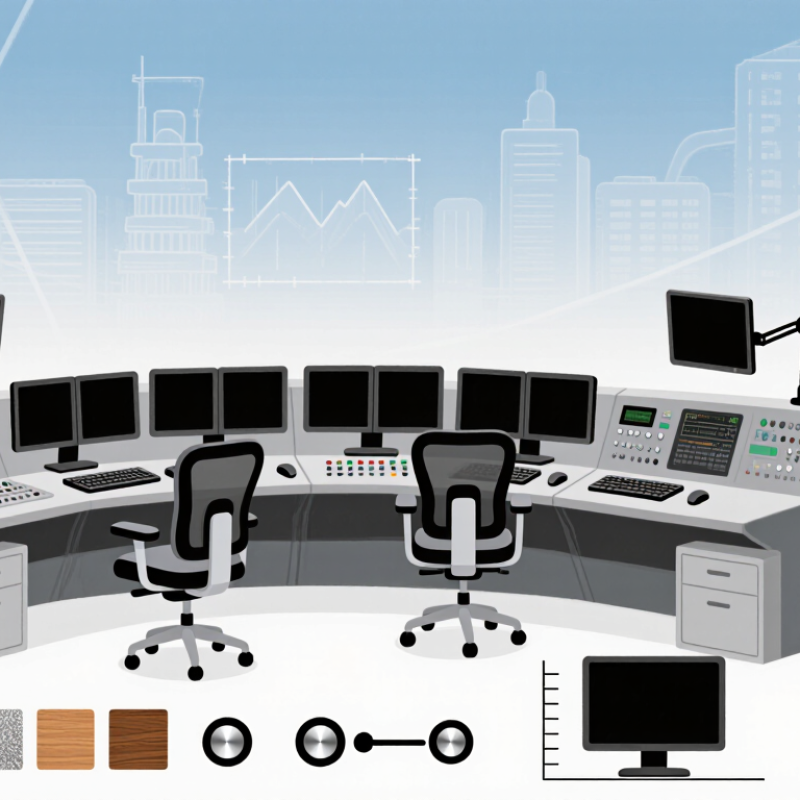
Table of Contents [Hide]
Control Room Console Desks: Definition, Functions, and Applications
A control room console desk is a purpose-built workstation for people who monitor systems and coordinate responses. It differs from ordinary office furniture through its integrated equipment space, cable management, and operator-focused layout. The work surface may hold several displays, a keyboard, communication devices, and controls within easy reach. Fit matters.
Its main functions are to support clear sightlines, organized equipment, and sustained work across long shifts. Adjustable monitor mounts can reduce neck strain, while recessed cable channels keep wiring contained and accessible for maintenance. Some consoles also include task lighting, power access, and storage for essential documents. Not every feature helps. Poorly placed screens or crowded surfaces can slow routine tasks, so layout should reflect actual workflows.
Control room console desks are used in utilities, transport operations, security monitoring, emergency coordination, and industrial facilities. Each setting has different demands: a transport team may need shared displays, while a plant operator may rely on instruments and local controls. Materials and finishes should suit expected use, cleaning routines, and equipment loads. A full-scale mock-up helps teams test reach, visibility, and movement before installation. Real shifts may still reveal issues that drawings miss.

© Copyright - Pro Tool & Supply - Site by SVM E-Marketing Solutions - Sitemap
- Privacy policy