- Products
- Air Compressors & Air Tools
- Climate Control
- Compaction Equipment
- Concrete Cutting Tools & Equipment
- Concrete and Masonry
- Demolition & Excavation
- Electrical & Mechanical
- Fasteners and Anchoring Adhesives
- Floor Protection
- Generators and Welders
- Hand Tools
- Heaters
- Janitorial and Office Supplies
- Jobsite Protection
- Ladders & Storage
- Lighting & Lighting Accessories
- Man Lifts
- Material Handling Equipment
- Power Tools
- Pressure Washers & Pumps
- Safety Gear
- Safety Products
- Saws
- Surface Preparation
- SEASONAL PRODUCTS
- Rentals
- Air Compressor and Air Tool Rentals
- Climate Control Rental
- Compaction Rentals
- Concrete Equipment Rentals
- Demolition & Excavation Equipment Rentals
- Concrete Floor Grinder Rentals
- General Construction Equipment Rentals
- Generator Rentals and Welder Rentals
- Heater Rentals
- Light Tower Rentals
- Man Lift Rentals in Massachusetts and Rhode Island
- Material Handling Equipment Rentals
- Pressure Washer & Pump Rentals
- Saw Rentals in New England
- SEASONAL PRODUCTS
- Products
- Air Compressors & Air Tools
- Climate Control
- Compaction Equipment
- Concrete Cutting Tools & Equipment
- Demolition & Excavation
- Electrical & Mechanical
- Floor Protection
- Generators and Welders
- Construction Heaters
- Construction Ladders, Staging, & Storage
- Construction Lighting
- Man Lifts
- Material Handling Equipment
- Industrial Janitorial and Office Supplies
- Pressure Washers & Pumps
- Construction Safety Products
- Construction Safety Gear
- Surface Preparation
- Building Protection
- Diesel Accessories
- Zero Emissions
- Rentals
- Air Compressor and Air Tool Rentals
- Climate Control Rental
- Compaction Rentals
- Concrete Equipment Rental
- Demolition & Excavation Equipment Rental
- General Construction Equipment Rental
- Generator Rentals and Welder Rentals
- Construction Heaters Rental
- Light Tower Rentals
- Man Lift Rentals
- Material Handling Equipment Rental
- Pressure Washer & Pump Rentals
- Saw Rentals in New England
- Concrete Floor Grinder Rentals
- Zero Emissions Rentals
- Repairs & Used
- Parts
- Blog
- Services
- Resources
- About Us
- Contact Us
Sales & Rental of Construction | Industrial Equipment & Supplies


Top 10 Camping Cooler Box Types for Global Buyers
Choosing the right Camping Cooler Box is rarely as simple as comparing volume or color. Global buyers must consider insulation, durability, transport, hygiene, and local climate. A compact soft cooler may suit short beach trips, while a molded hard cooler can protect food during long outdoor journeys. Each design solves a different problem.
This guide examines ten practical cooler box types for importers, retailers, distributors, and outdoor brands. It considers shell materials, wall thickness, gasket quality, drainage systems, handles, wheels, and usable interior space. Small details matter. A leaking drain plug can damage a vehicle. Weak hinges can fail after repeated opening. Poor insulation can turn frozen goods into warm packaging before lunchtime.
Cold chain matters.
The comparison also looks at supplier reliability and product consistency. Buyers should request samples, inspect stitching and seals, verify stated capacities, and review test documentation where available. Temperature performance can change with loading methods, sunlight, and ambient heat. Marketing claims are not enough. A dependable Camping Cooler Box should match its intended use, market expectations, and applicable product requirements. However, no single type is perfect. I have found that extra insulation often increases weight, while lighter designs may sacrifice holding time. That trade-off deserves honest attention. This overview aims to support careful purchasing decisions with clear, practical observations rather than exaggerated promises.
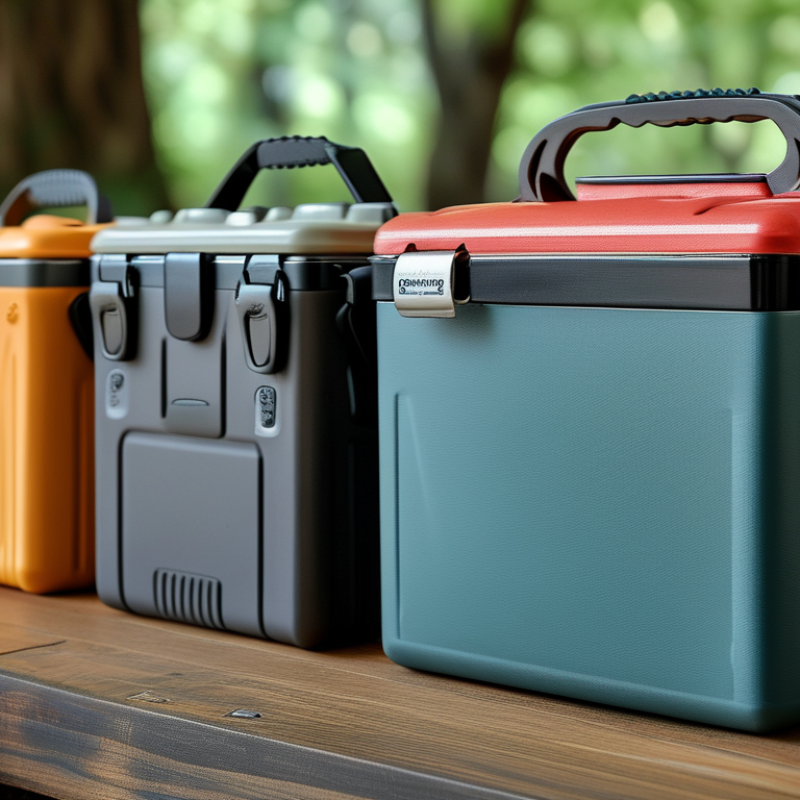
Table of Contents [Hide]
Cooler Box Taxonomy: The 10 Main Types by Structure, Use, and Capacity
Top 10 Camping Cooler Box Types for Global Buyers
Cooler Box Taxonomy: The 10 Main Types by Structure, Use, and Capacity
Choosing a camping cooler is easier when its structure matches the trip. The main types differ in insulation, mobility, access, and storage volume. A compact personal cooler suits one-day hikes and holds a few meals. A soft-sided cooler folds flat and works well for short drives. A hard-shell cooler offers stronger protection and stable stacking. It is bulky.
An ice chest provides broad capacity for family camps, often holding 40 to 100 liters. A wheeled cooler moves heavy food across paved sites, although rough ground can expose weak wheels. A backpack cooler leaves both hands free on trails. A seat cooler adds a firm lid, useful around a campsite. A powered cooler uses a compressor or thermoelectric system and needs a dependable power source. A passive cooler relies on ice or cold packs and remains simple. A marine-style cooler uses corrosion-resistant fittings for wet environments. A beverage cooler separates drinks from meals, improving access and reducing warm-air loss.
Capacity should follow real users, not optimistic packing. Allow space for ice, airflow, and fragile containers. Check wall thickness, drainage, hinge strength, handle comfort, and cleaning access. In my field checks, advertised volume sometimes feels larger than usable space. That detail matters. Compare internal dimensions and insulation performance under local weather, rather than relying on labels alone.
| No. | Cooler Box Type | Structural Design | Typical Capacity | Cooling Method | Portability | Best Camping Use | Key Buyer Considerations |
|---|---|---|---|---|---|---|---|
| 1 | Soft-Sided Insulated Cooler | Flexible fabric shell with foam insulation, an insulated liner, zipper closure, and exterior pockets. | 5–40 L | Passive cooling with ice packs or cubed ice. | Very easy to carry; commonly available with shoulder straps or handles. | Day trips, picnics, short hikes, and personal food storage. | Lightweight and foldable, but generally less puncture-resistant and less suitable for long-term ice retention than rigid models. |
| 2 | Hard-Sided Portable Cooler | Rigid plastic outer shell, molded insulation cavity, hinged lid, and carrying handles. | 10–70 L | Passive cooling with ice or reusable cold packs. | Portable for short distances; larger sizes may require two people. | Family camping, road trips, fishing, and general outdoor food storage. | Offers a practical balance of durability, cost, cleaning convenience, and usable storage space. |
| 3 | Wheeled Cooler | Rigid insulated body fitted with wheels, a pull handle, and reinforced transport points. | 35–100 L | Passive cooling with ice or cold packs. | Good on paved paths and firm ground; less convenient on sand, mud, or rough trails. | Car camping, beach access, sports events, and large group outings. | Reduces lifting effort, but wheel size, axle strength, handle durability, and empty weight are important. |
| 4 | Backpack Cooler | Soft insulated backpack structure with padded shoulder straps, an insulated compartment, and accessory pockets. | 10–30 L | Passive cooling with ice packs or sealed ice bags. | Hands-free and suitable for walking over moderate distances. | Hiking, cycling, canoeing, day camping, and mobile outdoor meals. | Look for comfortable load distribution, leak-resistant lining, water-resistant fabric, and stable zippers. |
| 5 | Rotomolded Heavy-Duty Cooler | One-piece rotationally molded shell with thick insulation, a gasketed lid, and reinforced hinges or latches. | 20–110 L | Passive cooling with ice; designed for extended ice retention. | Moderate to low due to high empty weight; larger versions may include wheels. | Multi-day camping, remote expeditions, hunting, fishing, and group provisioning. | Highly durable and well insulated, but heavier, bulkier, and usually more expensive than standard hard coolers. |
| 6 | Electric Thermoelectric Cooler | Insulated portable case containing a thermoelectric module, fan, power cable, and ventilation openings. | 10–40 L | Powered thermoelectric cooling; typically cools below ambient temperature rather than freezing contents. | Portable, but dependent on a vehicle socket, power station, or suitable adapter. | Car camping, van travel, short road trips, and campsite use with reliable electricity. | Check voltage compatibility, power consumption, noise level, ventilation clearance, and cooling performance in hot climates. |
| 7 | Compressor Portable Refrigerator | Rigid insulated cabinet with a compressor, evaporator, thermostat, digital controls, and removable basket or divider. | 20–100 L | Active vapor-compression refrigeration; many models can cool to freezing temperatures. | Transportable but relatively heavy; often used with vehicle power or a portable battery. | Long-distance travel, overlanding, camper vans, and extended stays without regular ice replacement. | Provides consistent temperature control, but buyers should evaluate energy use, start-up current, operating noise, and serviceability. |
| 8 | Marine and Fishing Cooler | Corrosion-resistant rigid body with secure latches, drainage plug, non-slip features, and fittings suited to wet environments. | 30–150 L | Passive cooling with ice; some specialized versions may include powered cooling. | Usually carried by two people or moved with optional wheels. | Boat camping, fishing trips, waterfront campsites, and wet outdoor environments. | Prioritize saltwater-resistant hardware, drain design, lid strength, cleanability, and resistance to ultraviolet exposure. |
| 9 | Personal Lunch and Compact Cooler | Small soft or semi-rigid insulated container with a top opening, handle, or shoulder strap. | 2–12 L | Passive cooling with reusable cold packs. | Highly portable and suitable for individual use. | Short hikes, work-site meals, children’s outdoor activities, and single-person camping. | Compact dimensions are useful for limited storage, but capacity and ice retention are normally lower than larger cooler boxes. |
| 10 | Modular or Compartmentalized Cooler | Insulated cooler with removable dividers, separate food zones, dry-storage sections, or integrated accessory compartments. | 20–80 L | Passive cooling with ice packs or ice; some configurations support powered cooling modules. | Moderate; portability depends on shell design, handles, and overall load. | Organized family camping, meal preparation, mixed food and beverage storage, and vehicle-based travel. | Improves organization and reduces cross-contamination, but internal dividers can reduce the available volume for large items. |

© Copyright - Pro Tool & Supply - Site by SVM E-Marketing Solutions - Sitemap
- Privacy policy