- Products
- Air Compressors & Air Tools
- Climate Control
- Compaction Equipment
- Concrete Cutting Tools & Equipment
- Concrete and Masonry
- Demolition & Excavation
- Electrical & Mechanical
- Fasteners and Anchoring Adhesives
- Floor Protection
- Generators and Welders
- Hand Tools
- Heaters
- Janitorial and Office Supplies
- Jobsite Protection
- Ladders & Storage
- Lighting & Lighting Accessories
- Man Lifts
- Material Handling Equipment
- Power Tools
- Pressure Washers & Pumps
- Safety Gear
- Safety Products
- Saws
- Surface Preparation
- SEASONAL PRODUCTS
- Rentals
- Air Compressor and Air Tool Rentals
- Climate Control Rental
- Compaction Rentals
- Concrete Equipment Rentals
- Demolition & Excavation Equipment Rentals
- Concrete Floor Grinder Rentals
- General Construction Equipment Rentals
- Generator Rentals and Welder Rentals
- Heater Rentals
- Light Tower Rentals
- Man Lift Rentals in Massachusetts and Rhode Island
- Material Handling Equipment Rentals
- Pressure Washer & Pump Rentals
- Saw Rentals in New England
- SEASONAL PRODUCTS
- Products
- Air Compressors & Air Tools
- Climate Control
- Compaction Equipment
- Concrete Cutting Tools & Equipment
- Demolition & Excavation
- Electrical & Mechanical
- Floor Protection
- Generators and Welders
- Construction Heaters
- Construction Ladders, Staging, & Storage
- Construction Lighting
- Man Lifts
- Material Handling Equipment
- Industrial Janitorial and Office Supplies
- Pressure Washers & Pumps
- Construction Safety Products
- Construction Safety Gear
- Surface Preparation
- Building Protection
- Diesel Accessories
- Zero Emissions
- Rentals
- Air Compressor and Air Tool Rentals
- Climate Control Rental
- Compaction Rentals
- Concrete Equipment Rental
- Demolition & Excavation Equipment Rental
- General Construction Equipment Rental
- Generator Rentals and Welder Rentals
- Construction Heaters Rental
- Light Tower Rentals
- Man Lift Rentals
- Material Handling Equipment Rental
- Pressure Washer & Pump Rentals
- Saw Rentals in New England
- Concrete Floor Grinder Rentals
- Zero Emissions Rentals
- Repairs & Used
- Parts
- Blog
- Services
- Resources
- About Us
- Contact Us
Sales & Rental of Construction | Industrial Equipment & Supplies


7 Tips for Choosing the Best Trailer Generator
Choosing the right Trailer Generator is more than comparing wattage and purchase prices. A reliable unit must match your trailer’s equipment, travel schedule, site conditions, and maintenance capacity. One generator may power lighting and small tools comfortably, yet struggle when compressors, pumps, or air conditioners start together. That starting surge is easy to overlook.
“Select the generator for real operating conditions, not the ideal number on the nameplate,” says Daniel Mercer, a mobile-power equipment consultant with over 20 years of field experience. His advice is practical. A dusty construction site, a cold morning, or a long tow can expose weaknesses that showroom testing misses. The best choice should feel stable on the road and dependable after hours of continuous operation.
This guide examines seven useful tips for choosing a Trailer Generator. It considers power output, starting capacity, fuel efficiency, noise control, trailer balance, weather protection, and service access. It also looks at safety features, including overload protection, grounding provisions, and clear emergency shutoffs. Small details matter. A poorly positioned fuel tank can make refueling awkward. Limited access panels can turn a simple filter change into an afternoon task.
There is no perfect model for every trailer. That is worth admitting. Buyers sometimes focus too heavily on maximum output and ignore transport weight. Others choose a quiet generator but underestimate fuel demand. Careful selection requires honest load calculations, realistic usage assumptions, and a little humility. The following tips can help you avoid expensive surprises and choose equipment that performs reliably in everyday conditions.
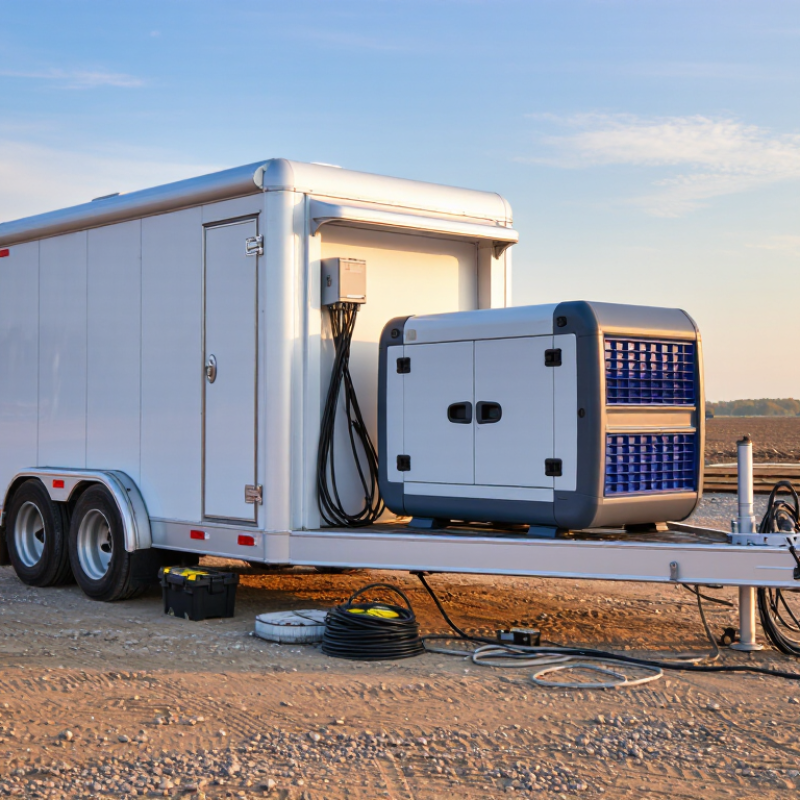
Table of Contents [Hide]
Calculate Total Demand: Add Starting Surge and Keep a 20% Capacity Reserve
Choosing the best trailer generator starts with an honest power calculation. List every device you may operate, including lights, chargers, pumps, tools, and climate equipment. Record each unit’s running wattage and starting surge.
Tip: Add running watts together, then identify the highest starting surge. A motor may briefly demand two or three times its normal power. For example, a 1,200-watt pump could require 3,000 watts during startup. The generator must handle that peak without stalling or dropping voltage.
Tip: Do not size the generator exactly to your calculated total. Add a 20% capacity reserve for safer operation and future equipment. If your running load is 4,000 watts and the largest startup demand adds 1,800 watts, your working requirement may reach 5,800 watts. With reserve, look for at least 6,960 watts of usable capacity.
Check the generator’s rated output, not only its maximum output. Rated power reflects sustained performance during real trailer work. I have seen estimates fail because refrigerator startup was ignored. It is an easy mistake. Recheck the figures when equipment changes, especially after adding a heater, compressor, or battery charger. Leave some headroom; crowded calculations often look precise but remain uncertain.

© Copyright - Pro Tool & Supply - Site by SVM E-Marketing Solutions - Sitemap
- Privacy policy