- Products
- Air Compressors & Air Tools
- Climate Control
- Compaction Equipment
- Concrete Cutting Tools & Equipment
- Concrete and Masonry
- Demolition & Excavation
- Electrical & Mechanical
- Fasteners and Anchoring Adhesives
- Floor Protection
- Generators and Welders
- Hand Tools
- Heaters
- Janitorial and Office Supplies
- Jobsite Protection
- Ladders & Storage
- Lighting & Lighting Accessories
- Man Lifts
- Material Handling Equipment
- Power Tools
- Pressure Washers & Pumps
- Safety Gear
- Safety Products
- Saws
- Surface Preparation
- SEASONAL PRODUCTS
- Rentals
- Air Compressor and Air Tool Rentals
- Climate Control Rental
- Compaction Rentals
- Concrete Equipment Rentals
- Demolition & Excavation Equipment Rentals
- Concrete Floor Grinder Rentals
- General Construction Equipment Rentals
- Generator Rentals and Welder Rentals
- Heater Rentals
- Light Tower Rentals
- Man Lift Rentals in Massachusetts and Rhode Island
- Material Handling Equipment Rentals
- Pressure Washer & Pump Rentals
- Saw Rentals in New England
- SEASONAL PRODUCTS
- Products
- Air Compressors & Air Tools
- Climate Control
- Compaction Equipment
- Concrete Cutting Tools & Equipment
- Demolition & Excavation
- Electrical & Mechanical
- Floor Protection
- Generators and Welders
- Construction Heaters
- Construction Ladders, Staging, & Storage
- Construction Lighting
- Man Lifts
- Material Handling Equipment
- Industrial Janitorial and Office Supplies
- Pressure Washers & Pumps
- Construction Safety Products
- Construction Safety Gear
- Surface Preparation
- Building Protection
- Diesel Accessories
- Zero Emissions
- Rentals
- Air Compressor and Air Tool Rentals
- Climate Control Rental
- Compaction Rentals
- Concrete Equipment Rental
- Demolition & Excavation Equipment Rental
- General Construction Equipment Rental
- Generator Rentals and Welder Rentals
- Construction Heaters Rental
- Light Tower Rentals
- Man Lift Rentals
- Material Handling Equipment Rental
- Pressure Washer & Pump Rentals
- Saw Rentals in New England
- Concrete Floor Grinder Rentals
- Zero Emissions Rentals
- Repairs & Used
- Parts
- Blog
- Services
- Resources
- About Us
- Contact Us
Sales & Rental of Construction | Industrial Equipment & Supplies


7 Tips for Choosing an Electric High Lift Pallet Truck
Warehouses are under pressure to move heavier loads faster, with fewer available operators. MHI’s 2023 Annual Industry Report found that 74% of supply chain leaders planned to increase technology investment. That shift makes the Electric High Lift Pallet Truck more than a basic transport tool. It can support pallet positioning, short-distance movement, and ergonomic lifting in busy facilities.
Yet equipment selection cannot rely on lifting height alone. A truck that reaches 3.5 meters may still perform poorly in a narrow aisle or on uneven concrete. The pallet’s weight, load center, turning radius, battery runtime, and mast visibility all affect daily productivity. OSHA’s Powered Industrial Trucks standard, 29 CFR 1910.178, also emphasizes operator training, inspection, and safe operating practices. Compliance must remain part of the buying decision.
Small details matter.
Picture an operator moving a 1,200-kilogram pallet from a loading bay to a rack. Poor steering response, weak braking, or limited fork visibility can create delays and unnecessary risk. The right model should match the facility, not merely the product brochure. Buyers should compare rated capacity at actual lift heights, charging requirements, service access, and warranty support. Battery technology is changing quickly, but charging infrastructure is often overlooked. That is a practical weakness worth admitting. This guide presents seven selection tips, combining manufacturer specifications, warehouse experience, and recognized industry guidance. The goal is a dependable choice that performs safely through ordinary shifts, not just during a showroom demonstration.
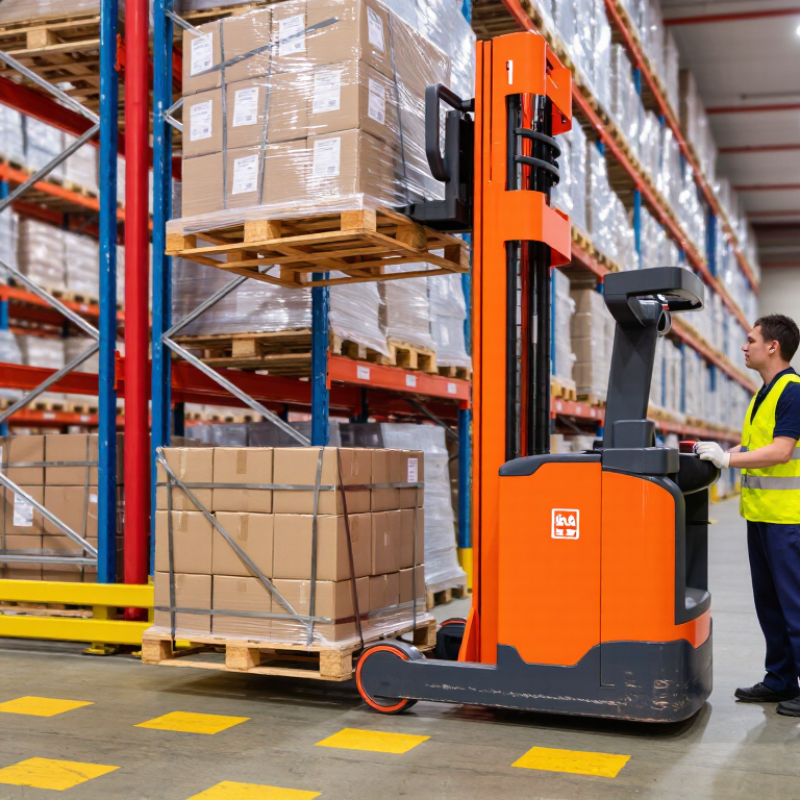
Table of Contents [Hide]
Define the Lifting Capacity and Height You Need
Tip 1: Define the real load, not the average load. Add the product, pallet, wrapping, and any attachment. Then check the truck’s rated capacity at the required load center and lift height. A 2,000-kilogram rating may fall sharply when the load sits farther forward or rises higher. A neat calculation can still mislead.
OSHA estimates that powered industrial trucks cause about 85 fatal accidents and 34,900 serious injuries annually in the United States. Capacity and height decisions therefore affect more than purchasing cost. Measure your heaviest pallet, its dimensions, and the narrowest travel space. Record these figures during a normal shift, not only during a controlled test. That is where practical experience matters.
Tip 2: Match lifting height to the highest working position. Measure rack beam height, pallet clearance, ceiling obstructions, and the operator’s sightline. Leave a safety margin for uneven floors and changing loads.
Tip 3: Ask for a capacity chart, not a single headline number. Compare residual capacity at your exact height and load center. ISO 3691-1 and relevant local workplace rules provide useful safety benchmarks, but site conditions still require competent assessment. Some buyers, myself included, may focus too heavily on maximum lift height. Usable capacity at that height is usually the more honest figure.

© Copyright - Pro Tool & Supply - Site by SVM E-Marketing Solutions - Sitemap
- Privacy policy