- Products
- Air Compressors & Air Tools
- Climate Control
- Compaction Equipment
- Concrete Cutting Tools & Equipment
- Concrete and Masonry
- Demolition & Excavation
- Electrical & Mechanical
- Fasteners and Anchoring Adhesives
- Floor Protection
- Generators and Welders
- Hand Tools
- Heaters
- Janitorial and Office Supplies
- Jobsite Protection
- Ladders & Storage
- Lighting & Lighting Accessories
- Man Lifts
- Material Handling Equipment
- Power Tools
- Pressure Washers & Pumps
- Safety Gear
- Safety Products
- Saws
- Surface Preparation
- SEASONAL PRODUCTS
- Rentals
- Air Compressor and Air Tool Rentals
- Climate Control Rental
- Compaction Rentals
- Concrete Equipment Rentals
- Demolition & Excavation Equipment Rentals
- Concrete Floor Grinder Rentals
- General Construction Equipment Rentals
- Generator Rentals and Welder Rentals
- Heater Rentals
- Light Tower Rentals
- Man Lift Rentals in Massachusetts and Rhode Island
- Material Handling Equipment Rentals
- Pressure Washer & Pump Rentals
- Saw Rentals in New England
- SEASONAL PRODUCTS
- Products
- Air Compressors & Air Tools
- Climate Control
- Compaction Equipment
- Concrete Cutting Tools & Equipment
- Demolition & Excavation
- Electrical & Mechanical
- Floor Protection
- Generators and Welders
- Construction Heaters
- Construction Ladders, Staging, & Storage
- Construction Lighting
- Man Lifts
- Material Handling Equipment
- Industrial Janitorial and Office Supplies
- Pressure Washers & Pumps
- Construction Safety Products
- Construction Safety Gear
- Surface Preparation
- Building Protection
- Diesel Accessories
- Zero Emissions
- Rentals
- Air Compressor and Air Tool Rentals
- Climate Control Rental
- Compaction Rentals
- Concrete Equipment Rental
- Demolition & Excavation Equipment Rental
- General Construction Equipment Rental
- Generator Rentals and Welder Rentals
- Construction Heaters Rental
- Light Tower Rentals
- Man Lift Rentals
- Material Handling Equipment Rental
- Pressure Washer & Pump Rentals
- Saw Rentals in New England
- Concrete Floor Grinder Rentals
- Zero Emissions Rentals
- Repairs & Used
- Parts
- Blog
- Services
- Resources
- About Us
- Contact Us
Sales & Rental of Construction | Industrial Equipment & Supplies


7 Tips for Choosing an SMC Enclosure Hydraulic Press
Choosing an Smc Enclosure Hydraulic Press is not simply a matter of selecting the highest tonnage. The press must match the enclosure size, compound flow, mold design, and production rhythm. A machine that looks powerful on paper may still create uneven corners, flashing, or slow cycle times. That is the uncomfortable part.
Composite manufacturing authority Dr. Peter K. Mallick offers a useful principle: “Processing conditions strongly influence composite performance.” His point applies directly to SMC molding. Pressure, temperature, dwell time, and platen movement must work together. One setting cannot repair every design mistake.
This guide presents seven practical tips for choosing an Smc Enclosure Hydraulic Press. It examines pressing force, daylight opening, platen accuracy, heating control, safety systems, maintenance access, and supplier support. These details become real during production. Imagine a large electrical enclosure sitting unevenly on the lower platen. Imagine resin flashing around a door recess. Small errors become expensive quickly.
Look beyond the machine frame. Check whether the hydraulic system maintains stable pressure during the holding stage. Confirm that the heating zones remain even across the mold surface. Ask how easily technicians can replace seals, inspect hoses, and calibrate sensors. These questions sound basic. They are often neglected.
The best choice may not be the fastest press. It may be the one that delivers repeatable parts with fewer interruptions. Still, perfection is unrealistic. Operators may need to adjust loading methods, mold temperature, or curing time after installation. A careful evaluation leaves room for those lessons.
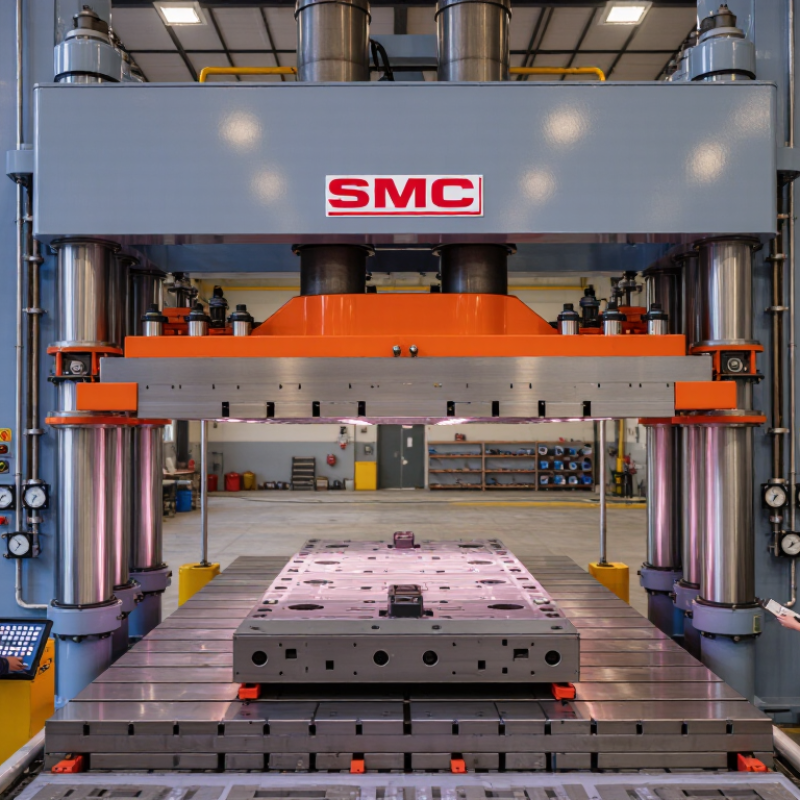
Table of Contents [Hide]
Define the SMC Enclosure Hydraulic Press and Its Primary Applications
7 Tips for Choosing an SMC Enclosure Hydraulic Press
An SMC enclosure hydraulic press compresses sheet molding compound inside a heated mold. Pressure forms the enclosure while heat cures its resin and reinforces its glass fibers. These presses commonly produce electrical cabinets, control boxes, telecommunications housings, and protective enclosures for industrial equipment. They also support renewable-energy systems and selected vehicle components.
According to MarketsandMarkets’ 2024 Sheet Molding Compound Market report, the SMC market is projected to grow from about USD 3.5 billion in 2024 to over USD 5 billion by 2029. This growth increases demand for stable pressure, accurate temperature control, and repeatable cycle times. When choosing equipment, check seven practical points: pressing force, mold size, daylight, heating uniformity, hydraulic response, automation, and service access. A larger press is not automatically safer or more productive.
Match the press force to the enclosure’s projected area and material flow. Confirm mold temperature consistency at several points, not only near the controller. Review cycle data from similar SMC parts. The U.S. Department of Energy reports that lightweight composites can reduce vehicle weight and improve efficiency, but processing defects can erase those benefits. Warpage, air pockets, and uneven walls remain common concerns. The selection process is not perfect. Actual trials may reveal weaknesses that a specification sheet hides.

© Copyright - Pro Tool & Supply - Site by SVM E-Marketing Solutions - Sitemap
- Privacy policy