- Products
- Air Compressors & Air Tools
- Climate Control
- Compaction Equipment
- Concrete Cutting Tools & Equipment
- Concrete and Masonry
- Demolition & Excavation
- Electrical & Mechanical
- Fasteners and Anchoring Adhesives
- Floor Protection
- Generators and Welders
- Hand Tools
- Heaters
- Janitorial and Office Supplies
- Jobsite Protection
- Ladders & Storage
- Lighting & Lighting Accessories
- Man Lifts
- Material Handling Equipment
- Power Tools
- Pressure Washers & Pumps
- Safety Gear
- Safety Products
- Saws
- Surface Preparation
- SEASONAL PRODUCTS
- Rentals
- Air Compressor and Air Tool Rentals
- Climate Control Rental
- Compaction Rentals
- Concrete Equipment Rentals
- Demolition & Excavation Equipment Rentals
- Concrete Floor Grinder Rentals
- General Construction Equipment Rentals
- Generator Rentals and Welder Rentals
- Heater Rentals
- Light Tower Rentals
- Man Lift Rentals in Massachusetts and Rhode Island
- Material Handling Equipment Rentals
- Pressure Washer & Pump Rentals
- Saw Rentals in New England
- SEASONAL PRODUCTS
- Products
- Air Compressors & Air Tools
- Climate Control
- Compaction Equipment
- Concrete Cutting Tools & Equipment
- Demolition & Excavation
- Electrical & Mechanical
- Floor Protection
- Generators and Welders
- Construction Heaters
- Construction Ladders, Staging, & Storage
- Construction Lighting
- Man Lifts
- Material Handling Equipment
- Industrial Janitorial and Office Supplies
- Pressure Washers & Pumps
- Construction Safety Products
- Construction Safety Gear
- Surface Preparation
- Building Protection
- Diesel Accessories
- Zero Emissions
- Rentals
- Air Compressor and Air Tool Rentals
- Climate Control Rental
- Compaction Rentals
- Concrete Equipment Rental
- Demolition & Excavation Equipment Rental
- General Construction Equipment Rental
- Generator Rentals and Welder Rentals
- Construction Heaters Rental
- Light Tower Rentals
- Man Lift Rentals
- Material Handling Equipment Rental
- Pressure Washer & Pump Rentals
- Saw Rentals in New England
- Concrete Floor Grinder Rentals
- Zero Emissions Rentals
- Repairs & Used
- Parts
- Blog
- Services
- Resources
- About Us
- Contact Us
Sales & Rental of Construction | Industrial Equipment & Supplies


7 Tips for Choosing a Potato Chips Production Line
A Potato Chips Production Line is not just a fryer and a conveyor. It is a sequence of decisions that shapes chip quality, operating costs, and production consistency. FAOSTAT reports that global potato production exceeded 370 million tonnes in 2022, supplying a large raw-material base for fresh and processed products. Yet potatoes vary. Their size, solids, sugar levels, and moisture can change with variety, season, and storage. A line must handle that variation without sacrificing crispness or creating unnecessary waste.
The right equipment choice starts with the product and the target output. Washing and peeling capacity matter, but so do slicer accuracy, fryer temperature control, oil filtration, seasoning coverage, cooling time, and packaging speed. Picture a thin slice entering the fryer: a small thickness difference can affect color and texture across an entire batch. Buyers should also inspect cleanability, food-contact surfaces, energy use, operator access, and the supplier’s service plan. A fast line is not automatically a reliable one.
This guide presents seven practical checks for comparing a Potato Chips Production Line, from capacity claims to commissioning support. It draws on FAOSTAT’s production data and established food-processing principles. No interview or source text was supplied for a verifiable quotation from a named potato-processing expert, so attributing a quote would risk inventing evidence. That limitation matters. A real supplier’s test results, product samples, and documented references are more useful than polished promises. Some figures may still look convincing on paper. Test them with your potatoes.
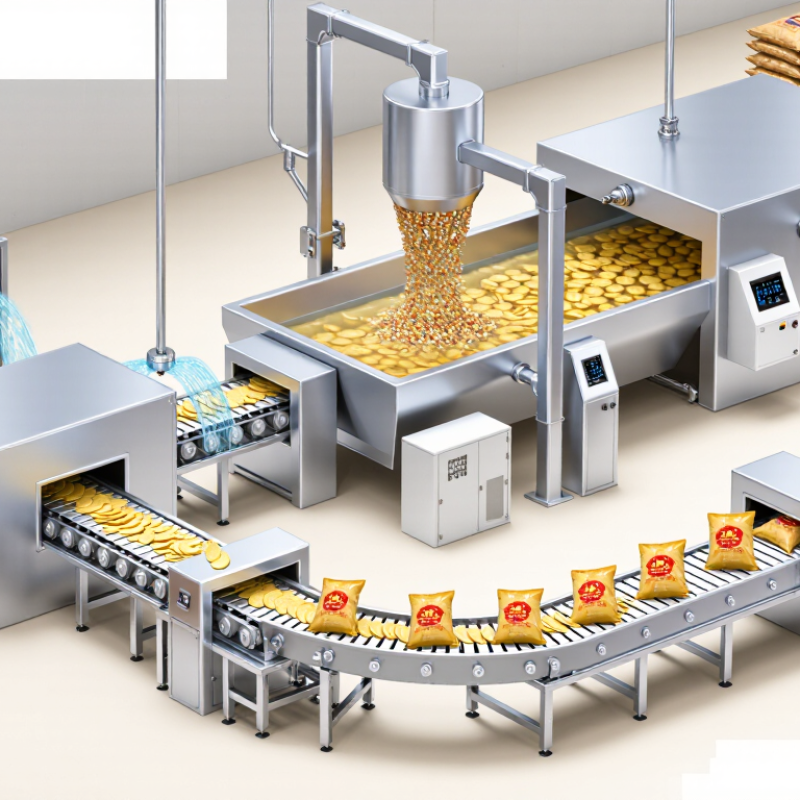
Table of Contents [Hide]
Define Production Goals and Required Output Capacity
Before selecting equipment, define the product mix, operating schedule, and sales forecast. FAOSTAT’s Crops and Livestock Products database records about 374 million tonnes of potatoes produced worldwide in 2022. That figure shows the scale of the raw-material supply, but it does not predict your local availability or demand. Check seasonal deliveries, potato size, dry matter, and storage conditions with suppliers. A steady supply of suitable potatoes matters as much as a fast fryer.
Convert your sales target into finished chips per hour, then allow for peeling, slicing, frying, seasoning, and packing limits. For example, a line rated at 500 kilograms per hour could produce 3.25 tonnes during 6.5 productive hours. Treat this as a planning example, not a guarantee. Cleaning, oil changes, product switches, and unplanned stops reduce actual output. Plan for real hours. Ask suppliers for capacity figures using your intended potato variety and slice thickness, and request a trial run with measured yield and downtime. I would also leave room for growth; though, spare capacity can be wasteful if demand stays flat. Compare the expected daily output with realistic sales, available storage, and the number of shifts your team can sustain.

© Copyright - Pro Tool & Supply - Site by SVM E-Marketing Solutions - Sitemap
- Privacy policy