- Products
- Air Compressors & Air Tools
- Climate Control
- Compaction Equipment
- Concrete Cutting Tools & Equipment
- Concrete and Masonry
- Demolition & Excavation
- Electrical & Mechanical
- Fasteners and Anchoring Adhesives
- Floor Protection
- Generators and Welders
- Hand Tools
- Heaters
- Janitorial and Office Supplies
- Jobsite Protection
- Ladders & Storage
- Lighting & Lighting Accessories
- Man Lifts
- Material Handling Equipment
- Power Tools
- Pressure Washers & Pumps
- Safety Gear
- Safety Products
- Saws
- Surface Preparation
- SEASONAL PRODUCTS
- Rentals
- Air Compressor and Air Tool Rentals
- Climate Control Rental
- Compaction Rentals
- Concrete Equipment Rentals
- Demolition & Excavation Equipment Rentals
- Concrete Floor Grinder Rentals
- General Construction Equipment Rentals
- Generator Rentals and Welder Rentals
- Heater Rentals
- Light Tower Rentals
- Man Lift Rentals in Massachusetts and Rhode Island
- Material Handling Equipment Rentals
- Pressure Washer & Pump Rentals
- Saw Rentals in New England
- SEASONAL PRODUCTS
- Products
- Air Compressors & Air Tools
- Climate Control
- Compaction Equipment
- Concrete Cutting Tools & Equipment
- Demolition & Excavation
- Electrical & Mechanical
- Floor Protection
- Generators and Welders
- Construction Heaters
- Construction Ladders, Staging, & Storage
- Construction Lighting
- Man Lifts
- Material Handling Equipment
- Industrial Janitorial and Office Supplies
- Pressure Washers & Pumps
- Construction Safety Products
- Construction Safety Gear
- Surface Preparation
- Building Protection
- Diesel Accessories
- Zero Emissions
- Rentals
- Air Compressor and Air Tool Rentals
- Climate Control Rental
- Compaction Rentals
- Concrete Equipment Rental
- Demolition & Excavation Equipment Rental
- General Construction Equipment Rental
- Generator Rentals and Welder Rentals
- Construction Heaters Rental
- Light Tower Rentals
- Man Lift Rentals
- Material Handling Equipment Rental
- Pressure Washer & Pump Rentals
- Saw Rentals in New England
- Concrete Floor Grinder Rentals
- Zero Emissions Rentals
- Repairs & Used
- Parts
- Blog
- Services
- Resources
- About Us
- Contact Us
Sales & Rental of Construction | Industrial Equipment & Supplies


7 Tips for Choosing a Nylon Flat Transmission Belt?
Choosing the right Nylon Flat Transmission Belt is not a simple catalog decision. Belt width, thickness, surface finish, tension, pulley diameter, and operating temperature all influence performance. A belt that looks suitable may still slip, stretch, or overheat under continuous load.
Power-transmission engineer Robert B. McCall explains, “A belt succeeds when its material, tension, and working environment are considered together.” That principle gives this guide its direction. The seven tips examine practical selection details, including torque requirements, pulley alignment, joint quality, and resistance to oil or moisture. These factors matter on real machines, where dust gathers near pulleys and heat builds inside enclosed drives.
Small errors become expensive.
A technician may measure the belt length correctly but overlook pulley crowning. Another may choose a thick belt for strength, then discover excessive bending resistance. I have also seen product descriptions use “high performance” without stating measurable load limits. That wording deserves caution. Reliable selection requires technical datasheets, manufacturer guidance, and application-specific calculations.
This introduction prepares readers to compare Nylon Flat Transmission Belt options with greater confidence. It does not treat one construction as perfect. Some belts offer excellent flexibility but sacrifice abrasion resistance. Others handle demanding loads but require larger pulleys and careful installation. The best choice depends on the machine, not marketing language.
These seven tips are designed for maintenance teams, equipment buyers, and engineers. They turn a broad purchase decision into a practical inspection process. Before ordering, record the speed, transmitted power, center distance, pulley dimensions, ambient conditions, and expected duty cycle. Missing data can lead to a costly guess.
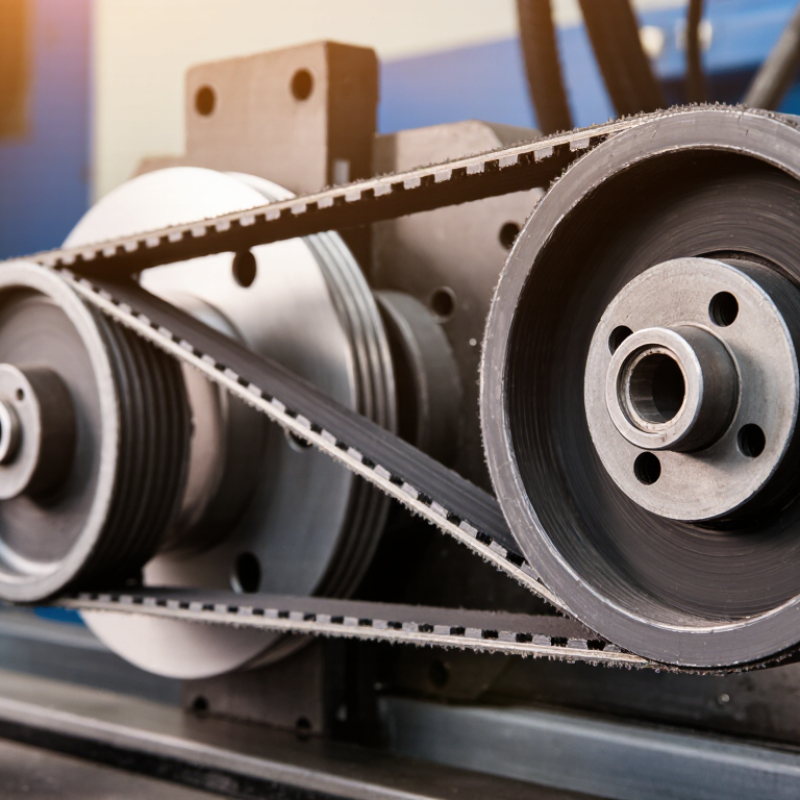
Table of Contents [Hide]
Understand the Structure and Working Principles of Nylon Flat Transmission Belts
7 Tips for Choosing a Nylon Flat Transmission Belt
Understand the Structure and Working Principles of Nylon Flat Transmission Belts
A nylon flat transmission belt usually combines a strong nylon tension layer with polyurethane, rubber, or coated fabric. The nylon carries tensile loads. The outer surface creates friction against pulleys. This separation of duties matters. A belt may look flexible, yet its inner layer can resist significant stretching. During inspection, check the belt edge, splice, and surface texture. Small cracks near the splice often reveal repeated bending stress.
The working principle is simple: pulley rotation creates tension on one side and slack on the other. Friction transfers torque between both surfaces. Correct tension prevents slipping, while excessive tension overloads shafts and bearings. The U.S. Department of Energy reports that motor-driven systems can consume about 60% of industrial electricity. Poor belt alignment can quietly increase this waste. Dust makes it worse. A practical check uses a straightedge across pulley faces and a tension gauge, not eyesight alone.
Choose the belt after measuring speed, torque, pulley diameter, operating temperature, and chemical exposure. ISO 4184 provides dimensional guidance for flat transmission belts, but standards cannot replace field testing. Nylon performs well under repeated loads, yet moisture and sharp contamination may change its behavior. That detail is easy to overlook. I would also question catalog ratings, because laboratory values rarely match a hot, dusty production line. Run a short trial, record temperature and tracking, then inspect the splice again.
7 Tips for Choosing a Nylon Flat Transmission Belt? – Understand the Structure and Working Principles of Nylon Flat Transmission Belts
| Tip | Selection Focus | Key Structural Feature | Recommended Data or Practical Guideline | Working Principle | What to Verify Before Purchase |
|---|---|---|---|---|---|
| 1 | Identify the Belt Construction | Common designs use a nylon tensile layer with polyurethane, rubber, leather, or elastomer covering layers. | Choose a high-strength nylon core for long center distances and high tensile loads. Select a coated surface when increased grip, wear resistance, or product protection is needed. | The nylon layer carries the tensile force, while the outer covering transfers friction to the pulley and protects the belt from abrasion. | Confirm the number of plies, total thickness, cover material, joint method, and whether the belt is intended for flat-belt transmission. |
| 2 | Match Width and Thickness to the Load | Belt width and thickness determine the available load-carrying area, bending stiffness, and contact area with the pulley. | Use the calculated power, belt speed, pulley diameter, and allowable working tension. Typical industrial flat belts may range from approximately 20 to 500 mm in width, but the correct size depends on the application. | Power is transmitted through the effective tension difference between the tight side and slack side. A wider belt generally supports greater load when pulley and alignment conditions are suitable. | Request allowable working tension in N/mm of belt width, not only breaking strength. Apply a suitable safety factor for shock loads and starts. |
| 3 | Check Pulley Diameter and Belt Flexibility | The belt bends repeatedly around the drive and driven pulleys; the tensile layer must tolerate cyclic flexing without fatigue. | Use the manufacturer’s minimum pulley diameter for the selected belt thickness and construction. As a general engineering principle, thicker belts require larger pulleys; the exact ratio must come from the belt specification. | A pulley converts the belt’s linear tension into rotational torque. Excessive bending causes higher flex fatigue, heat generation, and premature cracking or delamination. | Compare the actual pulley diameter with the specified minimum. Check whether the belt must run over crowned pulleys, small idlers, or reverse bends. |
| 4 | Evaluate Speed, Power, and Slip | Surface material, friction coefficient, belt tension, wrap angle, and pulley condition affect the ability to transmit torque without slipping. | For a belt speed of 10 m/s, pulley speed can be estimated as: rpm = 60 × belt speed ÷ (π × pulley diameter in metres). Maintain adequate wrap and tension without over-tensioning. | Power is approximately P = (T1 − T2) × v, where P is power in watts, T1 and T2 are tight- and slack-side tensions in newtons, and v is belt speed in m/s. | Check rated speed, calculated power, start-up torque, wrap angle, pulley surface, and evidence of slip such as glazing, heat, or speed loss. |
| 5 | Select the Surface for the Operating Environment | Cover texture and material may be smooth, textured, high-grip, oil-resistant, heat-resistant, or designed for product handling. | For dry power transmission, use a surface that provides stable friction. For oily, wet, dusty, or abrasive conditions, select a compatible cover and verify its temperature and chemical resistance. | Friction between the belt and pulley prevents relative motion. Contamination can reduce friction or attack the cover, changing the belt’s effective transmission capability. | Confirm operating temperature, moisture, oil exposure, cleaning chemicals, dust level, and whether the belt contacts food or other sensitive products. |
| 6 | Choose the Correct Joint and Installation Method | Endless welded, thermally joined, mechanically fastened, and laced constructions offer different strength, flexibility, and serviceability. | Use an endless or welded joint where smooth running and high joint strength are important. Use a mechanical joint where frequent removal or on-site installation is required and the pulley arrangement allows it. | The joint must transfer the same tensile force as the belt body while passing over pulleys without excessive thickness or vibration. | Check joint strength, joint thickness, minimum pulley diameter at the joint, installation tools, tracking direction, and allowable running speed. |
| 7 | Control Tension, Alignment, and Tracking | Flat belts normally rely on correct tension, pulley alignment, and a suitable pulley crown or tracking system to remain centered. | Install the belt straight and tension it only to the supplier’s specified working tension. Avoid excessive tension, unequal pulley shafts, and belt edges that contact fixed machine parts. | Proper tension maintains frictional contact, while alignment and pulley geometry guide the belt toward the center. Misalignment causes edge wear, wandering, and uneven loading. | Inspect shaft parallelism, pulley condition, belt centering, edge wear, tension, vibration, and temperature after initial running and during scheduled maintenance. |
Engineering note: Working tension, minimum pulley diameter, speed rating, temperature range, and chemical compatibility vary by belt construction and manufacturer. Final selection should be based on the technical data sheet and the actual duty cycle.

© Copyright - Pro Tool & Supply - Site by SVM E-Marketing Solutions - Sitemap
- Privacy policy