- Products
- Air Compressors & Air Tools
- Climate Control
- Compaction Equipment
- Concrete Cutting Tools & Equipment
- Concrete and Masonry
- Demolition & Excavation
- Electrical & Mechanical
- Fasteners and Anchoring Adhesives
- Floor Protection
- Generators and Welders
- Hand Tools
- Heaters
- Janitorial and Office Supplies
- Jobsite Protection
- Ladders & Storage
- Lighting & Lighting Accessories
- Man Lifts
- Material Handling Equipment
- Power Tools
- Pressure Washers & Pumps
- Safety Gear
- Safety Products
- Saws
- Surface Preparation
- SEASONAL PRODUCTS
- Rentals
- Air Compressor and Air Tool Rentals
- Climate Control Rental
- Compaction Rentals
- Concrete Equipment Rentals
- Demolition & Excavation Equipment Rentals
- Concrete Floor Grinder Rentals
- General Construction Equipment Rentals
- Generator Rentals and Welder Rentals
- Heater Rentals
- Light Tower Rentals
- Man Lift Rentals in Massachusetts and Rhode Island
- Material Handling Equipment Rentals
- Pressure Washer & Pump Rentals
- Saw Rentals in New England
- SEASONAL PRODUCTS
- Products
- Air Compressors & Air Tools
- Climate Control
- Compaction Equipment
- Concrete Cutting Tools & Equipment
- Demolition & Excavation
- Electrical & Mechanical
- Floor Protection
- Generators and Welders
- Construction Heaters
- Construction Ladders, Staging, & Storage
- Construction Lighting
- Man Lifts
- Material Handling Equipment
- Industrial Janitorial and Office Supplies
- Pressure Washers & Pumps
- Construction Safety Products
- Construction Safety Gear
- Surface Preparation
- Building Protection
- Diesel Accessories
- Zero Emissions
- Rentals
- Air Compressor and Air Tool Rentals
- Climate Control Rental
- Compaction Rentals
- Concrete Equipment Rental
- Demolition & Excavation Equipment Rental
- General Construction Equipment Rental
- Generator Rentals and Welder Rentals
- Construction Heaters Rental
- Light Tower Rentals
- Man Lift Rentals
- Material Handling Equipment Rental
- Pressure Washer & Pump Rentals
- Saw Rentals in New England
- Concrete Floor Grinder Rentals
- Zero Emissions Rentals
- Repairs & Used
- Parts
- Blog
- Services
- Resources
- About Us
- Contact Us
Sales & Rental of Construction | Industrial Equipment & Supplies


10 Tips for Buying Color Coated Steel Coil?
Buying Color Coated Steel Coil is not simply a price comparison. It is a technical decision involving steel grade, coating performance, finish quality, and supply reliability.
A suitable coil should match the building’s environment and forming requirements. Coastal projects need stronger corrosion protection than sheltered indoor applications. Check the substrate thickness, coating mass, paint system, color tolerance, gloss level, and expected service life. Small details matter. Ask for mill certificates and recent inspection records. Reliable suppliers should explain their test methods, production controls, and warranty conditions clearly.
The ten tips in this guide reflect practical purchasing experience. They cover supplier evaluation, specification checks, surface inspection, edge quality, packaging, delivery planning, and total cost. A bright sample may look excellent under warehouse lighting, yet reveal uneven gloss outdoors. That mistake is easy to make. Request a larger sample when appearance affects the project.
Do not judge every supplier by a polished brochure. Visit the facility when possible, review independent test results, and confirm production capacity before placing a large order. Also, calculate waste, cutting losses, transport damage, and future maintenance. The lowest quotation may become expensive later. No checklist is perfect. Unexpected color variation or delayed delivery can still happen. Careful buyers leave room for verification, written approvals, and honest discussion before production begins.
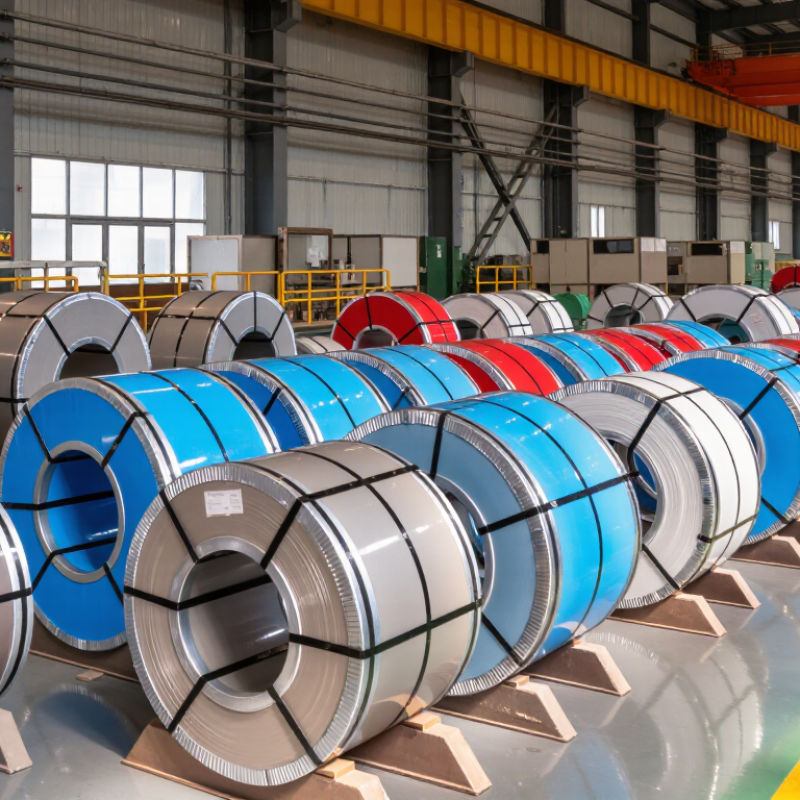
Table of Contents [Hide]
Define Color-Coated Steel Coil: Thicknesses from 0.20 to 1.20 mm
Color-coated steel coil is flat steel coated with metallic protection and a painted finish before fabrication. Common thicknesses range from 0.20 to 1.20 mm. This thickness normally describes the steel substrate, not the complete painted product. Confirm the measurement method before comparing quotations.
Tip 1 Match thickness with the application. Thin 0.20–0.40 mm coil suits light panels and indoor cladding. Thicker 0.50–1.20 mm material offers better stiffness for roofing, doors, and formed components.
Tip 2 Request the actual thickness tolerance. EN 10346 provides requirements for continuously hot-dip coated steel products, but supply tolerances still affect cutting and bending. A micrometer check at several coil points is practical. One reading is not enough.
1,888.2 million tonnes
The World Steel Association reported 1,888.2 million tonnes of global crude steel production in 2023.
This scale supports broad availability, but it does not guarantee consistent painted-coil quality.
Tip 3 Check coating mass, paint system, gloss, and color difference separately.
Tip 4 Ask for test data covering adhesion, hardness, and corrosion resistance.
ASTM A755 also highlights the importance of substrate and coating selection for prepainted steel.
Storage matters too.
Keep coils dry, ventilated, and away from standing water.
I have seen attractive surfaces fail after poor warehouse handling. A perfect specification cannot repair trapped moisture.
Consider forming radius, yield strength, width tolerance, and delivery inspection before signing the purchase order.

© Copyright - Pro Tool & Supply - Site by SVM E-Marketing Solutions - Sitemap
- Privacy policy