- Products
- Air Compressors & Air Tools
- Climate Control
- Compaction Equipment
- Concrete Cutting Tools & Equipment
- Concrete and Masonry
- Demolition & Excavation
- Electrical & Mechanical
- Fasteners and Anchoring Adhesives
- Floor Protection
- Generators and Welders
- Hand Tools
- Heaters
- Janitorial and Office Supplies
- Jobsite Protection
- Ladders & Storage
- Lighting & Lighting Accessories
- Man Lifts
- Material Handling Equipment
- Power Tools
- Pressure Washers & Pumps
- Safety Gear
- Safety Products
- Saws
- Surface Preparation
- SEASONAL PRODUCTS
- Rentals
- Air Compressor and Air Tool Rentals
- Climate Control Rental
- Compaction Rentals
- Concrete Equipment Rentals
- Demolition & Excavation Equipment Rentals
- Concrete Floor Grinder Rentals
- General Construction Equipment Rentals
- Generator Rentals and Welder Rentals
- Heater Rentals
- Light Tower Rentals
- Man Lift Rentals in Massachusetts and Rhode Island
- Material Handling Equipment Rentals
- Pressure Washer & Pump Rentals
- Saw Rentals in New England
- SEASONAL PRODUCTS
- Products
- Air Compressors & Air Tools
- Climate Control
- Compaction Equipment
- Concrete Cutting Tools & Equipment
- Demolition & Excavation
- Electrical & Mechanical
- Floor Protection
- Generators and Welders
- Construction Heaters
- Construction Ladders, Staging, & Storage
- Construction Lighting
- Man Lifts
- Material Handling Equipment
- Industrial Janitorial and Office Supplies
- Pressure Washers & Pumps
- Construction Safety Products
- Construction Safety Gear
- Surface Preparation
- Building Protection
- Diesel Accessories
- Zero Emissions
- Rentals
- Air Compressor and Air Tool Rentals
- Climate Control Rental
- Compaction Rentals
- Concrete Equipment Rental
- Demolition & Excavation Equipment Rental
- General Construction Equipment Rental
- Generator Rentals and Welder Rentals
- Construction Heaters Rental
- Light Tower Rentals
- Man Lift Rentals
- Material Handling Equipment Rental
- Pressure Washer & Pump Rentals
- Saw Rentals in New England
- Concrete Floor Grinder Rentals
- Zero Emissions Rentals
- Repairs & Used
- Parts
- Blog
- Services
- Resources
- About Us
- Contact Us
Sales & Rental of Construction | Industrial Equipment & Supplies


Top Smoke Precipitator Types for Buyers in 2026
Choosing a Smoke Precipitator in 2026 starts with the particles, not the product label. Oil mist, fine dust, and sticky cooking smoke behave differently inside a collector. A unit that looks impressive on a specification sheet may perform poorly when airflow, temperature, or maintenance needs change.
The U.S. Environmental Protection Agency’s Air Pollution Control Cost Manual explains how electrostatic precipitators charge particles and collect them on plates. Under suitable conditions, collection efficiency can exceed 99 percent. That figure is not a promise for every installation. Duct design, particle properties, and cleaning schedules all matter. WHO air-quality guidance also underscores why fine-particle control deserves attention. WHO expert Dr. Maria Neira has said, “Air pollution is one of the biggest environmental threats to human health, alongside climate change.” The quote concerns air pollution broadly, not one machine type.
Buyers will commonly compare dry plate, tubular, and wet electrostatic precipitators, alongside compact units designed for smaller exhaust streams. Each option has trade-offs. Dry systems suit many dust applications; wet systems can handle sticky particles but require water management. Plate spacing, pressure drop, access for cleaning, and replacement parts deserve close inspection. Small details matter.
A supplier’s test data is useful, but ask what was measured, where, and under which operating conditions. Request particle-size results, not just a single efficiency number. Also verify the expected service interval and local support. There is no universal winner. Even experienced buyers can miss the effect of changing production loads. A careful site assessment is less exciting than a glossy brochure, yet it is often the more reliable starting point.
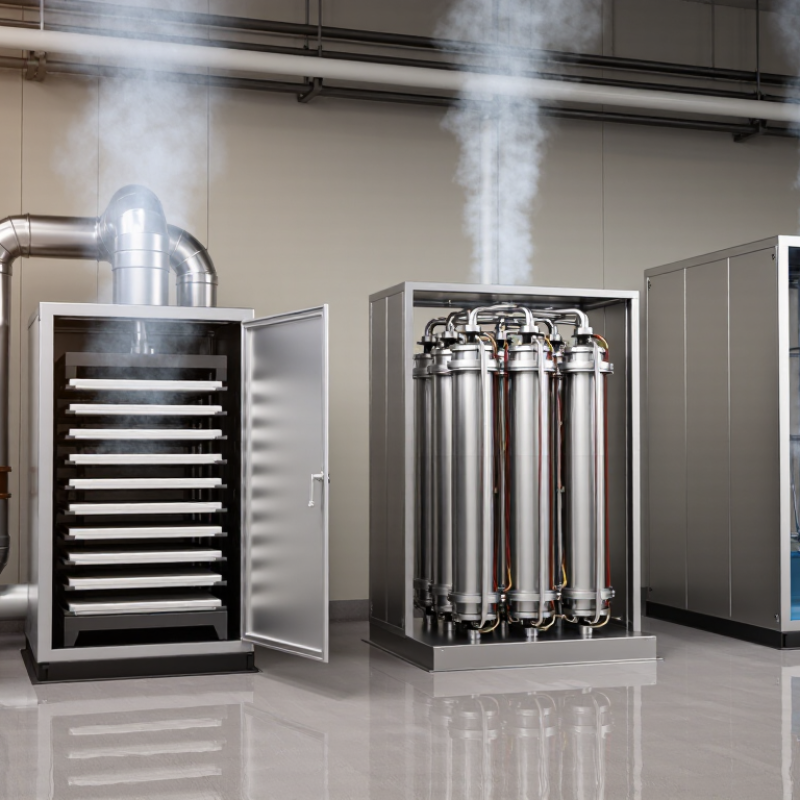
Table of Contents [Hide]
How Smoke Precipitators Work: Particle Size and Collection Efficiency
Smoke precipitators remove suspended particles by drawing contaminated air through a collection zone. In an electrostatic unit, particles receive an electrical charge and move toward oppositely charged plates. A mechanical collector instead relies on screens or filters to capture particles as air passes through. The method matters, but particle size matters too.
Very small particles can follow airflow around collection surfaces, making capture more difficult. Larger particles may be easier to trap, though performance still depends on air speed, loading, and equipment design. Efficiency is not one fixed number. It can vary across particle sizes, so buyers should ask for test data across the expected size range—not only a single headline figure. Look for measurements under conditions close to the intended operating airflow.
Check the details. A particle-size report, pressure-drop reading, and stated test method help make comparisons more meaningful. Dust buildup can reduce airflow or collection performance; cleaning access and maintenance intervals deserve attention. Humidity and particle characteristics may also affect results. One assumption can fail: a unit rated highly in a test may perform differently in a room with changing airflow. Match the collector to measured conditions, and verify performance after installation.

© Copyright - Pro Tool & Supply - Site by SVM E-Marketing Solutions - Sitemap
- Privacy policy