- Products
- Air Compressors & Air Tools
- Climate Control
- Compaction Equipment
- Concrete Cutting Tools & Equipment
- Concrete and Masonry
- Demolition & Excavation
- Electrical & Mechanical
- Fasteners and Anchoring Adhesives
- Floor Protection
- Generators and Welders
- Hand Tools
- Heaters
- Janitorial and Office Supplies
- Jobsite Protection
- Ladders & Storage
- Lighting & Lighting Accessories
- Man Lifts
- Material Handling Equipment
- Power Tools
- Pressure Washers & Pumps
- Safety Gear
- Safety Products
- Saws
- Surface Preparation
- SEASONAL PRODUCTS
- Rentals
- Air Compressor and Air Tool Rentals
- Climate Control Rental
- Compaction Rentals
- Concrete Equipment Rentals
- Demolition & Excavation Equipment Rentals
- Concrete Floor Grinder Rentals
- General Construction Equipment Rentals
- Generator Rentals and Welder Rentals
- Heater Rentals
- Light Tower Rentals
- Man Lift Rentals in Massachusetts and Rhode Island
- Material Handling Equipment Rentals
- Pressure Washer & Pump Rentals
- Saw Rentals in New England
- SEASONAL PRODUCTS
- Products
- Air Compressors & Air Tools
- Climate Control
- Compaction Equipment
- Concrete Cutting Tools & Equipment
- Demolition & Excavation
- Electrical & Mechanical
- Floor Protection
- Generators and Welders
- Construction Heaters
- Construction Ladders, Staging, & Storage
- Construction Lighting
- Man Lifts
- Material Handling Equipment
- Industrial Janitorial and Office Supplies
- Pressure Washers & Pumps
- Construction Safety Products
- Construction Safety Gear
- Surface Preparation
- Building Protection
- Diesel Accessories
- Zero Emissions
- Rentals
- Air Compressor and Air Tool Rentals
- Climate Control Rental
- Compaction Rentals
- Concrete Equipment Rental
- Demolition & Excavation Equipment Rental
- General Construction Equipment Rental
- Generator Rentals and Welder Rentals
- Construction Heaters Rental
- Light Tower Rentals
- Man Lift Rentals
- Material Handling Equipment Rental
- Pressure Washer & Pump Rentals
- Saw Rentals in New England
- Concrete Floor Grinder Rentals
- Zero Emissions Rentals
- Repairs & Used
- Parts
- Blog
- Services
- Resources
- About Us
- Contact Us
Sales & Rental of Construction | Industrial Equipment & Supplies


What Is a Retro Gas Pump Sign and Where to Buy One?
A Retro Gas Pump Sign can turn an ordinary garage, diner, or workshop into a small piece of roadside history. Its painted lettering, enamel shine, and weathered edges recall service stations from the 1930s through the 1960s. Some signs promoted fuel brands, while others identified motor oil, tires, or travel services. Their appeal is visual, but their value often depends on age, rarity, condition, and authenticity.
Jack Sim, a longtime gas-pump collector and author, offers a practical warning: “Condition and authenticity matter more than a shiny finish.” That advice deserves attention. A heavily polished sign may lose its original character. Faded paint can be meaningful. Rust can be serious.
When shopping for a Retro Gas Pump Sign, buyers should inspect the back, mounting holes, lettering, and surface texture. Original porcelain signs usually feel heavier and show natural wear around their edges. Reproductions may look attractive, but their colors can appear unusually bright. Ask sellers for clear photographs, measurements, manufacturer details, and provenance. Reliable dealers should answer without pressure.
You can find these signs through specialist antique dealers, automotive memorabilia shops, estate auctions, and established online marketplaces. Prices vary widely. A small reproduction may cost less than a rare, documented original. That difference matters.
Not every old-looking sign is genuinely old. Sometimes, even experienced collectors disagree. A careful buyer leaves room for doubt, compares several examples, and chooses a sign that fits both the space and the budget.
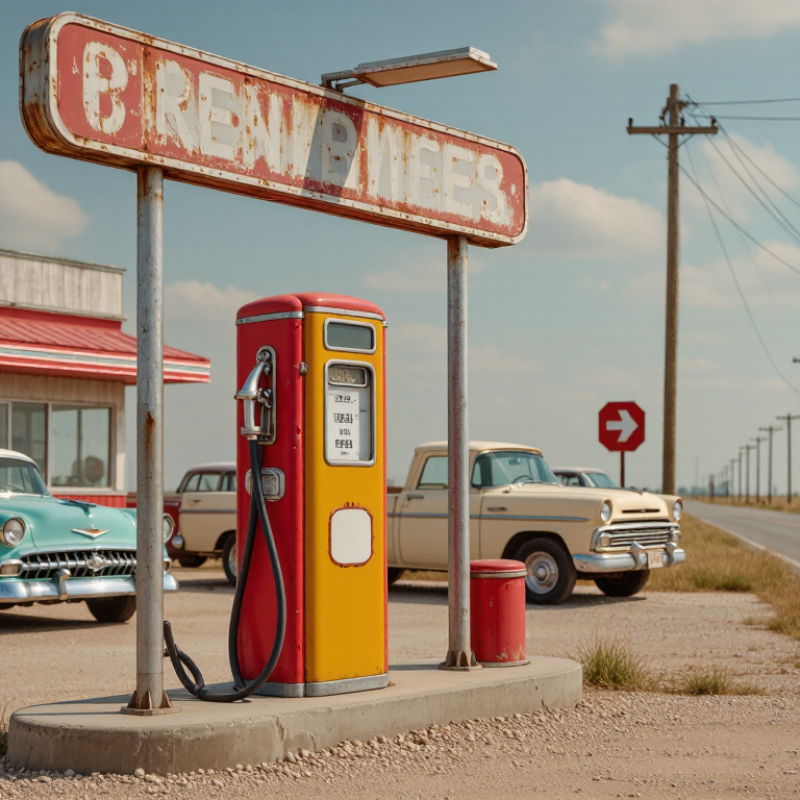
Table of Contents [Hide]
What a Retro Gas Pump Sign Is
A retro gas pump sign is a decorative sign inspired by the bold graphics used at mid-century fuel stations. It is usually made from painted steel, aluminum, or porcelain enamel. Many signs feature raised lettering, cream backgrounds, red borders, and simulated wear. A retro sign is not a working pump component. It is a visual object for garages, diners, workshops, restaurants, or private collections.
The design reflects a period when roadside signs guided drivers quickly. The U.S. Energy Information Administration reported approximately 8.9 million barrels per day of finished motor gasoline supplied in 2023. That scale helps explain why fuel-station imagery became familiar across American commercial culture. A convincing sign should have readable lettering, balanced spacing, and a believable finish. Excessive rust can look artificial. I still find some replicas too clean.
Collectors can buy retro gas pump signs through antique dealers, specialist sign workshops, estate auctions, and online vintage marketplaces. Reproduction signs are often easier to find and usually cost less than original porcelain examples. Check the sign’s width, weight, mounting holes, and surface condition before paying. The National Association of Convenience Stores’ 2024 industry report continues to identify fuel sales as a major reason customers visit convenience locations. That supports the lasting commercial appeal of fuel-related graphics. However, a report cannot judge authenticity. Ask for close photographs, production details, and honest disclosure of repairs. For outdoor use, choose UV-resistant paint and rust-protected metal. Placement matters. A small sign can disappear on a large brick wall.

© Copyright - Pro Tool & Supply - Site by SVM E-Marketing Solutions - Sitemap
- Privacy policy