- Products
- Air Compressors & Air Tools
- Climate Control
- Compaction Equipment
- Concrete Cutting Tools & Equipment
- Concrete and Masonry
- Demolition & Excavation
- Electrical & Mechanical
- Fasteners and Anchoring Adhesives
- Floor Protection
- Generators and Welders
- Hand Tools
- Heaters
- Janitorial and Office Supplies
- Jobsite Protection
- Ladders & Storage
- Lighting & Lighting Accessories
- Man Lifts
- Material Handling Equipment
- Power Tools
- Pressure Washers & Pumps
- Safety Gear
- Safety Products
- Saws
- Surface Preparation
- SEASONAL PRODUCTS
- Rentals
- Air Compressor and Air Tool Rentals
- Climate Control Rental
- Compaction Rentals
- Concrete Equipment Rentals
- Demolition & Excavation Equipment Rentals
- Concrete Floor Grinder Rentals
- General Construction Equipment Rentals
- Generator Rentals and Welder Rentals
- Heater Rentals
- Light Tower Rentals
- Man Lift Rentals in Massachusetts and Rhode Island
- Material Handling Equipment Rentals
- Pressure Washer & Pump Rentals
- Saw Rentals in New England
- SEASONAL PRODUCTS
- Products
- Air Compressors & Air Tools
- Climate Control
- Compaction Equipment
- Concrete Cutting Tools & Equipment
- Demolition & Excavation
- Electrical & Mechanical
- Floor Protection
- Generators and Welders
- Construction Heaters
- Construction Ladders, Staging, & Storage
- Construction Lighting
- Man Lifts
- Material Handling Equipment
- Industrial Janitorial and Office Supplies
- Pressure Washers & Pumps
- Construction Safety Products
- Construction Safety Gear
- Surface Preparation
- Building Protection
- Diesel Accessories
- Zero Emissions
- Rentals
- Air Compressor and Air Tool Rentals
- Climate Control Rental
- Compaction Rentals
- Concrete Equipment Rental
- Demolition & Excavation Equipment Rental
- General Construction Equipment Rental
- Generator Rentals and Welder Rentals
- Construction Heaters Rental
- Light Tower Rentals
- Man Lift Rentals
- Material Handling Equipment Rental
- Pressure Washer & Pump Rentals
- Saw Rentals in New England
- Concrete Floor Grinder Rentals
- Zero Emissions Rentals
- Repairs & Used
- Parts
- Blog
- Services
- Resources
- About Us
- Contact Us
Sales & Rental of Construction | Industrial Equipment & Supplies


What Is a Restringing Rackets Machine and How Does It Work?
A Restringing Rackets Machine is a specialized tool for replacing and tensioning strings in tennis, badminton, and squash rackets. It combines a mounting system, string clamps, a tension head, and adjustment controls. Together, these parts hold the frame securely and pull each string to a selected tension.
The process begins with careful frame mounting. A technician places the racket on a central support and checks its alignment. The machine then guides the string through the racket’s grommets. Its tension head pulls the string, while clamps hold each section in place. This pattern continues across the main and cross strings. Small details matter. Uneven tension can change power, control, comfort, and durability.
Accuracy depends on more than the machine itself. Experienced stringers inspect the frame, identify its recommended tension range, and select suitable string materials. They also check clamp pressure and calibrate the tension system regularly. Digital models can improve consistency, but they cannot replace judgment. A machine may display exact numbers while a worn clamp creates hidden tension loss.
That limitation deserves attention. Restringing is partly technical and partly practical. Two rackets can receive identical settings yet feel different during play. String type, player technique, temperature, and frame condition all influence the result. This guide explains how a Restringing Rackets Machine works, what each component does, and which handling choices affect the finished racket. The aim is reliable understanding, not exaggerated precision.
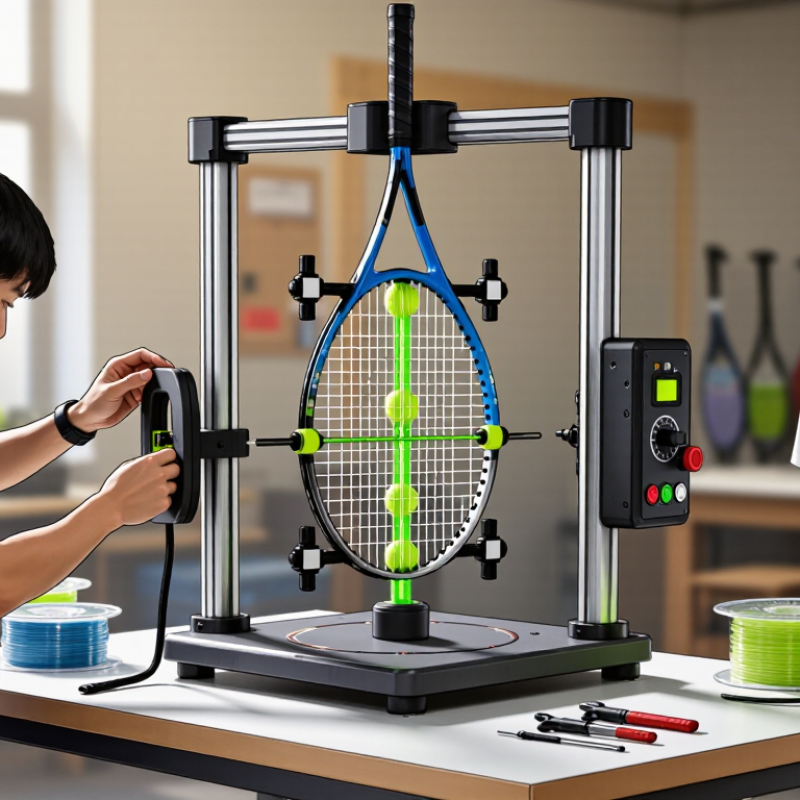
Table of Contents [Hide]
What Is a Racket Restringing Machine?
A racket restringing machine is a specialized tool for replacing worn strings in tennis, badminton, or squash rackets. It holds the frame securely while applying controlled tension to each string. Most machines include a turntable, frame supports, string clamps, and a tension head. Together, these parts help create an even string bed and protect the racket from unnecessary stress.
The restringing process begins by mounting the racket at several support points. The technician then removes the old strings and checks the frame for cracks or deformation. New string is fed through the main holes and pulled to a selected tension. Clamps hold each section in place before the next pull. Cross strings are installed afterward, forming the familiar grid pattern. From practical experience, consistent tension matters more than speed. A rushed clamp can leave a loose section, even when the final reading looks correct. Small differences can affect control, comfort, and power.
Tips: Clean the clamps before use. Check the supports carefully. Use a reliable tension reference, but do not treat it as perfect. String materials stretch differently, and machine calibration can change over time. Record the racket type, string, and tension after each job. This simple note helps identify patterns. I still recheck unusual results, because equipment and technique both have limits.

© Copyright - Pro Tool & Supply - Site by SVM E-Marketing Solutions - Sitemap
- Privacy policy