- Products
- Air Compressors & Air Tools
- Climate Control
- Compaction Equipment
- Concrete Cutting Tools & Equipment
- Concrete and Masonry
- Demolition & Excavation
- Electrical & Mechanical
- Fasteners and Anchoring Adhesives
- Floor Protection
- Generators and Welders
- Hand Tools
- Heaters
- Janitorial and Office Supplies
- Jobsite Protection
- Ladders & Storage
- Lighting & Lighting Accessories
- Man Lifts
- Material Handling Equipment
- Power Tools
- Pressure Washers & Pumps
- Safety Gear
- Safety Products
- Saws
- Surface Preparation
- SEASONAL PRODUCTS
- Rentals
- Air Compressor and Air Tool Rentals
- Climate Control Rental
- Compaction Rentals
- Concrete Equipment Rentals
- Demolition & Excavation Equipment Rentals
- Concrete Floor Grinder Rentals
- General Construction Equipment Rentals
- Generator Rentals and Welder Rentals
- Heater Rentals
- Light Tower Rentals
- Man Lift Rentals in Massachusetts and Rhode Island
- Material Handling Equipment Rentals
- Pressure Washer & Pump Rentals
- Saw Rentals in New England
- SEASONAL PRODUCTS
- Products
- Air Compressors & Air Tools
- Climate Control
- Compaction Equipment
- Concrete Cutting Tools & Equipment
- Demolition & Excavation
- Electrical & Mechanical
- Floor Protection
- Generators and Welders
- Construction Heaters
- Construction Ladders, Staging, & Storage
- Construction Lighting
- Man Lifts
- Material Handling Equipment
- Industrial Janitorial and Office Supplies
- Pressure Washers & Pumps
- Construction Safety Products
- Construction Safety Gear
- Surface Preparation
- Building Protection
- Diesel Accessories
- Zero Emissions
- Rentals
- Air Compressor and Air Tool Rentals
- Climate Control Rental
- Compaction Rentals
- Concrete Equipment Rental
- Demolition & Excavation Equipment Rental
- General Construction Equipment Rental
- Generator Rentals and Welder Rentals
- Construction Heaters Rental
- Light Tower Rentals
- Man Lift Rentals
- Material Handling Equipment Rental
- Pressure Washer & Pump Rentals
- Saw Rentals in New England
- Concrete Floor Grinder Rentals
- Zero Emissions Rentals
- Repairs & Used
- Parts
- Blog
- Services
- Resources
- About Us
- Contact Us
Sales & Rental of Construction | Industrial Equipment & Supplies


What Is a Marine Washing Machine and How Does It Work?
A Marine Washing Machine is built for a difficult environment. It must clean clothes while coping with limited freshwater, unstable power, vibration, and changing sea conditions. Unlike a household washer, it may use seawater-resistant components, compact drum designs, and specialized drainage systems. Space matters. Every centimeter counts.
Marine systems author Nigel Calder offers a useful principle: “A boat’s systems must work together, not in isolation.” This idea explains how a Marine Washing Machine operates onboard. Water enters through a controlled supply line, passes through a filter, and fills the drum. A motor turns the drum through wash and spin cycles. Used water then moves through a secure drain system, often with a pump and anti-siphon protection. Sensors may control water level, temperature, and load balance.
The process sounds simple. It is not always simple at sea. A rough passage can shift clothing inside the drum, causing vibration and stopping the spin cycle. Hard water can leave mineral deposits. Limited electrical capacity may restrict heating performance. Operators must also consider freshwater tanks, greywater arrangements, ventilation, and maintenance access. These details reveal an important limitation: no single design suits every vessel.
This guide examines what a Marine Washing Machine is, how its components work, and why marine installation differs from home use. It also considers practical mistakes, including overloading, poor drainage, and ignoring corrosion. Real-world reliability depends on correct installation and honest maintenance. Sometimes, the smallest overlooked hose causes the biggest problem.
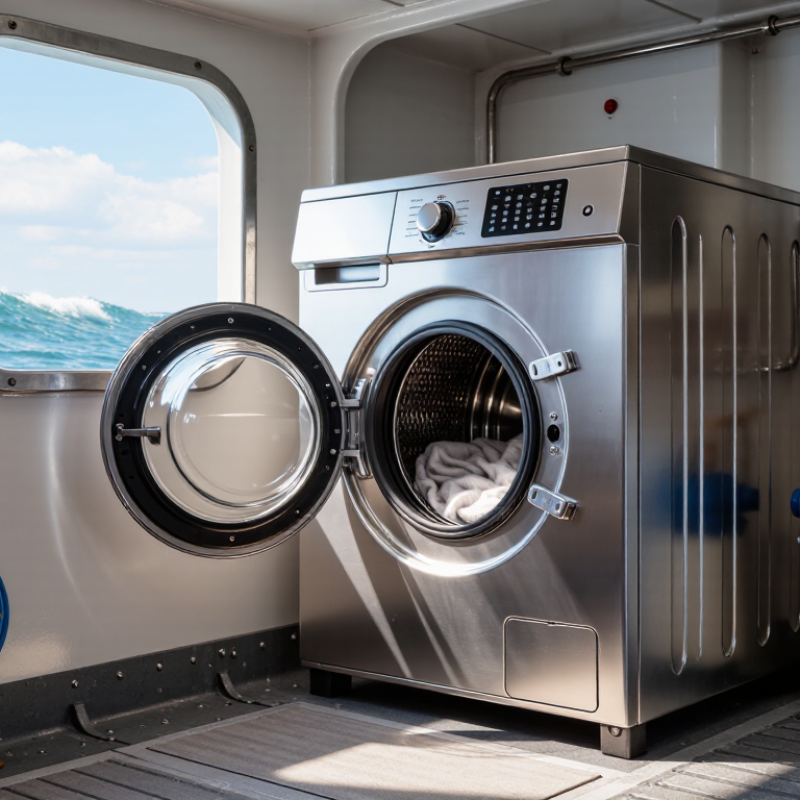
Table of Contents [Hide]
Marine Washing Machines: Definition and Purpose
What Is a Marine Washing Machine and How Does It Work?
A marine washing machine is a compact laundry appliance designed for ships, yachts, offshore platforms, and research vessels. Its purpose is practical: clean clothing, bedding, towels, and protective workwear during long voyages. Unlike a household model, it must handle limited space, vessel movement, vibration, humidity, and restricted freshwater supplies. The term is not perfectly standardized. Some systems are domestic-sized, while others use separate commercial washers and dryers.
The machine fills with treated freshwater, mixes it with detergent, and rotates a perforated drum. Water then drains through the vessel’s approved wastewater system. A high-speed spin removes much of the moisture before drying. Marine installations often require secure mounting, corrosion-resistant parts, and electrical protection suitable for onboard conditions.
UNCTAD’s Review of Maritime Transport 2023 states that over 80% of global merchandise trade by volume moves by sea. That scale explains why reliable onboard laundry supports crew welfare and operational continuity. Energy use still matters. The Fourth IMO GHG Study 2020 estimated international shipping produced about 2.89% of global anthropogenic greenhouse-gas emissions in 2018.
Tips: Check freshwater pressure, drainage capacity, load limits, and vibration controls before installation. Use low-foam detergent and avoid overloading the drum. A small mistake can create leaks, imbalance, or unnecessary water consumption. Operators should also record cycle times and maintenance issues. Real onboard data may challenge the manufacturer’s ideal figures.

© Copyright - Pro Tool & Supply - Site by SVM E-Marketing Solutions - Sitemap
- Privacy policy