- Products
- Air Compressors & Air Tools
- Climate Control
- Compaction Equipment
- Concrete Cutting Tools & Equipment
- Concrete and Masonry
- Demolition & Excavation
- Electrical & Mechanical
- Fasteners and Anchoring Adhesives
- Floor Protection
- Generators and Welders
- Hand Tools
- Heaters
- Janitorial and Office Supplies
- Jobsite Protection
- Ladders & Storage
- Lighting & Lighting Accessories
- Man Lifts
- Material Handling Equipment
- Power Tools
- Pressure Washers & Pumps
- Safety Gear
- Safety Products
- Saws
- Surface Preparation
- SEASONAL PRODUCTS
- Rentals
- Air Compressor and Air Tool Rentals
- Climate Control Rental
- Compaction Rentals
- Concrete Equipment Rentals
- Demolition & Excavation Equipment Rentals
- Concrete Floor Grinder Rentals
- General Construction Equipment Rentals
- Generator Rentals and Welder Rentals
- Heater Rentals
- Light Tower Rentals
- Man Lift Rentals in Massachusetts and Rhode Island
- Material Handling Equipment Rentals
- Pressure Washer & Pump Rentals
- Saw Rentals in New England
- SEASONAL PRODUCTS
- Products
- Air Compressors & Air Tools
- Climate Control
- Compaction Equipment
- Concrete Cutting Tools & Equipment
- Demolition & Excavation
- Electrical & Mechanical
- Floor Protection
- Generators and Welders
- Construction Heaters
- Construction Ladders, Staging, & Storage
- Construction Lighting
- Man Lifts
- Material Handling Equipment
- Industrial Janitorial and Office Supplies
- Pressure Washers & Pumps
- Construction Safety Products
- Construction Safety Gear
- Surface Preparation
- Building Protection
- Diesel Accessories
- Zero Emissions
- Rentals
- Air Compressor and Air Tool Rentals
- Climate Control Rental
- Compaction Rentals
- Concrete Equipment Rental
- Demolition & Excavation Equipment Rental
- General Construction Equipment Rental
- Generator Rentals and Welder Rentals
- Construction Heaters Rental
- Light Tower Rentals
- Man Lift Rentals
- Material Handling Equipment Rental
- Pressure Washer & Pump Rentals
- Saw Rentals in New England
- Concrete Floor Grinder Rentals
- Zero Emissions Rentals
- Repairs & Used
- Parts
- Blog
- Services
- Resources
- About Us
- Contact Us
Sales & Rental of Construction | Industrial Equipment & Supplies


How to Choose the Right Spray Hose for Your Needs?
Choosing the right Spray Hose is not a minor purchasing decision. It affects application quality, operator safety, maintenance time, and total operating cost.
Grand View Research estimates that the global industrial hose market will continue expanding through 2030, driven by agriculture, construction, chemical processing, and manufacturing. MarketsandMarkets also identifies pressure rating, material compatibility, flexibility, and temperature resistance as major selection factors. These reports cover industrial hoses broadly, not every Spray Hose application. That distinction matters.
“The right hose is a system decision, not a catalog decision,” says Mike Krawczyk, a hose-application specialist associated with Gates Industrial. His point is practical. A hose that handles water may fail quickly with fertilizer, solvent, abrasive slurry, or heated fluid.
Look closely.
Imagine a 30-meter hose dragging across concrete, bending near a pump, and pulsing under pressure. Its cover needs abrasion resistance. Its tube must resist the sprayed chemical. Its fittings must match the working pressure, connection style, and flow requirement.
ISO 7751 guidance emphasizes the relationship between working pressure and burst pressure. However, pressure alone cannot determine suitability. Temperature spikes, ultraviolet exposure, cleaning chemicals, and repeated flexing can reduce service life.
A cheaper hose may appear efficient. It may become an expensive mistake.
This guide examines those trade-offs through real selection criteria, manufacturer specifications, and field experience. It also acknowledges an uncomfortable truth: product labels are sometimes incomplete. Buyers should verify technical data, inspect hose condition regularly, and consult qualified suppliers when the application is uncertain.
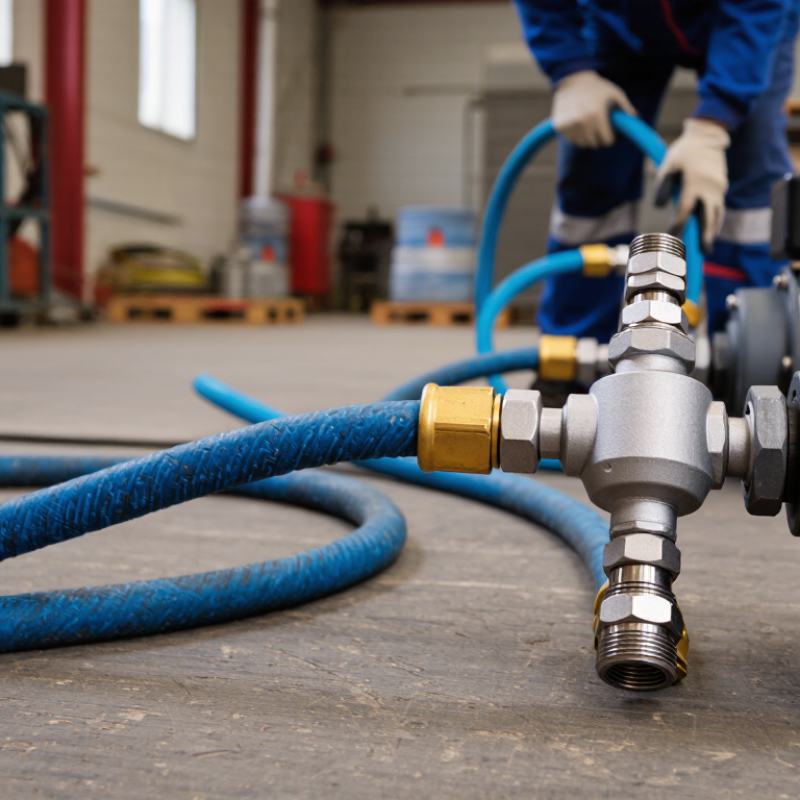
Table of Contents [Hide]
Define the Spray Hose’s Intended Use and Working Conditions
How to Choose the Right Spray Hose for Your Needs?
Define the Spray Hose’s Intended Use and Working Conditions
Start by identifying what the spray hose must carry and where it will operate. Water, fertilizers, cleaning solutions, and abrasive mixtures place different demands on hose materials. A hose used for greenhouse misting may need flexibility, while one used for farm spraying needs stronger abrasion resistance. Check the required pressure, temperature range, flow rate, and chemical compatibility before selecting a hose.
The work environment matters just as much. A hose dragged across concrete needs a durable outer cover and suitable bend strength. In cold conditions, some materials become stiff and may crack during sharp movement. In hot areas, excessive temperature can weaken the inner tube. Measure the connection size carefully, too. A loose fitting can leak, while an undersized passage restricts flow and increases pressure. I once focused on pressure rating and overlooked repeated bending near the coupling. It failed earlier than expected. That was a costly reminder.
Tips: Walk through the actual application before buying. Note the hose length, spray distance, storage method, and frequency of use. Leave enough length for movement, but avoid unnecessary loops on the ground. Inspect the hose before every operation for blisters, cuts, soft spots, or exposed reinforcement. Replace damaged sections promptly. Compatibility charts are useful, but real conditions can vary, so test cautiously when the fluid, temperature, or pressure is unfamiliar.
© Copyright - Pro Tool & Supply - Site by SVM E-Marketing Solutions - Sitemap
- Privacy policy