- Products
- Air Compressors & Air Tools
- Climate Control
- Compaction Equipment
- Concrete Cutting Tools & Equipment
- Concrete and Masonry
- Demolition & Excavation
- Electrical & Mechanical
- Fasteners and Anchoring Adhesives
- Floor Protection
- Generators and Welders
- Hand Tools
- Heaters
- Janitorial and Office Supplies
- Jobsite Protection
- Ladders & Storage
- Lighting & Lighting Accessories
- Man Lifts
- Material Handling Equipment
- Power Tools
- Pressure Washers & Pumps
- Safety Gear
- Safety Products
- Saws
- Surface Preparation
- SEASONAL PRODUCTS
- Rentals
- Air Compressor and Air Tool Rentals
- Climate Control Rental
- Compaction Rentals
- Concrete Equipment Rentals
- Demolition & Excavation Equipment Rentals
- Concrete Floor Grinder Rentals
- General Construction Equipment Rentals
- Generator Rentals and Welder Rentals
- Heater Rentals
- Light Tower Rentals
- Man Lift Rentals in Massachusetts and Rhode Island
- Material Handling Equipment Rentals
- Pressure Washer & Pump Rentals
- Saw Rentals in New England
- SEASONAL PRODUCTS
- Products
- Air Compressors & Air Tools
- Climate Control
- Compaction Equipment
- Concrete Cutting Tools & Equipment
- Demolition & Excavation
- Electrical & Mechanical
- Floor Protection
- Generators and Welders
- Construction Heaters
- Construction Ladders, Staging, & Storage
- Construction Lighting
- Man Lifts
- Material Handling Equipment
- Industrial Janitorial and Office Supplies
- Pressure Washers & Pumps
- Construction Safety Products
- Construction Safety Gear
- Surface Preparation
- Building Protection
- Diesel Accessories
- Zero Emissions
- Rentals
- Air Compressor and Air Tool Rentals
- Climate Control Rental
- Compaction Rentals
- Concrete Equipment Rental
- Demolition & Excavation Equipment Rental
- General Construction Equipment Rental
- Generator Rentals and Welder Rentals
- Construction Heaters Rental
- Light Tower Rentals
- Man Lift Rentals
- Material Handling Equipment Rental
- Pressure Washer & Pump Rentals
- Saw Rentals in New England
- Concrete Floor Grinder Rentals
- Zero Emissions Rentals
- Repairs & Used
- Parts
- Blog
- Services
- Resources
- About Us
- Contact Us
Sales & Rental of Construction | Industrial Equipment & Supplies


How to Choose a Lithium Ion Car Battery?
Choosing a Lithium Ion Car Battery requires more than comparing capacity and price. Vehicle design, charging systems, climate, and safety requirements all influence the correct choice. The International Energy Agency reported nearly 14 million electric car sales worldwide in 2023. That growth has increased demand for dependable, well-engineered battery systems. Yet popularity does not make every lithium battery suitable for every vehicle.
Start with the battery’s chemistry. Lithium iron phosphate, or LFP, usually offers strong thermal stability and long cycle life. Nickel-manganese-cobalt cells can provide higher energy density, but they require careful thermal management. BloombergNEF’s 2024 Battery Price Survey placed the average lithium-ion pack price at 115 dollars per kilowatt-hour. Lower prices are encouraging, but cost alone cannot prove quality. A cheap pack may hide weak cells, limited protection, or poor documentation.
Check voltage, usable capacity, cold-cranking requirements, dimensions, terminals, and communication protocols. Confirm compatibility with the vehicle’s alternator, charger, battery-management system, and warranty terms. Standards such as ISO 12405 and UL 2580 offer useful reference points, but certification details still need verification. A battery can fit the tray and still fail electronically. That mistake is easy to make.
Real-world conditions matter. A vehicle parked outdoors at minus 10 degrees Celsius may behave differently from one tested in a warm workshop. Service history also matters, although sellers may not provide complete data. There is no universal best battery. The safest decision combines verified specifications, professional installation, transparent test results, and realistic driving needs. Even this approach has limits, so recheck every critical figure before purchase.
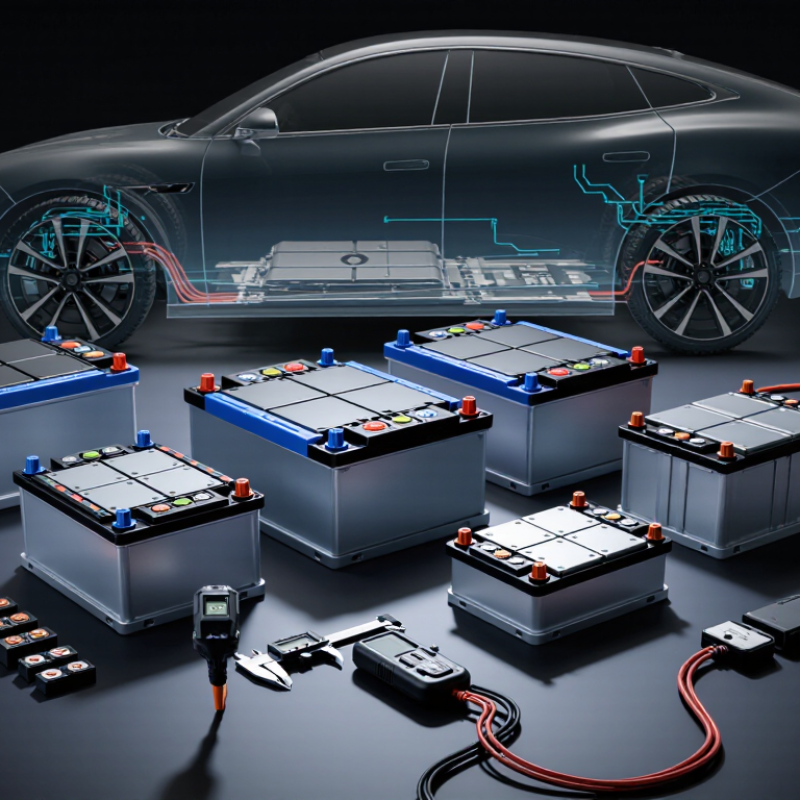
Table of Contents [Hide]
Understanding Lithium-Ion Car Battery Types and Applications
How to Choose a Lithium Ion Car Battery?
Understanding Lithium-Ion Car Battery Types and Applications
Lithium-ion car batteries are not one uniform product. Their chemistry, voltage, capacity, and cooling design determine where they work best. Lithium iron phosphate, or LFP, offers strong thermal stability and long cycle life. It suits many electric vehicles and energy storage systems. Nickel-rich chemistries, including NMC and NCA, usually provide higher energy density. They can support longer driving ranges, but temperature control becomes more demanding. Lithium titanate, or LTO, charges quickly and handles frequent cycling well. Its lower energy density can increase pack size and cost.
Application matters more than chemistry alone. A 12-volt lithium battery may power accessories or replace a conventional starter battery. A 48-volt system can support mild-hybrid functions and electrical equipment. High-voltage battery packs drive fully electric vehicles and require carefully managed modules, sensors, and cooling channels. Do not confuse a starting battery with a traction battery. Their electrical demands are very different.
Check the vehicle’s approved voltage, terminal layout, battery management system, and charging limits. A battery with impressive capacity may still fit poorly or communicate incorrectly with the car. In cold weather, charging restrictions can become important. Real use exposes weaknesses. A short urban trip, repeated fast charging, and a hot parking area create different stresses. Specifications help, but they never tell the whole story. Even experienced technicians can overlook software compatibility or installation space. That deserves a second check.

© Copyright - Pro Tool & Supply - Site by SVM E-Marketing Solutions - Sitemap
- Privacy policy