- Products
- Air Compressors & Air Tools
- Climate Control
- Compaction Equipment
- Concrete Cutting Tools & Equipment
- Concrete and Masonry
- Demolition & Excavation
- Electrical & Mechanical
- Fasteners and Anchoring Adhesives
- Floor Protection
- Generators and Welders
- Hand Tools
- Heaters
- Janitorial and Office Supplies
- Jobsite Protection
- Ladders & Storage
- Lighting & Lighting Accessories
- Man Lifts
- Material Handling Equipment
- Power Tools
- Pressure Washers & Pumps
- Safety Gear
- Safety Products
- Saws
- Surface Preparation
- SEASONAL PRODUCTS
- Rentals
- Air Compressor and Air Tool Rentals
- Climate Control Rental
- Compaction Rentals
- Concrete Equipment Rentals
- Demolition & Excavation Equipment Rentals
- Concrete Floor Grinder Rentals
- General Construction Equipment Rentals
- Generator Rentals and Welder Rentals
- Heater Rentals
- Light Tower Rentals
- Man Lift Rentals in Massachusetts and Rhode Island
- Material Handling Equipment Rentals
- Pressure Washer & Pump Rentals
- Saw Rentals in New England
- SEASONAL PRODUCTS
- Products
- Air Compressors & Air Tools
- Climate Control
- Compaction Equipment
- Concrete Cutting Tools & Equipment
- Demolition & Excavation
- Electrical & Mechanical
- Floor Protection
- Generators and Welders
- Construction Heaters
- Construction Ladders, Staging, & Storage
- Construction Lighting
- Man Lifts
- Material Handling Equipment
- Industrial Janitorial and Office Supplies
- Pressure Washers & Pumps
- Construction Safety Products
- Construction Safety Gear
- Surface Preparation
- Building Protection
- Diesel Accessories
- Zero Emissions
- Rentals
- Air Compressor and Air Tool Rentals
- Climate Control Rental
- Compaction Rentals
- Concrete Equipment Rental
- Demolition & Excavation Equipment Rental
- General Construction Equipment Rental
- Generator Rentals and Welder Rentals
- Construction Heaters Rental
- Light Tower Rentals
- Man Lift Rentals
- Material Handling Equipment Rental
- Pressure Washer & Pump Rentals
- Saw Rentals in New England
- Concrete Floor Grinder Rentals
- Zero Emissions Rentals
- Repairs & Used
- Parts
- Blog
- Services
- Resources
- About Us
- Contact Us
Sales & Rental of Construction | Industrial Equipment & Supplies


How to Choose Galvalume Corrugated Sheet?
Choosing the right Galvalume Corrugated Sheet requires more than comparing prices or surface brightness. The best option depends on climate, roof design, building use, and expected service life. A sheet that performs well on a dry farm building may struggle near saltwater. That difference matters.
Galvalume steel commonly uses an aluminum-zinc-silicon coating for improved corrosion resistance. However, coating quality is only one part of the decision. Buyers should check base-metal thickness, coating class, profile depth, panel width, and fastener compatibility. A thicker sheet may provide better stiffness under wind or maintenance loads. The correct roof pitch also helps water drain quickly. Small details can prevent leaks.
Check the specification carefully.
Reliable suppliers should provide test reports, coating information, dimensional tolerances, and traceable production records. Standards such as ASTM or EN requirements can support comparison, but the applicable standard depends on the project location. Local building rules still control the final selection. Experience also shows that installation quality can defeat a good material. Cut edges, exposed fasteners, and poor overlaps often create avoidable problems. I have seen attractive panels fail early because installers ignored drainage and ventilation. That is an uncomfortable lesson. It deserves attention.
This guide will examine how to choose Galvalume Corrugated Sheet with practical criteria. It will compare thicknesses, coatings, profiles, finishes, and supplier claims. It will also highlight common purchasing mistakes. No single product fits every project. Careful evaluation remains the safer approach.
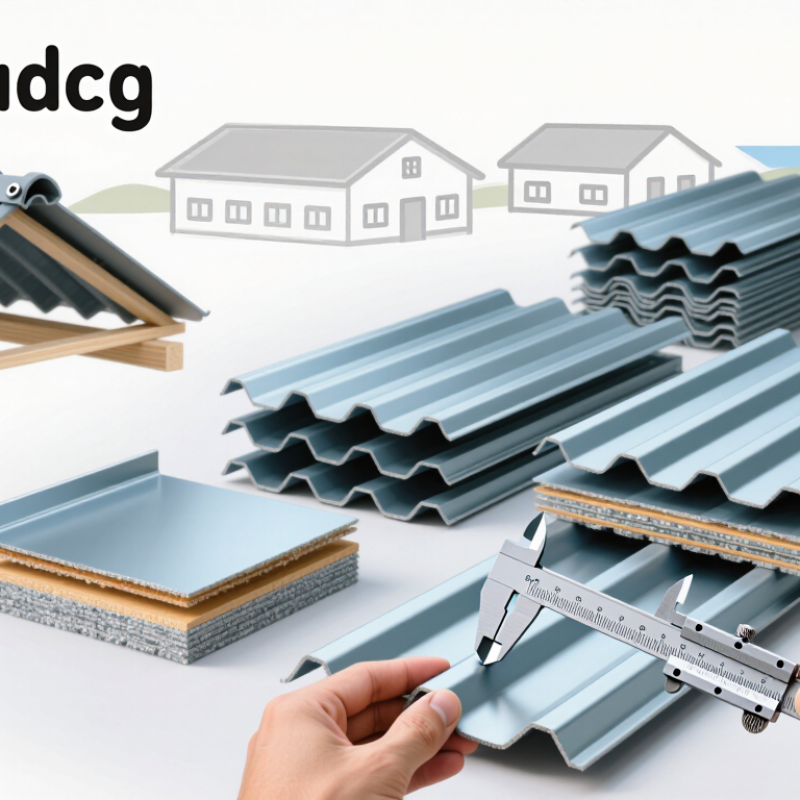
Table of Contents [Hide]
Galvalume Corrugated Sheet: Structure, Coating, and Core Properties
Choosing a galvalume corrugated sheet requires more than checking its appearance. Its structure normally includes a steel core, an aluminum-zinc-silicon coating, and formed ribs. The steel core supplies strength and supports fastener holding. Corrugation increases stiffness while keeping the sheet relatively light. Deeper ribs usually improve load performance, but they may require compatible overlaps and accessories.
The coating is a critical choice. Aluminum helps create a stable barrier against moisture and heat, while zinc provides protective action around minor scratches. Coating mass should match the exposure level, not just the lowest price. Near coastal air, industrial fumes, or frequent condensation, a stronger coating and careful detailing are sensible. Avoid direct contact with wet concrete, copper, or trapped debris. Small mistakes there can shorten service life.
Check the base steel thickness, yield strength, rib profile, coating designation, and actual panel length. Thin sheets may look economical but can dent under foot traffic or strong wind.
During inspection, look for bare spots, uneven coating, sharp burrs, and crushed ribs. Cut edges deserve attention because they expose the steel core. Use compatible fasteners with sealed washers, and keep drainage paths clear.
No sheet is perfect. I would not choose by color alone, because the core and coating often determine long-term performance. A sample cut, technical datasheet, and project-specific load review provide more reliable evidence than a showroom surface.

© Copyright - Pro Tool & Supply - Site by SVM E-Marketing Solutions - Sitemap
- Privacy policy