- Products
- Air Compressors & Air Tools
- Climate Control
- Compaction Equipment
- Concrete Cutting Tools & Equipment
- Concrete and Masonry
- Demolition & Excavation
- Electrical & Mechanical
- Fasteners and Anchoring Adhesives
- Floor Protection
- Generators and Welders
- Hand Tools
- Heaters
- Janitorial and Office Supplies
- Jobsite Protection
- Ladders & Storage
- Lighting & Lighting Accessories
- Man Lifts
- Material Handling Equipment
- Power Tools
- Pressure Washers & Pumps
- Safety Gear
- Safety Products
- Saws
- Surface Preparation
- SEASONAL PRODUCTS
- Rentals
- Air Compressor and Air Tool Rentals
- Climate Control Rental
- Compaction Rentals
- Concrete Equipment Rentals
- Demolition & Excavation Equipment Rentals
- Concrete Floor Grinder Rentals
- General Construction Equipment Rentals
- Generator Rentals and Welder Rentals
- Heater Rentals
- Light Tower Rentals
- Man Lift Rentals in Massachusetts and Rhode Island
- Material Handling Equipment Rentals
- Pressure Washer & Pump Rentals
- Saw Rentals in New England
- SEASONAL PRODUCTS
- Products
- Air Compressors & Air Tools
- Climate Control
- Compaction Equipment
- Concrete Cutting Tools & Equipment
- Demolition & Excavation
- Electrical & Mechanical
- Floor Protection
- Generators and Welders
- Construction Heaters
- Construction Ladders, Staging, & Storage
- Construction Lighting
- Man Lifts
- Material Handling Equipment
- Industrial Janitorial and Office Supplies
- Pressure Washers & Pumps
- Construction Safety Products
- Construction Safety Gear
- Surface Preparation
- Building Protection
- Diesel Accessories
- Zero Emissions
- Rentals
- Air Compressor and Air Tool Rentals
- Climate Control Rental
- Compaction Rentals
- Concrete Equipment Rental
- Demolition & Excavation Equipment Rental
- General Construction Equipment Rental
- Generator Rentals and Welder Rentals
- Construction Heaters Rental
- Light Tower Rentals
- Man Lift Rentals
- Material Handling Equipment Rental
- Pressure Washer & Pump Rentals
- Saw Rentals in New England
- Concrete Floor Grinder Rentals
- Zero Emissions Rentals
- Repairs & Used
- Parts
- Blog
- Services
- Resources
- About Us
- Contact Us
Sales & Rental of Construction | Industrial Equipment & Supplies


How to Choose the Right Cement Mixer?
Choosing the right Cement Mixer affects concrete consistency, labor time, waste, and jobsite safety. It is not simply a matter of selecting the largest drum. A 160-liter mixer may suit small repairs, while a 300-liter model can support regular slab and foundation work. The correct choice depends on batch size, material type, power supply, transport needs, and mixing frequency.
Recent reports from Grand View Research and IMARC Group describe steady growth in construction equipment demand. Their findings point toward greater interest in portable, efficient, and lower-maintenance machinery. That trend sounds convincing, but market growth does not guarantee a suitable purchase. A mixer that looks powerful in a showroom may struggle on uneven ground or overload a weak electrical circuit. Check the rated output, drum capacity, motor protection, and spare-parts availability. These details matter more than polished photographs.
Concrete specialist Pierre-Claude Aïtcin wrote, “Concrete is the most widely used construction material in the world.” His observation highlights the importance of reliable production control. A mixer should rotate steadily, discharge cleanly, and maintain a workable mixture without excessive manual correction. OSHA and NIOSH guidance also stresses dust control, guarding, noise protection, and safe operating procedures around cement materials. Do not ignore them.
One practical lesson is easy to miss. Bigger is not always better. A smaller towable Cement Mixer may save fuel, storage space, and setup time. Yet choosing purely by price can create expensive downtime later. Compare real batch requirements with manufacturer data, then question your assumptions before buying. That final step is often overlooked.
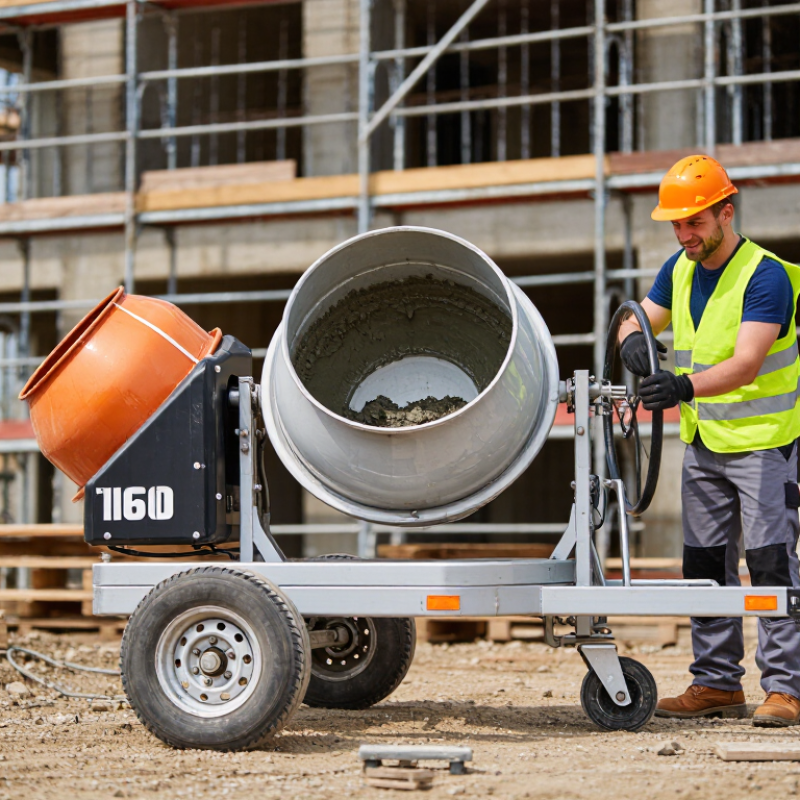
Table of Contents [Hide]
Define the Cement Mixing Requirements for Your Project
Choosing a cement mixer starts with defining the exact mixing requirements for your project. Identify the material, batch volume, mixing time, and required consistency. Concrete containing coarse aggregate needs more drum clearance than mortar or grout. Measure the aggregate size carefully.
Estimate your daily output before comparing mixer capacity. A small repair may need only several 20-liter batches, while a foundation requires steady production. Allow space for loading and discharge. A mixer that looks powerful on paper may struggle when overloaded. I learned this after filling a drum too quickly; the mixture turned uneven, and cleanup took much longer than expected.
Consider the worksite conditions as well. Check power access, ground stability, transport distance, and available ventilation. Electric mixers suit fixed sites with reliable power, while fuel-powered equipment may fit remote locations, subject to local safety rules. Match the mixing speed to the material specification, not personal preference. Faster is not always better.
Cleaning access also matters. Dried cement can reduce drum capacity and damage moving parts. Inspect the blades, frame, and emergency controls before each use. Keep a written batch record, including water quantity and mixing duration. The record may reveal small errors that are easy to miss during a busy pour.

© Copyright - Pro Tool & Supply - Site by SVM E-Marketing Solutions - Sitemap
- Privacy policy