- Products
- Air Compressors & Air Tools
- Climate Control
- Compaction Equipment
- Concrete Cutting Tools & Equipment
- Concrete and Masonry
- Demolition & Excavation
- Electrical & Mechanical
- Fasteners and Anchoring Adhesives
- Floor Protection
- Generators and Welders
- Hand Tools
- Heaters
- Janitorial and Office Supplies
- Jobsite Protection
- Ladders & Storage
- Lighting & Lighting Accessories
- Man Lifts
- Material Handling Equipment
- Power Tools
- Pressure Washers & Pumps
- Safety Gear
- Safety Products
- Saws
- Surface Preparation
- SEASONAL PRODUCTS
- Rentals
- Air Compressor and Air Tool Rentals
- Climate Control Rental
- Compaction Rentals
- Concrete Equipment Rentals
- Demolition & Excavation Equipment Rentals
- Concrete Floor Grinder Rentals
- General Construction Equipment Rentals
- Generator Rentals and Welder Rentals
- Heater Rentals
- Light Tower Rentals
- Man Lift Rentals in Massachusetts and Rhode Island
- Material Handling Equipment Rentals
- Pressure Washer & Pump Rentals
- Saw Rentals in New England
- SEASONAL PRODUCTS
- Products
- Air Compressors & Air Tools
- Climate Control
- Compaction Equipment
- Concrete Cutting Tools & Equipment
- Demolition & Excavation
- Electrical & Mechanical
- Floor Protection
- Generators and Welders
- Construction Heaters
- Construction Ladders, Staging, & Storage
- Construction Lighting
- Man Lifts
- Material Handling Equipment
- Industrial Janitorial and Office Supplies
- Pressure Washers & Pumps
- Construction Safety Products
- Construction Safety Gear
- Surface Preparation
- Building Protection
- Diesel Accessories
- Zero Emissions
- Rentals
- Air Compressor and Air Tool Rentals
- Climate Control Rental
- Compaction Rentals
- Concrete Equipment Rental
- Demolition & Excavation Equipment Rental
- General Construction Equipment Rental
- Generator Rentals and Welder Rentals
- Construction Heaters Rental
- Light Tower Rentals
- Man Lift Rentals
- Material Handling Equipment Rental
- Pressure Washer & Pump Rentals
- Saw Rentals in New England
- Concrete Floor Grinder Rentals
- Zero Emissions Rentals
- Repairs & Used
- Parts
- Blog
- Services
- Resources
- About Us
- Contact Us
Sales & Rental of Construction | Industrial Equipment & Supplies


How to Choose the Best Grid On Inverter?
Choosing the right Grid On Inverter is not simply a matter of matching a number on a product page. It affects energy yield, household safety, installation cost, and future expansion. A 5 kW inverter may suit a small home, yet perform poorly with unusual roof angles or frequent voltage fluctuations. Real conditions matter. Roof orientation, local sunlight, panel voltage, phase type, and utility requirements all influence the decision. In practice, installers sometimes discover that a cheaper model creates extra work during commissioning.
This guide examines the technical and practical details behind a reliable choice. It considers rated output, maximum power point tracking, conversion efficiency, monitoring tools, protection features, and warranty support. A useful comparison should also check whether the inverter matches the planned panel configuration. For example, string voltage may look acceptable at midday but fall outside the operating range on a cold morning. Small oversights can become expensive. Manufacturer datasheets, recognized certifications, and experienced installers provide stronger evidence than attractive marketing claims.
No single Grid On Inverter is best for every property. A coastal home may need stronger corrosion protection, while an urban system may require better shade tolerance. Grid stability can also change the answer. Even experienced buyers can misjudge future electricity demand. That uncertainty deserves attention. The following sections provide a practical framework for comparing models, asking precise installer questions, and balancing performance with dependable long-term service. The goal is not the most impressive specification. It is a safe, compatible, and realistically maintainable system.
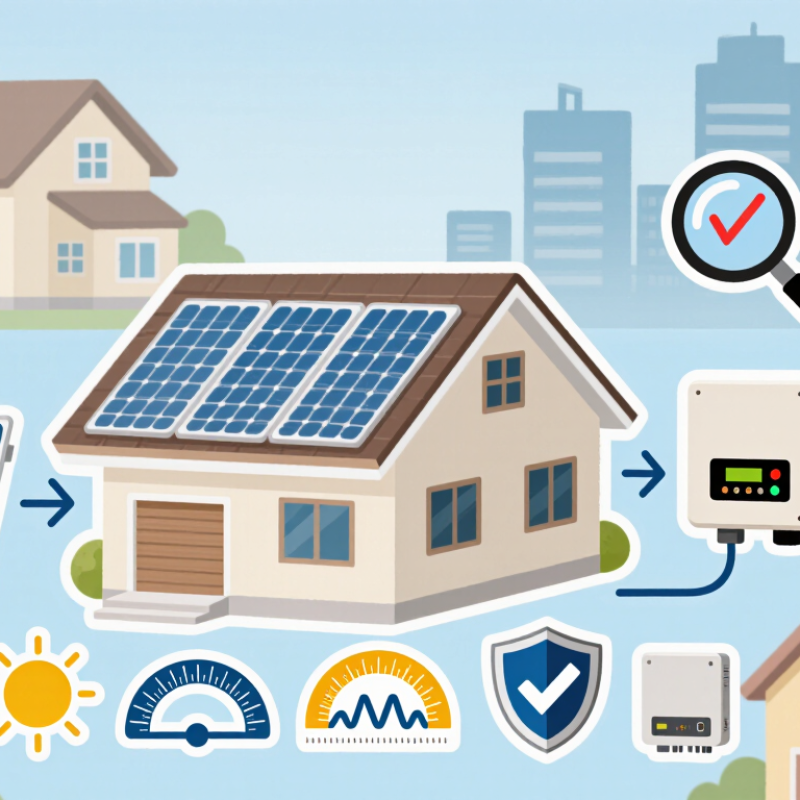
Table of Contents [Hide]
Understanding How Grid-Tied Inverters Work
A grid-tied inverter converts solar panels’ direct current into usable alternating current. It then synchronizes with the utility grid’s voltage, frequency, and phase. This coordination must be precise. Otherwise, the system may operate inefficiently or trigger protection settings.
When the grid is available, excess solar power can flow into the utility network, depending on local rules and the approved connection agreement. If the grid fails, a compliant inverter disconnects automatically through anti-islanding protection. This protects repair crews and nearby equipment. The best grid-tied inverter should match the array’s voltage range, expected power, and site temperature. Oversizing the panels slightly can improve annual production, but excessive oversizing may cause clipping. That trade-off deserves careful review.
Tips: Check the inverter’s maximum input voltage and MPPT operating range. Review its efficiency at partial loads, not only its peak rating. Ask for clear monitoring data, fault records, and installation documentation. Confirm that protective functions meet local electrical requirements. A qualified installer should also inspect cable length, ventilation, shading, and the service panel. Small details matter. I have seen theoretical designs underperform because afternoon shadows were ignored. Weather changes too, so production estimates should remain realistic rather than perfect.

© Copyright - Pro Tool & Supply - Site by SVM E-Marketing Solutions - Sitemap
- Privacy policy