- Products
- Air Compressors & Air Tools
- Climate Control
- Compaction Equipment
- Concrete Cutting Tools & Equipment
- Concrete and Masonry
- Demolition & Excavation
- Electrical & Mechanical
- Fasteners and Anchoring Adhesives
- Floor Protection
- Generators and Welders
- Hand Tools
- Heaters
- Janitorial and Office Supplies
- Jobsite Protection
- Ladders & Storage
- Lighting & Lighting Accessories
- Man Lifts
- Material Handling Equipment
- Power Tools
- Pressure Washers & Pumps
- Safety Gear
- Safety Products
- Saws
- Surface Preparation
- SEASONAL PRODUCTS
- Rentals
- Air Compressor and Air Tool Rentals
- Climate Control Rental
- Compaction Rentals
- Concrete Equipment Rentals
- Demolition & Excavation Equipment Rentals
- Concrete Floor Grinder Rentals
- General Construction Equipment Rentals
- Generator Rentals and Welder Rentals
- Heater Rentals
- Light Tower Rentals
- Man Lift Rentals in Massachusetts and Rhode Island
- Material Handling Equipment Rentals
- Pressure Washer & Pump Rentals
- Saw Rentals in New England
- SEASONAL PRODUCTS
- Products
- Air Compressors & Air Tools
- Climate Control
- Compaction Equipment
- Concrete Cutting Tools & Equipment
- Demolition & Excavation
- Electrical & Mechanical
- Floor Protection
- Generators and Welders
- Construction Heaters
- Construction Ladders, Staging, & Storage
- Construction Lighting
- Man Lifts
- Material Handling Equipment
- Industrial Janitorial and Office Supplies
- Pressure Washers & Pumps
- Construction Safety Products
- Construction Safety Gear
- Surface Preparation
- Building Protection
- Diesel Accessories
- Zero Emissions
- Rentals
- Air Compressor and Air Tool Rentals
- Climate Control Rental
- Compaction Rentals
- Concrete Equipment Rental
- Demolition & Excavation Equipment Rental
- General Construction Equipment Rental
- Generator Rentals and Welder Rentals
- Construction Heaters Rental
- Light Tower Rentals
- Man Lift Rentals
- Material Handling Equipment Rental
- Pressure Washer & Pump Rentals
- Saw Rentals in New England
- Concrete Floor Grinder Rentals
- Zero Emissions Rentals
- Repairs & Used
- Parts
- Blog
- Services
- Resources
- About Us
- Contact Us
Sales & Rental of Construction | Industrial Equipment & Supplies


How to Choose High Quality Cabinet Hardware?
Choosing High Quality Cabinet Hardware is more than matching handles to cabinet colors. It affects daily comfort, durability, and the finished appearance of a room. A pull may look attractive in a product photo, yet feel sharp, loose, or poorly balanced after installation. Careful selection begins with practical details, not decoration alone.
Experienced installers usually examine the metal, fastening system, surface finish, and overall weight. Solid brass, stainless steel, and high-grade zinc alloys can offer dependable performance when properly manufactured. Check whether the mounting screws fit firmly and leave enough thread inside the cabinet door. A drawer pull should sit steadily without twisting under regular use. Open and close the cabinet repeatedly. Notice the grip.
Finish matters, too. Brushed surfaces can hide fingerprints, while coated finishes may resist moisture in kitchens and bathrooms. However, no finish is completely maintenance-free. Even experienced buyers can overlook weak screw threads or uneven plating. That is worth remembering. Reliable suppliers should provide clear dimensions, material information, installation guidance, and warranty terms. Independent testing or documented quality control can strengthen confidence, although marketing language alone proves very little.
Before purchasing, compare the hardware with your cabinet thickness, room conditions, and expected usage. A small knob may suit a light bedside cabinet but feel uncomfortable on a wide kitchen drawer. Measure twice. Then inspect every piece before installation. This practical approach helps homeowners, designers, and contractors choose cabinet hardware that looks refined and performs consistently over time.
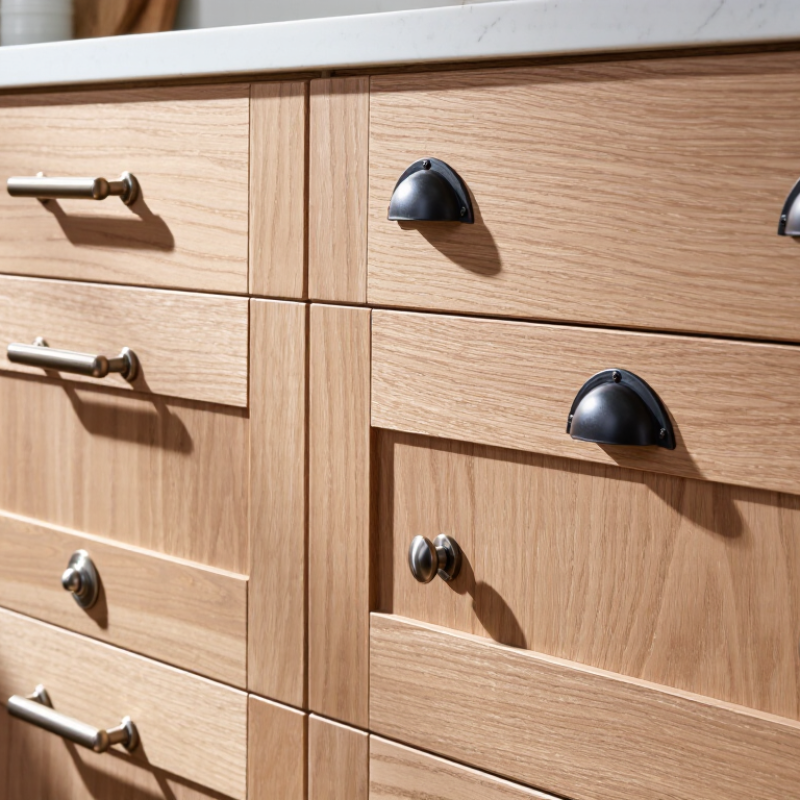
Table of Contents [Hide]
Understanding the Core Features of High-Quality Cabinet Hardware
High-quality cabinet hardware begins with its core features, not its finish. In the 2024 NKBA Kitchen Trends Report, designers continue to emphasize durable, easy-care materials in busy kitchens. That makes substrate and construction important. Solid brass, stainless steel, or reinforced zinc usually feels denser than thin stamped metal. Check the mounting plate, screw threads, and moving joints. A handle should sit firmly without twisting.
Function reveals quality quickly. Drawer slides should open smoothly, remain aligned, and resist side-to-side movement. Hinges need controlled closing and consistent adjustment. The ANSI/BHMA A156.9 standard provides performance testing for cabinet hardware, including repeated operation and load resistance. Ask for test details, not just a “premium” label. That phrase proves very little.
Surface protection matters, especially near sinks and cooktops. Look for finishes tested against corrosion, humidity, and household cleaners. ASTM B117 salt-spray testing can indicate resistance, but laboratory results do not perfectly predict every home. Real kitchens are messier. Wipe marks, loose screws, and sharp edges become obvious after months of use. I would inspect a sample under strong light and operate it repeatedly. Small flaws count. A beautiful pull that loosens after installation is not high quality.

© Copyright - Pro Tool & Supply - Site by SVM E-Marketing Solutions - Sitemap
- Privacy policy