- Products
- Air Compressors & Air Tools
- Climate Control
- Compaction Equipment
- Concrete Cutting Tools & Equipment
- Concrete and Masonry
- Demolition & Excavation
- Electrical & Mechanical
- Fasteners and Anchoring Adhesives
- Floor Protection
- Generators and Welders
- Hand Tools
- Heaters
- Janitorial and Office Supplies
- Jobsite Protection
- Ladders & Storage
- Lighting & Lighting Accessories
- Man Lifts
- Material Handling Equipment
- Power Tools
- Pressure Washers & Pumps
- Safety Gear
- Safety Products
- Saws
- Surface Preparation
- SEASONAL PRODUCTS
- Rentals
- Air Compressor and Air Tool Rentals
- Climate Control Rental
- Compaction Rentals
- Concrete Equipment Rentals
- Demolition & Excavation Equipment Rentals
- Concrete Floor Grinder Rentals
- General Construction Equipment Rentals
- Generator Rentals and Welder Rentals
- Heater Rentals
- Light Tower Rentals
- Man Lift Rentals in Massachusetts and Rhode Island
- Material Handling Equipment Rentals
- Pressure Washer & Pump Rentals
- Saw Rentals in New England
- SEASONAL PRODUCTS
- Products
- Air Compressors & Air Tools
- Climate Control
- Compaction Equipment
- Concrete Cutting Tools & Equipment
- Demolition & Excavation
- Electrical & Mechanical
- Floor Protection
- Generators and Welders
- Construction Heaters
- Construction Ladders, Staging, & Storage
- Construction Lighting
- Man Lifts
- Material Handling Equipment
- Industrial Janitorial and Office Supplies
- Pressure Washers & Pumps
- Construction Safety Products
- Construction Safety Gear
- Surface Preparation
- Building Protection
- Diesel Accessories
- Zero Emissions
- Rentals
- Air Compressor and Air Tool Rentals
- Climate Control Rental
- Compaction Rentals
- Concrete Equipment Rental
- Demolition & Excavation Equipment Rental
- General Construction Equipment Rental
- Generator Rentals and Welder Rentals
- Construction Heaters Rental
- Light Tower Rentals
- Man Lift Rentals
- Material Handling Equipment Rental
- Pressure Washer & Pump Rentals
- Saw Rentals in New England
- Concrete Floor Grinder Rentals
- Zero Emissions Rentals
- Repairs & Used
- Parts
- Blog
- Services
- Resources
- About Us
- Contact Us
Sales & Rental of Construction | Industrial Equipment & Supplies


China Top RTO Manufacturers How to Choose the Best?
Choosing among China’s top RTO manufacturers requires more than comparing stainless-steel panels, prices, or catalog promises. A regenerative thermal oxidizer must match your emission profile, airflow, solvent loading, operating schedule, and local compliance requirements. The U.S. Environmental Protection Agency’s Air Pollution Control Cost Manual reports typical VOC destruction efficiencies of approximately 95% to 99% for well-designed thermal oxidizers. It also emphasizes that actual performance depends on temperature, residence time, mixing, and maintenance.
The numbers matter. An RTO operating at 100,000 Nm³/h may face very different demands from a coating line or chemical process. High solvent peaks can affect valve selection, ceramic media design, burner capacity, and pressure stability. China’s Ministry of Ecology and Environment also stresses process control, fugitive-emission management, and continuous monitoring in VOC governance guidance. Therefore, a reliable manufacturer should provide engineering calculations, tested performance data, equipment drawings, and clear commissioning procedures.
A strong supplier will discuss the difficult details. Ask about heat recovery efficiency, startup fuel consumption, corrosion resistance, switching-valve service life, and emergency bypass control. Request references from facilities with similar gases and production volumes. Independent testing is valuable, although it may not cover every operating condition. No shortlist is perfect. A polished brochure can still hide weak after-sales support or vague warranty terms. This guide examines China’s leading RTO manufacturers through technical capability, manufacturing experience, documentation quality, safety design, customization, and lifecycle cost. The best choice is rarely the cheapest unit. It is the system that performs consistently beside your actual production line.
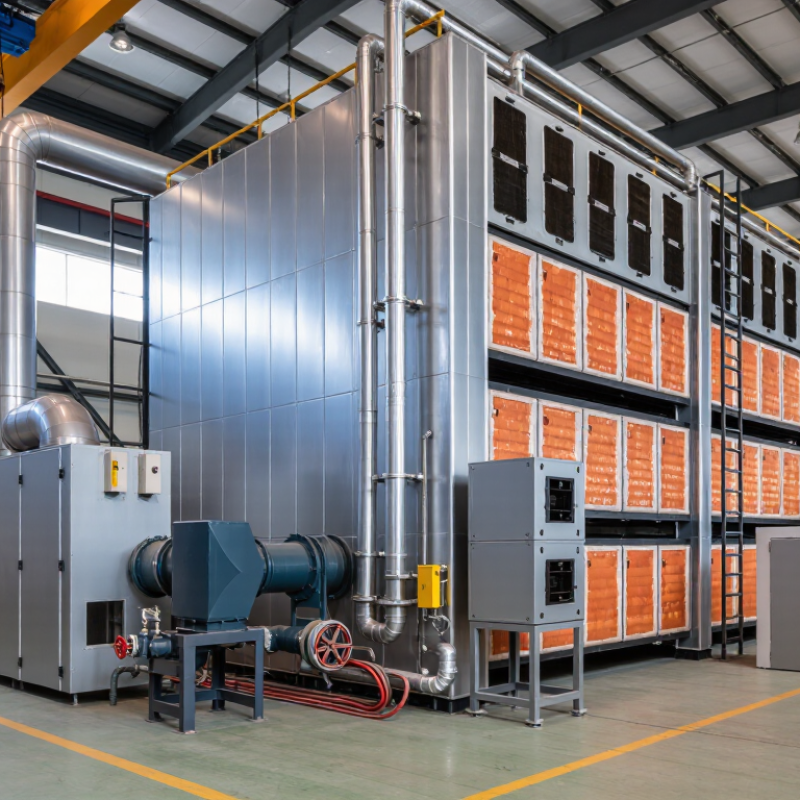
Table of Contents [Hide]
What Is an RTO and Why Does Manufacturer Choice Matter?
A regenerative thermal oxidizer (RTO) treats VOC-laden industrial exhaust through controlled thermal oxidation. It uses ceramic heat-recovery media to capture and reuse heat, reducing fuel demand during stable operation. Exhaust passes through the media beds, enters a combustion chamber, and then leaves through another heated bed. The airflow direction changes through timed valve switching. Small details matter. Poor sealing can increase leakage, pressure drop, and operating costs.
Manufacturer choice matters because an RTO is not an off-the-shelf box. The system must match gas volume, VOC concentration, moisture, dust loading, and temperature changes. During plant assessments, engineers should review actual operating data, not only design averages. Ask for verified destruction efficiency, heat-recovery performance, valve durability, control logic, and maintenance access. A reliable supplier also explains startup behavior, emergency handling, spare parts, and service response. Some proposals look efficient on paper but overlook fluctuating production. That mistake can become expensive.
Tips: Request a process-based design calculation and recent performance records. Check whether the supplier can test your exhaust before final sizing. Inspect drawings for access doors, drain points, insulation, and safe inspection areas. Compare total ownership cost, including fuel, electricity, media replacement, downtime, and maintenance labor. Do not judge by purchase price alone. A useful question is simple: What happens when the exhaust composition changes suddenly? The answer may reveal more than a polished brochure. Review assumptions carefully, because even experienced teams can miss an inconvenient operating condition.

© Copyright - Pro Tool & Supply - Site by SVM E-Marketing Solutions - Sitemap
- Privacy policy